
Beomeosa Temple: Free Entry, Hours and How to Get There

Beomeosa Temple sits on the forested slope of Geumjeongsan in northern Busan, well away from the beach crowds. The monk Uisang founded it in 678, and it still works as an active Seon (Zen) monastery. This guide covers hours, free entry, subway directions, and Templestay basics. Last updated November 2026.
According to Visit Busan, the temple opens every day from 08:00 to 17:00, and admission is free. Because the gates run on that schedule, a late-afternoon arrival leaves little time for the courtyards.
Tickets and Opening Hours
The essentials fit in a short list, and the figures below come from Visit Busan, the city tourism board. Visit Busan and VisitKorea agree on the hours, which is why we use them here.
The temple's own English site lists no visiting hours, while some third-party sites print wider ranges. Treat 08:00 to 17:00 as the rule and plan to be inside well before closing.
- Opening hours
- According to Visit Busan, the temple is open every day from 08:00 to 17:00, all year round.
- Adult admission
- Visit Busan lists entry as free, so an adult ticket costs ₩0 at the gate.
- Address
- The temple stands at 250 Beomeosa-ro, Geumjeong-gu, Busan, in the Cheongnyong-dong area.
- Nearest metro
- Take Busan Metro Line 1 to Beomeosa Station, leave by Exit 5 or 7, then ride bus 90.
- Parking
- Visit Busan lists a paid Beomeosa Temple parking lot with accessible parking and an accessible bathroom.
How to Get to Beomeosa Temple by Metro and Bus
The standard route uses Busan Metro Line 1 and one short bus ride uphill. Visit Busan says to exit Beomeosa Station by Exit 5 or 7 and take bus 90 to the Beomeosa Parking Lot stop. Seomyeon is also on Line 1.
The temple's own directions offer a second option from Nopo Station on Line 1. Leave by Exit 2, walk about 2 minutes to the bus 90 stop, and ride the bus past the temple.
The two sources name the bus stop differently, with Visit Busan using Beomeosa Parking Lot and the temple using Sangma village, Seon-munhwawon. Both point to the same bus 90 line, so watch the route number and ask the driver if unsure.
According to the Busan Transportation Corporation, the first Line 1 train from Dadaepo Beach toward Nopo leaves at 05:04. The last one leaves at 23:11, though times at Beomeosa Station differ, so check the posted timetable for the return.
- Route A: Beomeosa Station
- Ride Line 1 to Beomeosa Station, use Exit 5 or 7, and board bus 90 to the parking lot stop.
- Route B: Nopo Station
- Ride Line 1 to Nopo Station, take Exit 2, and walk 2 minutes to the bus 90 stop.

What to See at Beomeosa Temple
The name means roughly Temple of the Nirvana Fish, from a legend of a golden fish in a rock pool near the summit. Beomeosa also counts among the three major temples of southeast Korea, alongside Haeinsa and Tongdosa.
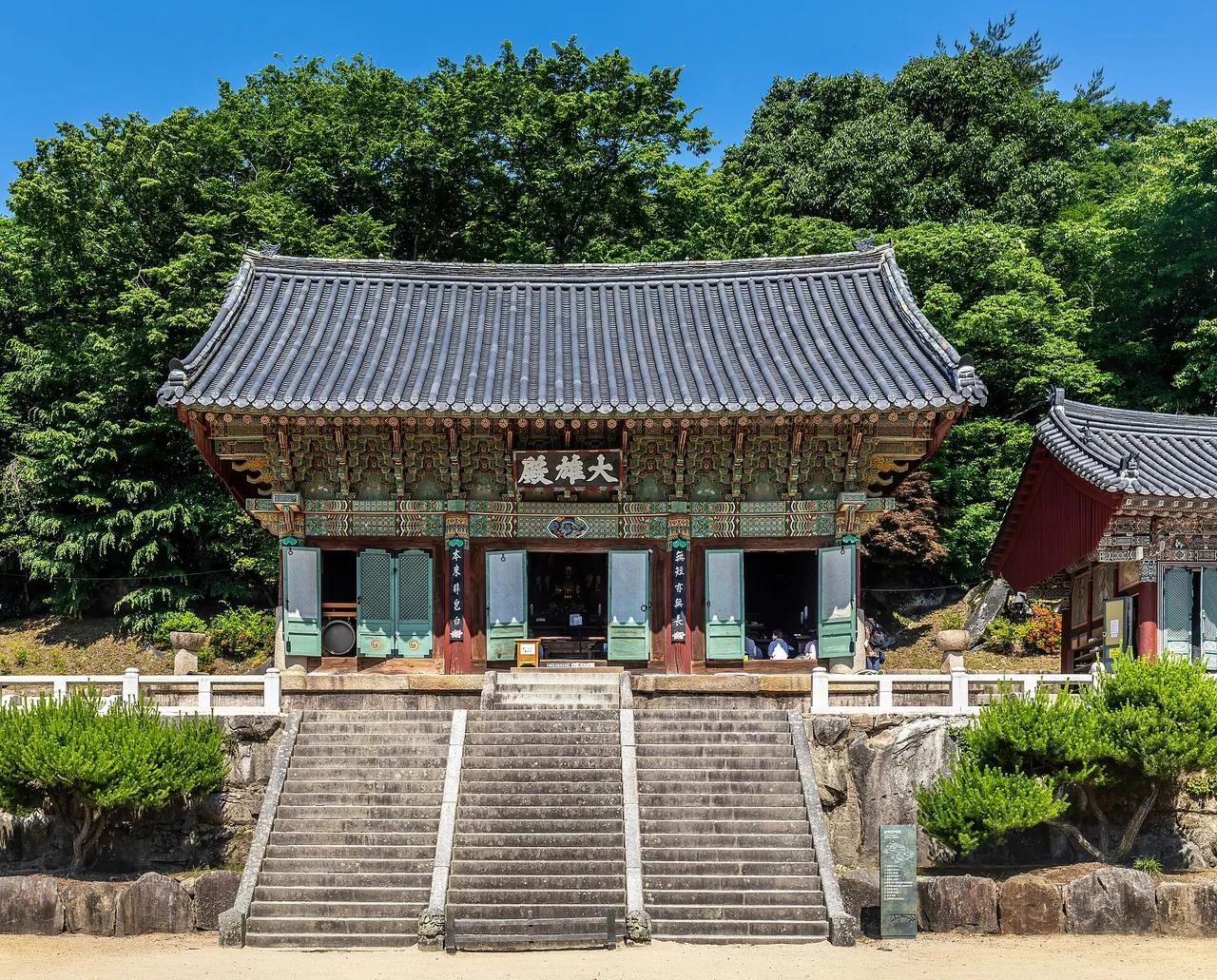
Japanese invasions between 1592 and 1597 nearly destroyed the complex. The main hall, Daeungjeon, was rebuilt in 1614.
Visit Busan and the temple site call several buildings National Treasures, but Wikipedia lists them as Treasures. We use Treasure here, and the wording is worth knowing if you compare sources.
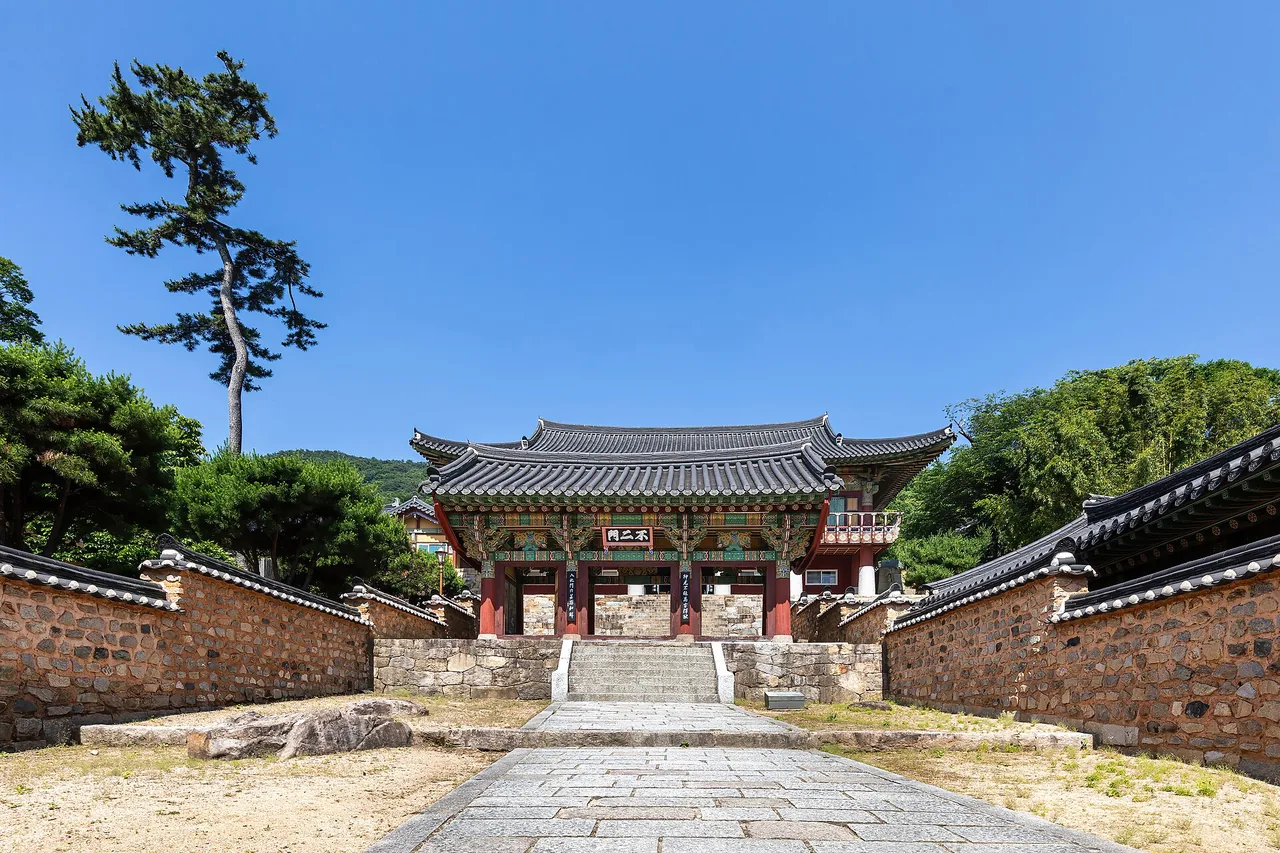
- Jogyemun One-Pillar Gate
- This entrance gate is a designated Treasure and the one-pillar gate at the entrance.
- Daeungjeon Main Hall
- Rebuilt in 1614, the hall is a Treasure, and in June 2026 the Korea Heritage Service also designated its four murals.
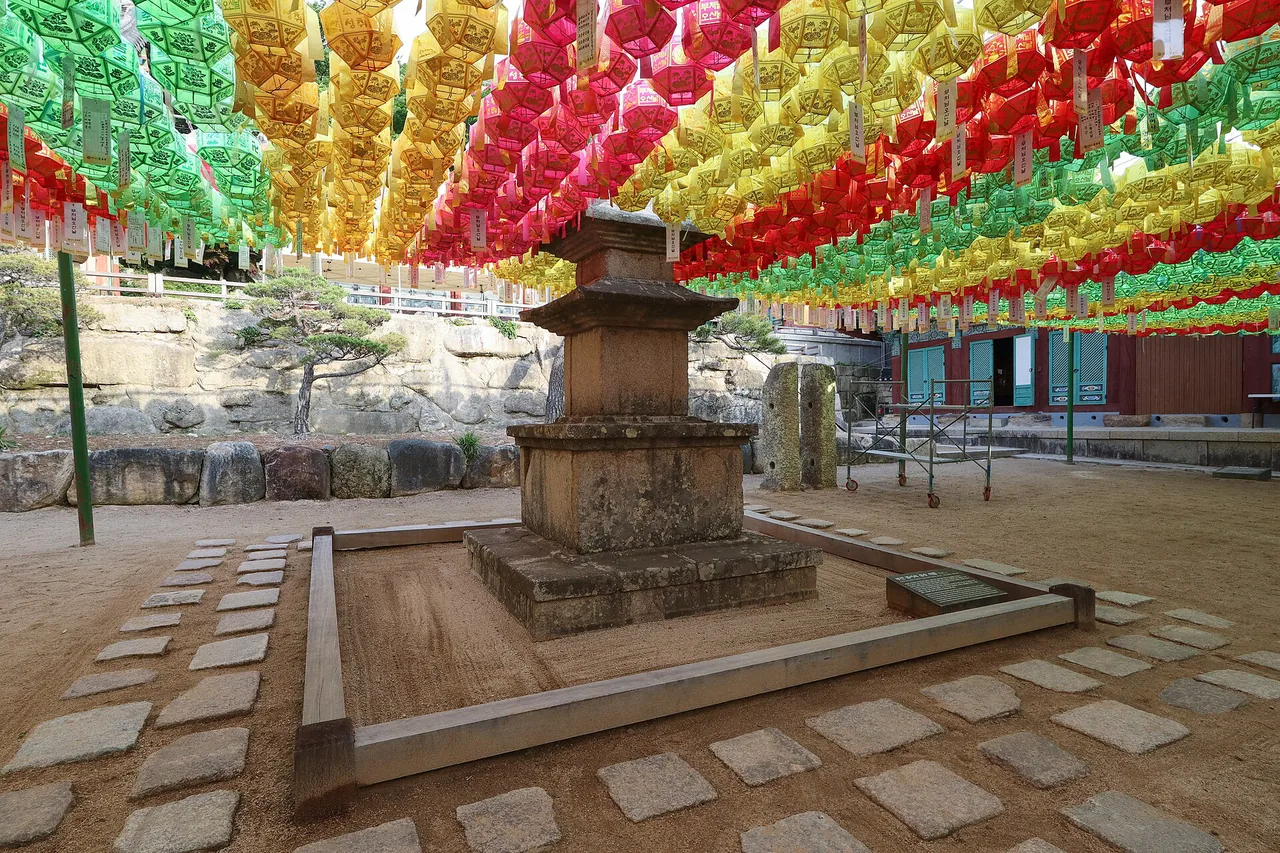
- Three-Story Stone Pagoda
- Dating from the Unified Silla era, this designated Treasure stands in the courtyard.
- Wild Wisteria Groves
- More than 6,500 wild wisteria plants are a Natural Monument and bloom in late spring.
Templestay, Etiquette, and What to Wear
Beomeosa takes part in the Templestay program, where guests sleep at the temple, eat temple food, and follow the monks' routine. Visit Busan says applications go through the temple's website, and the temple lists a Templestay phone line at 051-508-5726.
We could not confirm a current Templestay price or schedule, so we do not quote one here. Contact the temple directly for dates and fees, and ignore any figure that cannot be traced to the temple.
Visit Busan asks visitors to observe silence, and that fits an active training monastery. Keep your voice low, switch your phone to silent, and ask before photographing monks or worshippers.
Our sources give no formal dress code, so we suggest covered shoulders and knees as a respectful default.

Beomeosa vs. Haedong Yonggungsa Temple
Beomeosa is a mountain monastery in the north, while Haedong Yonggungsa Temple is a seaside temple in Gijang-gun. Travelers who want quiet courtyards and forest air should pick Beomeosa.
According to Visit Busan, Haedong Yonggungsa is free and open daily from 04:30 to 19:20, with last entry by 18:50. Beomeosa closes much earlier at 17:00, so the two temples cannot share one late-afternoon plan.
Reaching Haedong Yonggungsa means Exit 7 of Haeundae Station on Line 2 and then bus 181, 100, or Haeundae 9.
Best Timing and Where to Stay Nearby
Arrive in the morning so you still have daylight and open gates for the upper halls. Late spring brings the wisteria bloom, though we found no official peak dates, so ask the temple before planning around it.
The temple's official site lists seasonal services this year. A 21-day Shinjung prayer runs until Wednesday, Nov 18, and a winter solstice prayer runs Dec 20 to Dec 22 at Bojeru.
Its November 10 notice says the short-term ordination school is postponed until 2027. Anyone planning that program should contact the temple before booking travel.
For lodging, Seomyeon is one base option, with Exit 2 serving Busan Metro Lines 1 and 2. We have no verified room rates, so compare prices on a booking site for your dates.
After the temple, head back toward the center for Gamcheon Culture Village or the Busan Museum on another day.
Frequently Asked Questions
Is there an entrance fee for Beomeosa Temple?
No. Visit Busan and VisitKorea list admission as free.
What are Beomeosa Temple's opening hours?
Visit Busan and VisitKorea list 08:00-17:00 every day, open all year.
How do I get to Beomeosa Temple by subway?
Take Busan Metro Line 1 to Beomeosa Station, use Exit 5 or 7, and take bus 90 to the Beomeosa Parking Lot stop.
How old is Beomeosa Temple?
It was founded in 678 by the monk Uisang during the reign of Silla's King Munmu. Most of the temple burned during the 1592 Japanese invasion, and the main hall, Daeungjeon, dates from 1614.
What heritage treasures are at Beomeosa?
Daeungjeon (the main hall), the three-story stone pagoda and the Jogyemun one-pillar gate are designated Treasures, and in June 2026 the Korea Heritage Service designated the murals inside Daeungjeon as a Treasure too.
Can you do a Templestay at Beomeosa?
Yes. Beomeosa takes part in the Templestay program, where visitors stay at the temple, eat temple food and follow the monks' routine; Visit Busan says applications are made through the temple's website.
What does the name Beomeosa mean?
It refers to a legend of a golden fish from heaven living in Geumsaem, a rock pool near the top of Geumjeongsan; the name is usually translated as 'Temple of the Nirvana Fish'.
Is there parking at Beomeosa?
Yes, Visit Busan lists the paid Beomeosa Temple parking lot, with accessible parking and an accessible bathroom.
Beomeosa rewards visitors who arrive early, move quietly, and respect its role as a working monastery. With free entry and a simple Line 1 and bus 90 route, it is straightforward to reach from central Busan.
For ideas on what to pair with it, browse our Busan attractions guide and pick one more stop for another day.
For more Busan planning, read our 30 Best Things to Do in Busan: Beaches, Temples, Markets & Day Plans, Best Time to Visit Busan: Month-by-Month Guide and Busan City Tour Bus: Lines, Timetable & Which to Ride guides.