
Gamcheon Culture Village: Free Entry, Hours and How to Get There

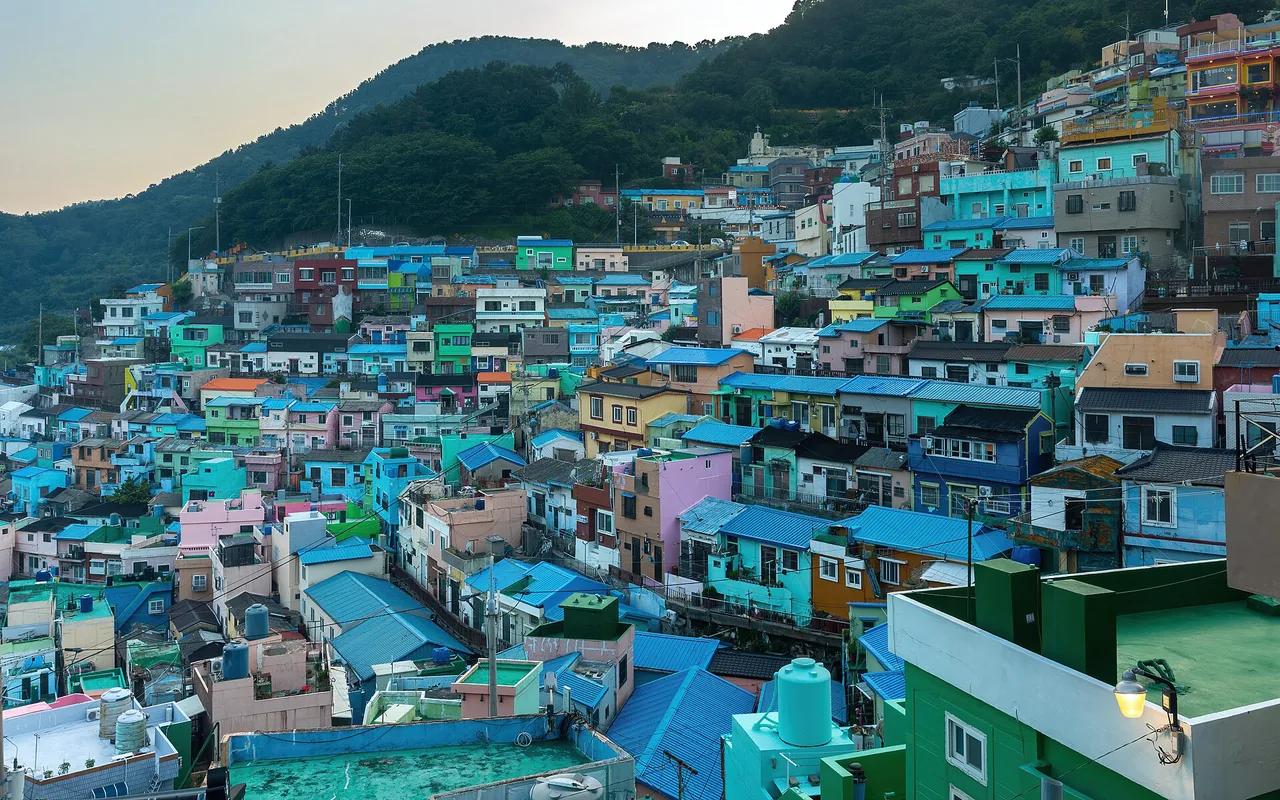
Gamcheon Culture Village is a terraced hillside neighborhood in Saha-gu, on the western side of Busan. Brightly painted houses climb the slopes of Cheonmasan Mountain, and narrow alleys link murals, small museums and workshops. This guide covers entry, opening hours, how to get there and what to see. Last updated November 2026.
According to Visit Busan, the steep terraces earned the village the nickname Machu Picchu of Korea. Real residents still live here, so the visit works best when you walk quietly.
Tickets and Opening Hours
According to Visit Busan, the village is open every day of the year. Hours run 09:00-18:00 from March to October and 09:00-17:00 from November to February. Visit Busan shows no update date for these hours. The village is a residential neighborhood with public lanes, so the hours most likely apply to the information center and village facilities.
Entry is free at ₩0, and only parking carries a charge, according to Visit Busan. The listing gives no parking rate.
- Opening hours from March to October
- The village is open every day from 09:00 to 18:00 during these months, according to Visit Busan.
- Opening hours from November to February
- Winter hours are shorter, running every day from 09:00 to 17:00, according to Visit Busan.
- Adult entry price
- Entry costs ₩0 because the village is free to visit, with only parking charged.
- Address and neighborhood
- The village sits at 203 Gamnae 2-ro in Saha-gu, on the western side of Busan.
Getting There
The nearest metro route starts at Busan Metro Line 1 Toseong Station, exit 6. From there, board village bus Saha 1-1, Seo-gu 2 or Seo-gu 2-2 and get off at Gamjeong Elementary School. A walk of about 5 minutes then brings you into the village.
Goejeong Station on Line 1 also works, using exit 6 and village bus Saha 1 or Saha 1-1 to the same stop. A third option starts at Jagalchi Station exit 1, where you catch a bus from the Chungmu Market stop. Those buses are Seo-gu 2, Seo-gu 2-2 or Saha-gu 1-1, according to the village's listed routes.
Driving is possible but not encouraged, and the village asks visitors to use public transport. It lists two public lots: 78 spaces in the basement of the Busan Education History Center at 130 Okcheon-ro, and 40 spaces at the Gamcheon 2-dong public lot. Large buses must reserve in advance.

History of the Village
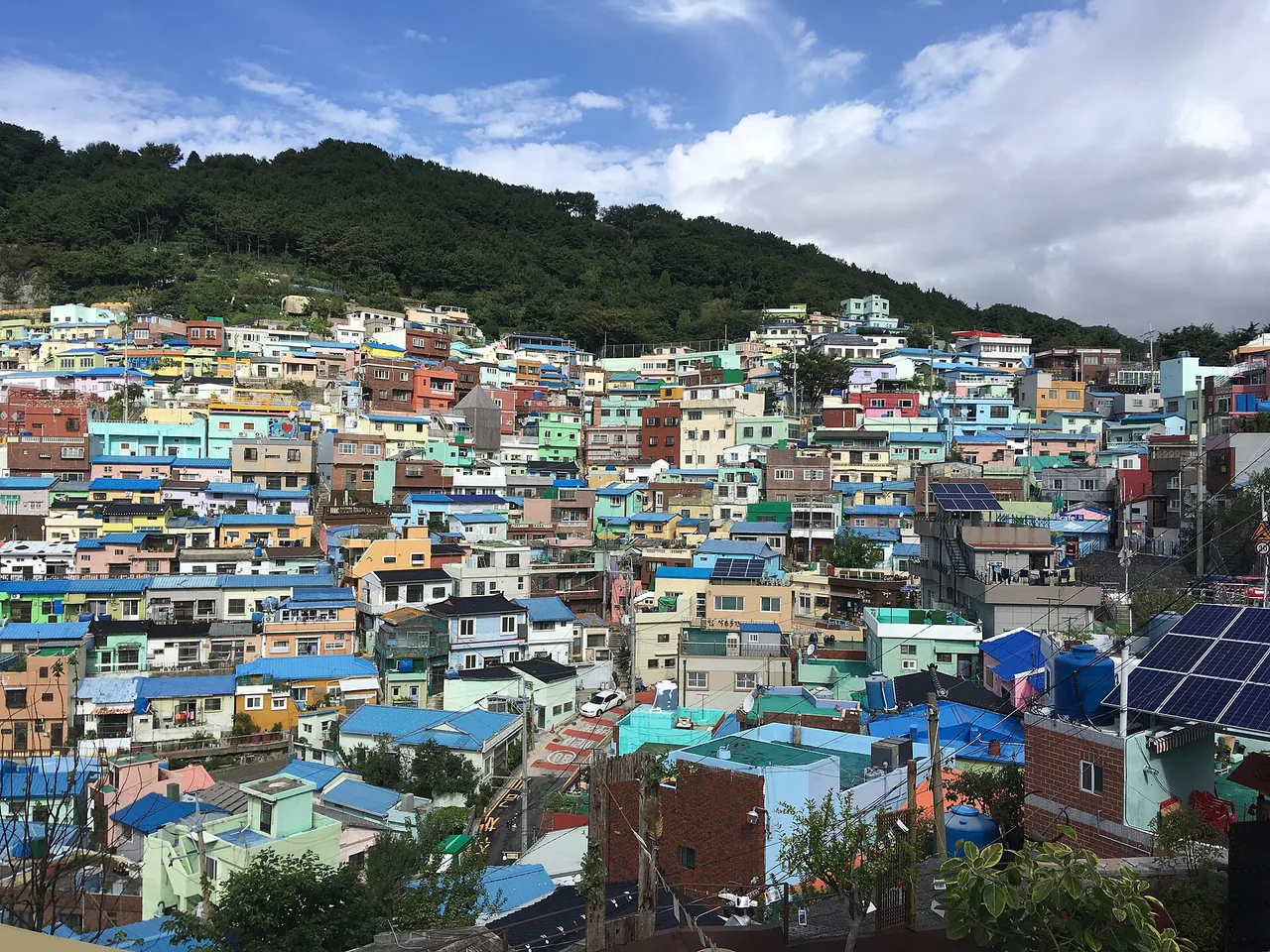
Gamcheon grew on the slopes of Cheonmasan Mountain, and the old name of the area was Gamnae. Sources differ on the early years. The village's own site says it formed when refugees settled there during the Korean War and took its present shape with a Taegeukdo religious community in the 1950s. English Wikipedia instead traces the first settlement to the 1920s and 1930s and records around 800 families, described as Taegeukdo followers, moving in in 1955.
The terraced houses were built so as not to block the sunlight and views of the homes behind them, which is why the village reads as a staircase of rooftops from across the valley.
The colorful look is more recent. In 2009 artists, students and residents began decorating the village under the Ministry of Culture, Sports and Tourism's Village Art Project, and in 2010 it was designated a culture village. It won the Presidential Award at the 2016 Korea Space Culture Awards.
Walking the Alleys
A stamp map sold at the village information center guides a self-led tour of the alleys. Our sources do not list its price, so ask at the center. Collecting stamps gives the walk a clear route through a maze of lanes.
The village is open until 18:00 from March to October but only until 17:00 from November to February, so in winter the afternoon is shorter.
Terrain and Accessibility on the Hillside
Gamcheon sits on a steep mountainside, and its houses rise in terraces. Expect constant slopes and steps rather than a flat stroll. Comfortable shoes with good grip make the walk easier.
Our sources list no accessibility details, so we cannot promise step-free routes. Visitors with wheelchairs or strollers may want to contact the village through its official site before going.
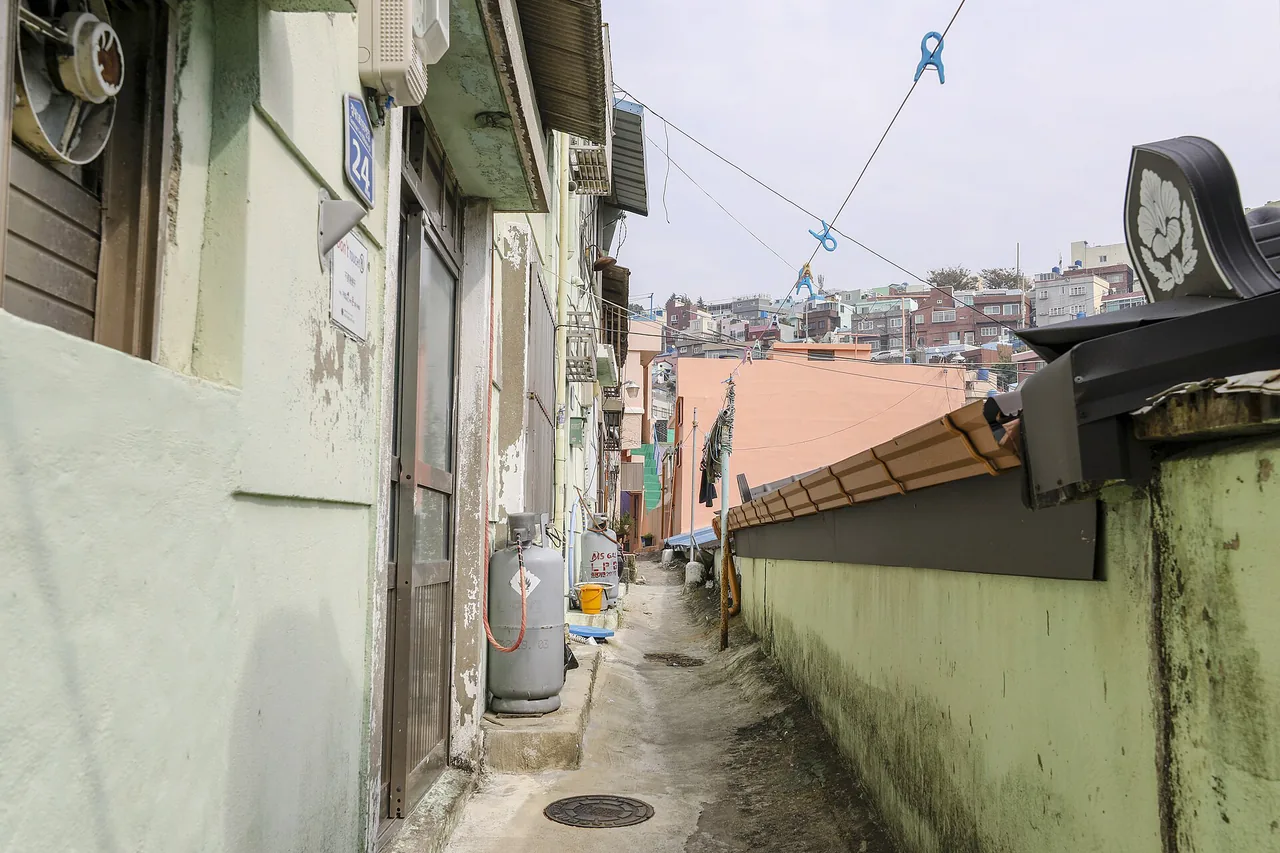
People live here, so Visit Busan and the village ask visitors to keep quiet and keep the lanes clean. Avoid blocking doorways while you pose for photos.

Little Prince Stops and Village Experiences
The Little Prince and desert fox sculpture overlooks the village and is a popular photo stop. Near the entrance, the Small Museum shows old photos and household items from the neighborhood's earlier decades. The Korea Tourism Organization also profiles the village for first-time visitors.
In 2015, about 300 houses stood empty, and many have since become galleries, workshops and shops. Nine resident-artist workshops now fill the lanes, and the resident-run Gamnae Cafe offers a place to rest. The village drew about 1.4 million visitors that same year. Under the Little Prince sculpture, a B612 souvenir shop opened in 2018.
Visit Busan says most visitors try the hanbok program. It rents traditional hanbok, modified hanbok and enlightenment-era outfits. Prices and booking rules are not listed in our sources.
Combining Gamcheon With Other Busan Sights
Gamcheon can be combined with other Busan stops, but each needs its own trip. Haedong Yonggungsa Temple is in Gijang-gun, in a different part of Busan, so treat it as a separate outing. According to Visit Busan, the temple is open daily from 04:30 to 19:20, with last entry by 18:50, and admission is free.
The temple opens at 04:30 and its hours run later than the village, so the two can share a day only if you plan the transfer. Visit Busan lists Haeundae Station exit 7 on Line 2, then Bus 181, 100 or Haeundae 9, for the temple.
Another culture village is covered in our guide to Huinnyeoul Culture Village.
Frequently Asked Questions
Is Gamcheon Culture Village free to visit?
Yes. Visit Busan lists the service fee as free, except for parking fees.
What are Gamcheon Culture Village's opening hours?
Visit Busan lists it as open every day: 09:00-18:00 from March to October and 09:00-17:00 from November to February. It is open throughout the year.
How do I get to Gamcheon Culture Village by subway?
Take Busan Metro Line 1 to Toseong Station, exit 6, and transfer to village bus Saha 1-1, Seo-gu 2 or Seo-gu 2-2; get off at Gamjeong Elementary School and walk about 5 minutes. From Goejeong Station (Line 1, exit 6) take village bus Saha 1 or Saha 1-1 to the same stop.
Is there parking at Gamcheon Culture Village?
Yes, but it is limited. The village lists the Gamcheon Culture Village public parking lot (basement of the Busan Education History Center, 130 Okcheon-ro, 78 spaces) and the Gamcheon 2-dong public parking lot (40 spaces), and asks visitors to use public transport. Large buses must reserve in advance.
Why is Gamcheon called the Machu Picchu of Korea?
Its houses are stacked in terraces up a steep mountainside; Visit Busan says this landscape earned it the nickname Machu Picchu of Korea, and Wikipedia also records the nickname Korea's Santorini.
What is there to see in Gamcheon Culture Village?
Murals and art installations along the alleys, the Small Museum near the entrance with old photos and household items, the Little Prince and desert fox sculpture, resident-artist workshops, souvenir shops and the resident-run Gamnae Cafe. A stamp map sold at the village information center guides an alley tour.
Can you rent hanbok at Gamcheon Culture Village?
Visit Busan says most visitors try the hanbok program, where traditional hanbok, modified hanbok and enlightenment-era outfits can be rented.
Do people live in Gamcheon Culture Village?
Yes. It is a residential area, and Visit Busan and the village ask visitors to keep quiet, keep it clean and respect residents' daily lives.
Gamcheon rewards visitors who respect its hours, its slopes and its residents. Free entry and Line 1 plus village bus access make it easy to fit in. For more places to pair with it, browse our Busan attractions guide.
For more Busan planning, read our 30 Best Things to Do in Busan: Beaches, Temples, Markets & Day Plans, Best Time to Visit Busan: Month-by-Month Guide and Busan City Tour Bus: Lines, Timetable & Which to Ride guides.