
Bulguksa Temple in Gyeongju: Hours, Access and Visitor Tips

Last updated November 2026. This Bulguksa Temple Gyeongju visitor guide covers hours, access, and what to look at once you pass through the gate. Admission has been free since May 4, 2023, which makes the temple an easy UNESCO stop to add to a Korea trip.
Bulguksa sits on the slopes of Tohamsan and joined the UNESCO World Heritage List in December 1995, together with Seokguram Grotto. The present temple was begun in 751 and completed by the state in 774, but most of its wooden buildings burned in 1593. Excavation and restoration from 1969 to 1973 gave the compound the form you see today.
Tickets, Opening Hours and Parking
According to the temple's official site, Bulguksa opens at 9:00 AM every day. Hours are the same on weekdays, weekends and public holidays, and the temple has no regular closing day.
Closing time depends on the season, and the official page marks it as the time admission ends. The list below shows the three seasonal cutoffs.
Some third-party guides list a 7:00 AM opening or weekend hours starting at 8:30 AM. Those figures conflict with the official page, so we follow the temple's own 9:00 AM opening. Plan around the seasonal cutoffs rather than a blog's single closing time.
The official site states that admission has been free since May 4, 2023, under the revised Cultural Heritage Protection Act. Older guides still quote a ₩6,000 adult fee, and Gyeongju City's fee page keeps that old figure hidden in its code. Treat the ₩6,000 number as outdated.
Parking is the one cost, listed by the temple at ₩2,000 for cars and ₩4,000 for large vehicles such as buses. Pets are not allowed inside the grounds. The temple's address is 385 Bulguk-ro, Gyeongju-si, Gyeongsangbuk-do (Jinhyeon-dong 15-1).
- November to January closing time
- Admission opens at 9:00 AM and closes at 5:00 PM, the earliest cutoff of the year.
- February and October closing time
- Admission opens at 9:00 AM and closes at 5:30 PM in these two shoulder months.
- March to September closing time
- Admission opens at 9:00 AM and closes at 6:00 PM, giving the longest visiting window.
Getting There From Gyeongju
According to the temple's directions, city buses 10 and 11 run frequently from central Gyeongju to Bulguksa. Both are easy to catch at Gyeongju Station and the bus terminal.
Gyeongju City's tourism site says bus 10 takes about 35 to 45 minutes from the bus terminal to Bulguksa. It runs every 20 minutes, with the first bus at 6:00 AM and the last at 9:40 PM. Bus 11 runs the same loop in the opposite direction, and Bulguksa is the turnaround stop.
Arriving by KTX at Singyeongju Station, you can take bus 700, which also stops at Bulguksa, according to Seokguram's official directions. It makes only four runs a day, so build your arrival around that timetable.
Drivers from central Gyeongju take National Route 7 toward Ulsan to the Gujeong-dong junction in front of Bulguksa Station. From there, turn left onto Local Road 902 and drive 2.5 km to the tourist complex parking lot in front of the temple. Coming by National Route 4 past the Bomun complex toward Gampo, turn right at the junction before Deokdong Lake, pass the Folk Craft Village, and about 5 minutes later you reach the same parking lot. For more stops around town, see our Gyeongju attractions guide.

What to See Inside the Temple Grounds
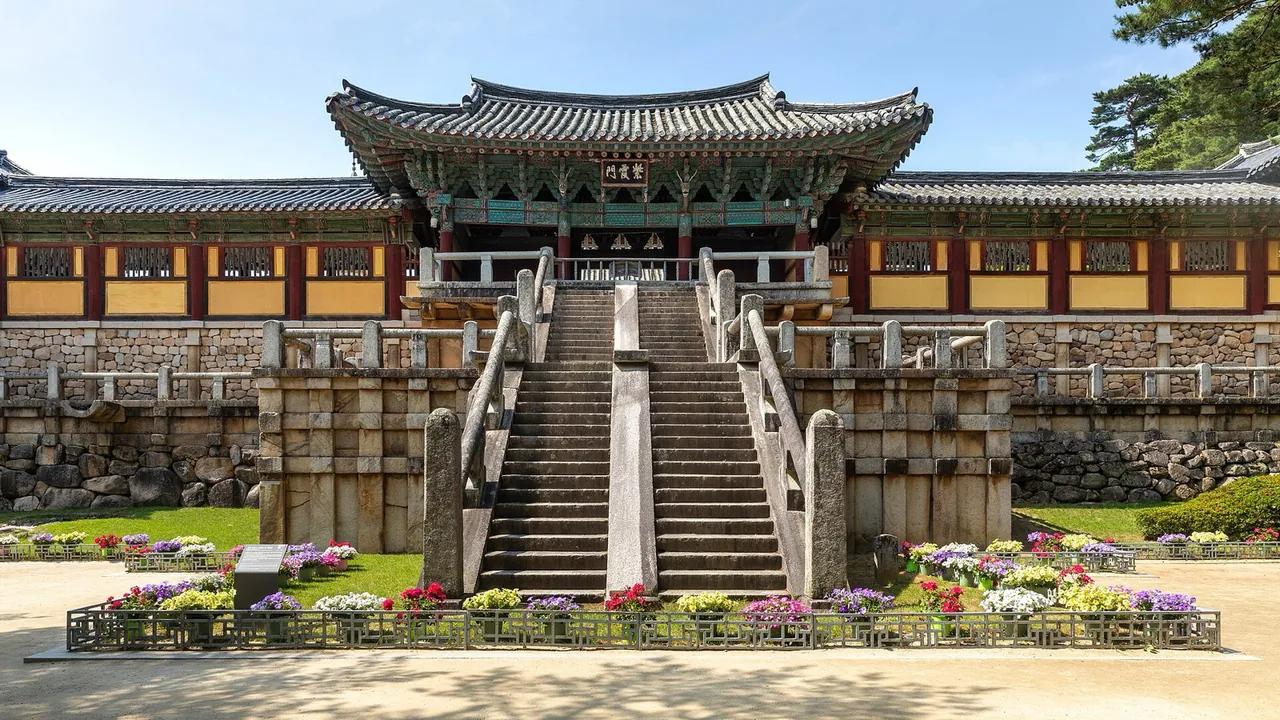
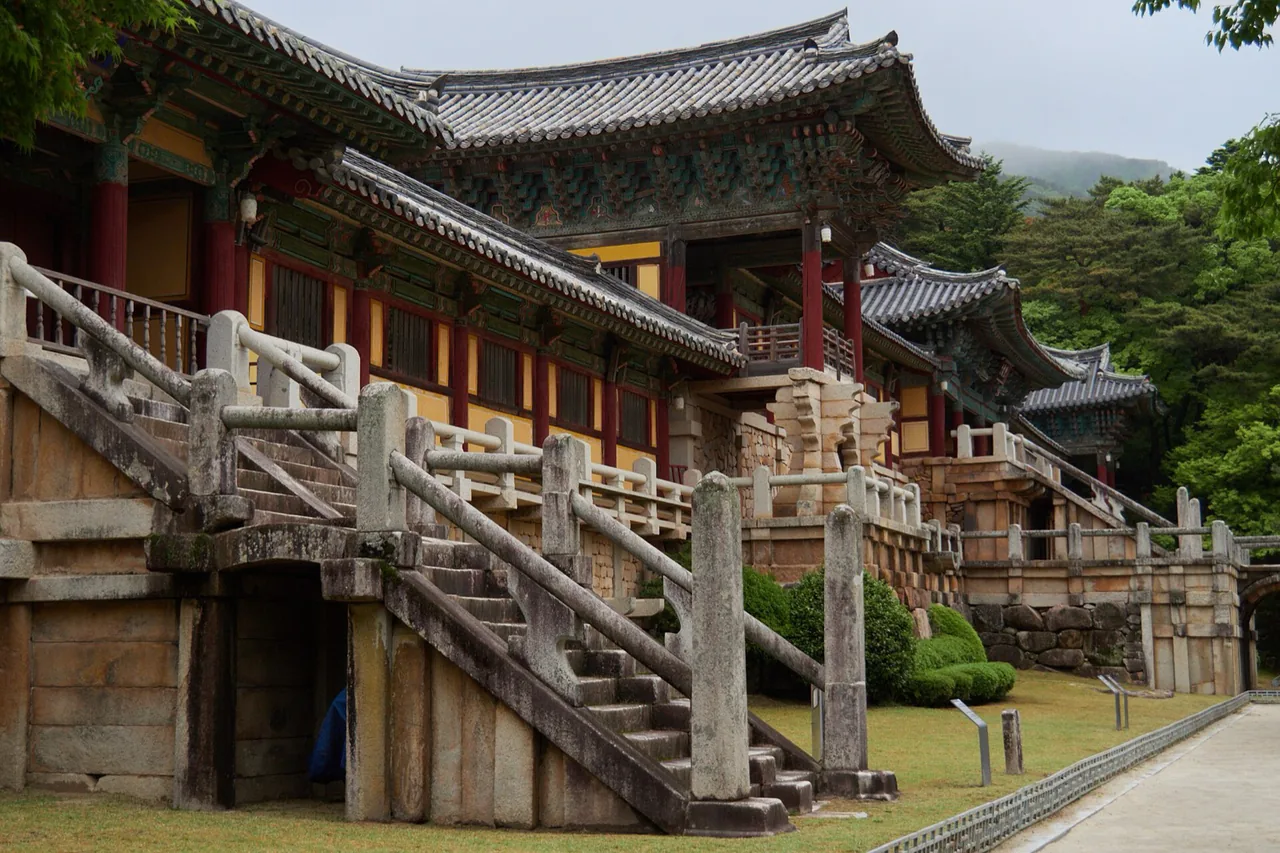
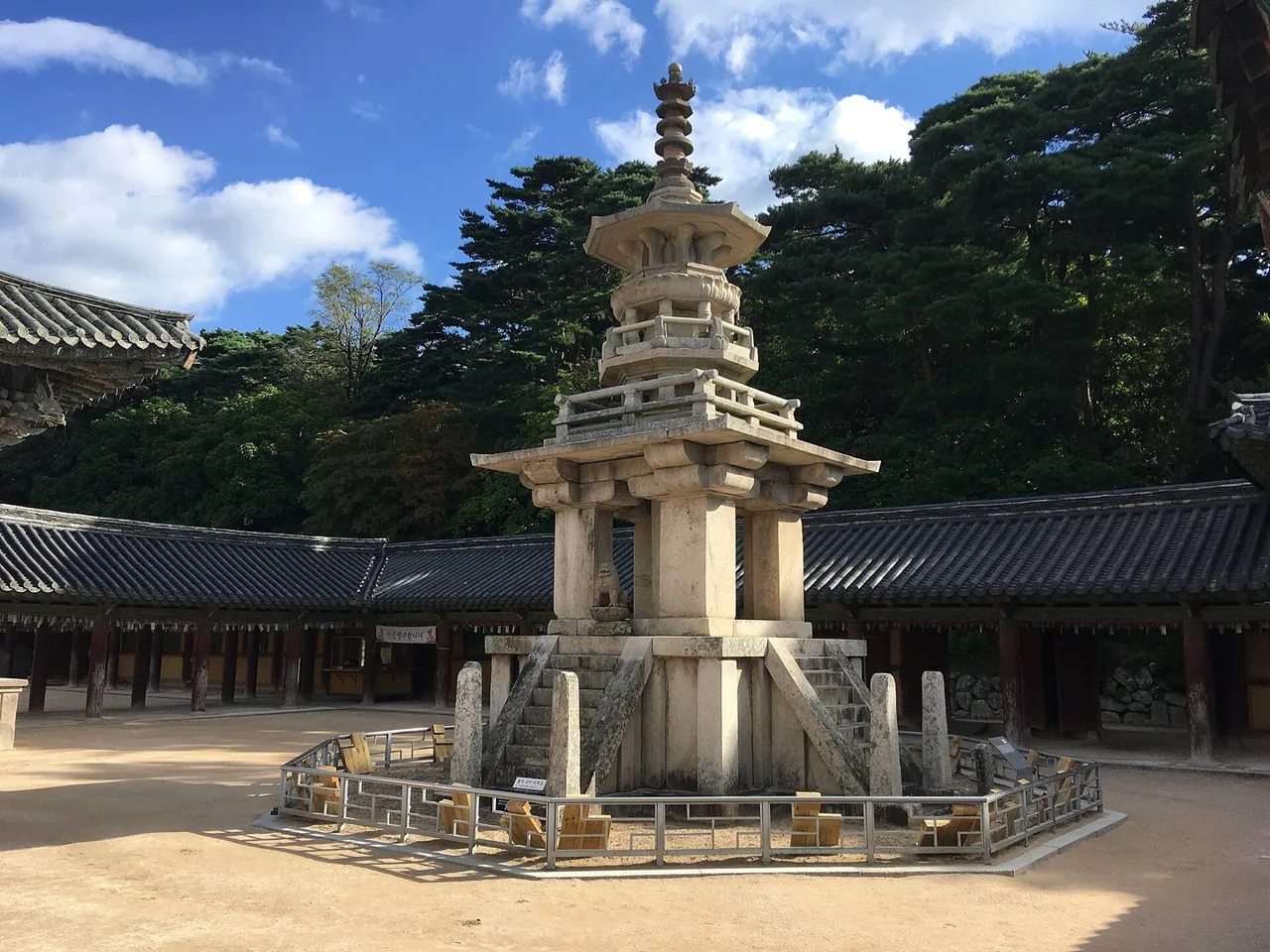
Start at the stone stairway-bridges Cheongungyo and Baegungyo, which climb to Jahamun Gate and are National Treasures. Beyond the gate, the main courtyard holds two more National Treasures, the Dabotap and Seokgatap pagodas.
Dabotap is 10.4 meters tall, while the three-story Seokgatap rises 8.2 meters. Both stand in front of Daeungjeon Hall.
Higher up, the Yeonhwagyo and Chilbogyo bridges lead to Geungnakjeon Hall, which holds a gilt-bronze seated Amitabha Buddha. Nearby Birojeon houses a gilt-bronze seated Vairocana Buddha. The Vairocana statue is 1.77 meters tall and the Amitabha statue 1.66 meters.
Records say a small temple stood on the site under King Beopheung in 528. The present temple was begun in 751 by chief minister Kim Dae-seong under King Gyeongdeok and completed by the state in 774. Most of its wooden buildings burned during the Japanese invasion of 1593, and the temple took its current form after excavation and restoration from 1969 to 1973. The designated historic site covers 409,315 square meters, and Bulguksa is a head temple of the Jogye Order. For another Gyeongju sight, see Cheomseongdae Observatory.
Pairing Bulguksa With Seokguram
Seokguram Grotto lies about 3 km from Bulguksa on Tohamsan, and bus 12 connects the two, according to Seokguram's official site. The shared December 1995 UNESCO listing is why many visitors pair them in one outing.
As our own suggestion, visit Bulguksa first in winter, because its admission closes at 5:00 PM from November to January. This guide does not list Seokguram's closing times, so confirm them on its own page before you lock in the order.
Other sights in town, including the Gyeongju National Museum, Donggung Palace and Wolji Pond and the Daereungwon Tomb Complex, have their own guides.

Planning Notes: Renovation, Museum and Timing
Some news-style blogs say renovation of the main hall, Daeungjeon, starts in 2026. In a notice dated March 8, 2026, the temple said no repair schedule has been set and that the work does not affect entry.
Several guides also mention a Bulguksa Museum with its own fee. We could not confirm that fee on an official page, so ask at the temple instead of trusting a blog figure.
From November to January, admission closes at 5:00 PM, so plan to be inside well before then. The grounds are an active Buddhist temple, so keep your voice low near the halls.
Frequently Asked Questions
Is Bulguksa Temple free to enter?
Yes. The temple's official site says admission has been free since May 4, 2023, under the revised Cultural Heritage Protection Act.
What are Bulguksa Temple's opening hours?
Admission runs from 09:00 every day. Entry closes at 17:00 from November to January, 17:30 in February and October, and 18:00 from March to September. Hours are the same on weekdays, weekends and holidays.
Is Bulguksa closed on any day?
No. The official site says the temple is open all year with no closing day.
How do I get to Bulguksa from downtown Gyeongju?
Take city bus 10 or 11. Bus 10 takes about 35-45 minutes from the bus terminal to Bulguksa and runs every 20 minutes from 06:00 to 21:40.
Is the main hall (Daeungjeon) closed for renovation?
In a notice dated March 8, 2026, the temple said no schedule for repairs to Daeungjeon has been set and that the work does not affect entry.
Can I bring my dog to Bulguksa?
No. Pets are not allowed inside the temple grounds.
How much is parking at Bulguksa?
The temple lists parking at 2,000 won for cars and 4,000 won for large vehicles such as buses.
How far is Bulguksa from Seokguram Grotto?
The two sites are about 3 km apart on Tohamsan. Bus 12 connects Bulguksa with Seokguram.
Bulguksa rewards a short, well-timed visit: free entry, a 9:00 AM opening, and a seasonal cutoff between 5:00 PM and 6:00 PM. Take bus 10 or 11, walk the bridges and courtyards, and then decide whether Seokguram fits your day. For more ideas, browse our Gyeongju travel guide before you finalize the route.
For more Gyeongju planning, read our 20 Things to Do in Gyeongju: Silla Sights by Area, Best Time to Visit Gyeongju: Month-by-Month Guide and Gyeongju in Autumn: Foliage, Temples and Trip Planning guides.