
Gyeongpo Lake in Gangneung: Hours, Access and Loop Tips

Last updated November 2026. Gyeongpo Lake sits about 6 km north of downtown Gangneung, where a sandbar separates a calm lagoon from the East Sea. This Gyeongpo Lake Gangneung visitor guide covers hours, cost, access, the loop path, and the stops worth pairing with it.
Entry is free, and according to Gangneung city tourism the lake is open year-round with no regular closing day. We also flag where official sources stay silent, such as bike rental prices, so you never plan around a number we cannot confirm.
Tickets and Opening Hours
According to Gangneung city tourism, Gyeongpo Lake is open year-round and has no regular closing day. Its listing also calls the lake available at any time, so a sunrise walk and an after-dinner stroll both work. The listing gives no opening or closing time for the shoreline.
Admission costs ₩0, because Gangneung city tourism lists entry as free. Free parking is listed too, and the lot sits about 10 m from the main entrance. Keep in mind that the lot is unpaved open ground rather than a paved car park.
Getting There
Gangneung city tourism places the lake about 6 km north of downtown Gangneung, between the city and Gyeongpo Beach. The official address is 365 Gyeongpo-ro in Jeo-dong, Gangneung, postal code 25461. The city tourism listing gives the distance but no bus number, so we will not guess a route. Check a Korean map app for current buses or taxis from Gangneung Station or the city center. Drivers can head for the free lot beside the entrance.
- Step-Free Entrance and Toilets
- The main entrance has no step, and the door clear width is 90 cm or more.
- An accessible toilet in the park has a stall for disabled users, Braille signage and tactile guide blocks.
- Parking Caveat for Wheelchair Users
- The unpaved lot has no designated disabled parking spaces, so a drop-off near the entrance may be easier.
What to See Around Gyeongpo Lake
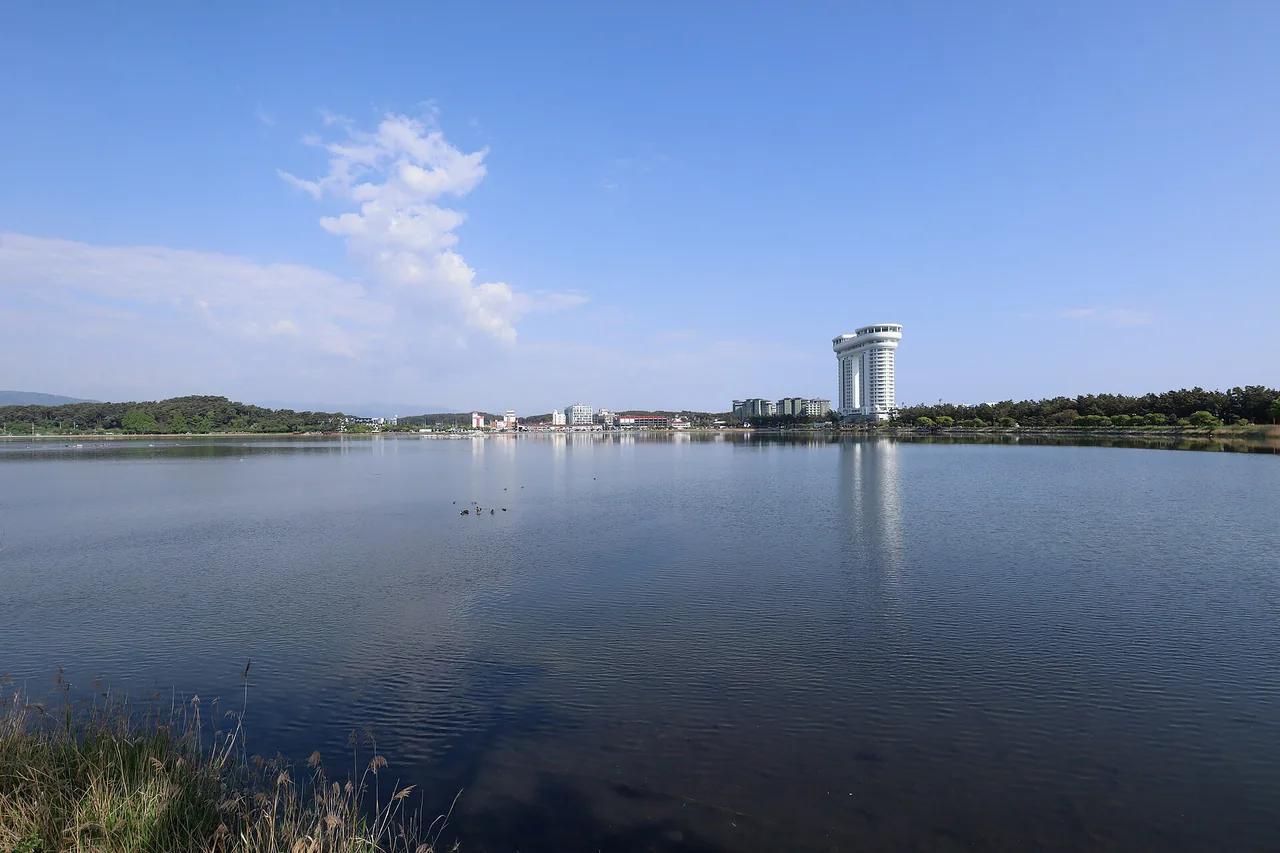
Gyeongpo is a lagoon formed when sand cut a bay off from the open sea. English Wikipedia dates this to about 6,000 years ago and calls it the second-biggest lagoon on Korea's east coast. The water is shallow, only 1-2 m deep according to Gangneung city tourism.
Thirteen pavilions stand around the shore, and the key stop is Gyeongpodae Pavilion on the west side. It was first built in 1326 and moved to its present hill in 1508. The Joseon poet Jeong Cheol ranked it first of the Eight Views of Gwandong.
The lake and pavilion together became Scenic Site number 108 on December 30, 2013. Ducks, cormorants and egrets live on the water, and swans and white-naped cranes have been recorded as migratory visitors. The Gyeongpo Gasiyeon Wetland lies alongside, so birdwatchers may want binoculars.
- Gyeongpodae Pavilion
- This hilltop pavilion on the lake's west side is the historic centerpiece, first built in 1326.
- Gangneung's tourism map puts it roughly 0.5 to 0.6 km from the lake.
- Pine Groves and Cherry Trees
- Old pines and cherry trees ring the shoreline, and the cherry trees drive the spring festival.
- Gyeongpo Gasiyeon Wetland
- This wetland runs beside the lake and is a natural spot to look for resident and migratory birds.
- Gyeongpo Beach
- The beach sits on the sandbar between lake and sea, about 1 km from Gyeongpodae.

Walking or Cycling the Lake Loop
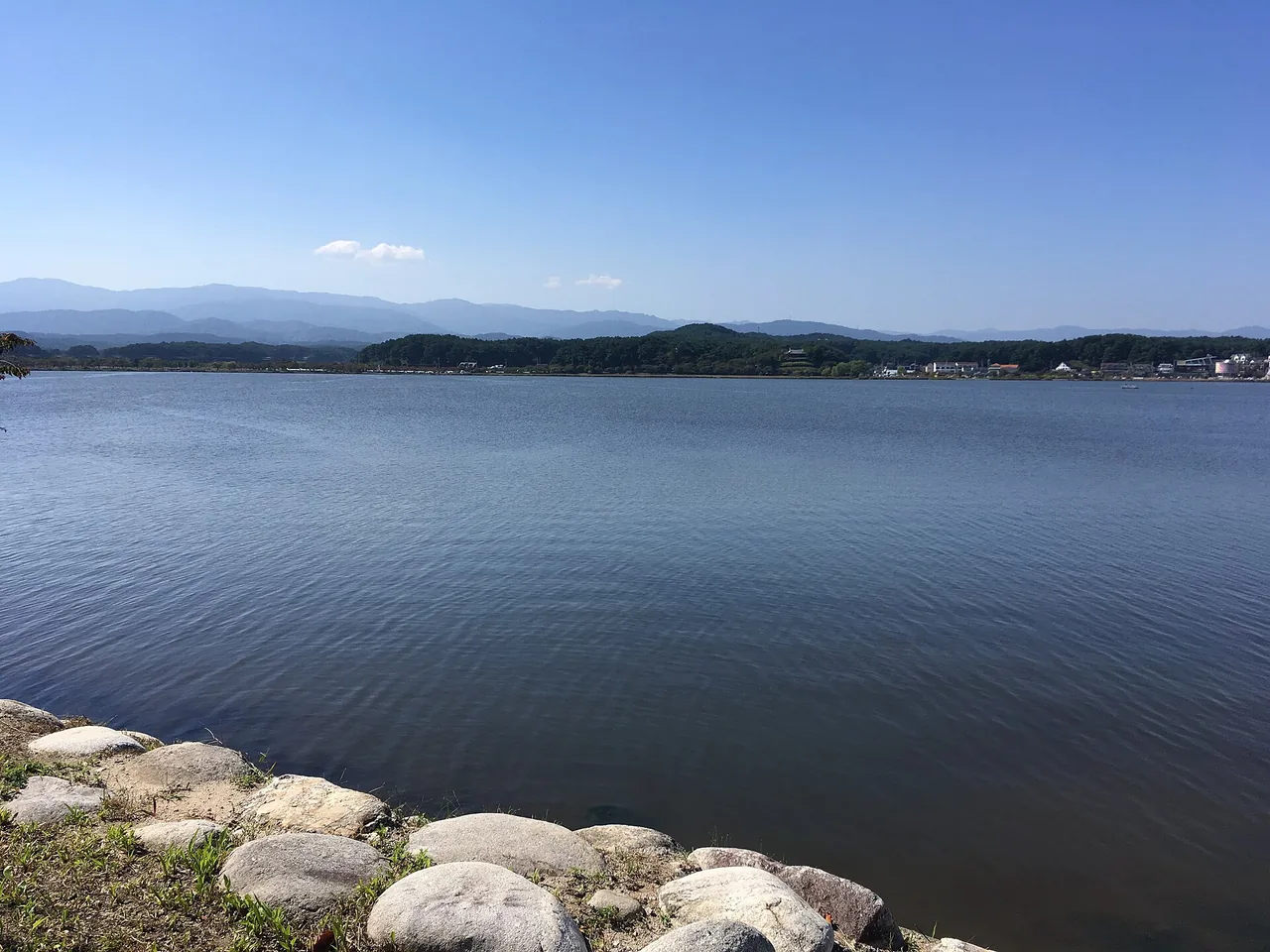
Silt and landfill have shrunk the lake, and Gangneung city tourism says its shoreline fell from about 12 km to about 4 km. The 2013 heritage designation gives a slightly longer circumference of about 4,300 m. Area figures differ as well, with Wikipedia citing about 900,000 square meters and the 2013 announcement about 998,000.
Because sources disagree, treat the loop as roughly 4 km rather than a measured route.
Gangneung city tourism suggests cycling the lake, with bicycle paths all around the shore. Bikes and four-wheel cycles can be rented there. The listing names no rental operators, prices or hours, so confirm the rate with the renter before you ride.
- Walk the Loop
- Choose walking if you want to stop at pavilions and look for birds along the way.
- Cycle the Loop
- Choose a bike if time is short, since the path circles the whole lake and rentals are available.
- Rent a Four-Wheel Cycle
- These pedal vehicles are listed alongside bikes and suit groups who want to ride together.
Best Season and Time of Day to Visit
Gangneung city tourism calls the lake beautiful in every season, so no month is a wasted trip. Spring brings the annual cherry blossom festival around the lake. Blossom timing shifts from year to year, so check festival dates close to your trip.
Early summer is when the lotus rise, and the official listing singles this period out as especially beautiful.
Evening is another good window, because the lake stays accessible at any time and Gangneung city tourism mentions evening walks after sunset. Local lore says Gyeongpo has five moons, in the sky, on the lake, on the sea, in your wine cup and in a companion's eyes. Carry that idea into a night stroll and the lake feels like more than a daytime stop.

Pairing the Lake With Other Gangneung Sights
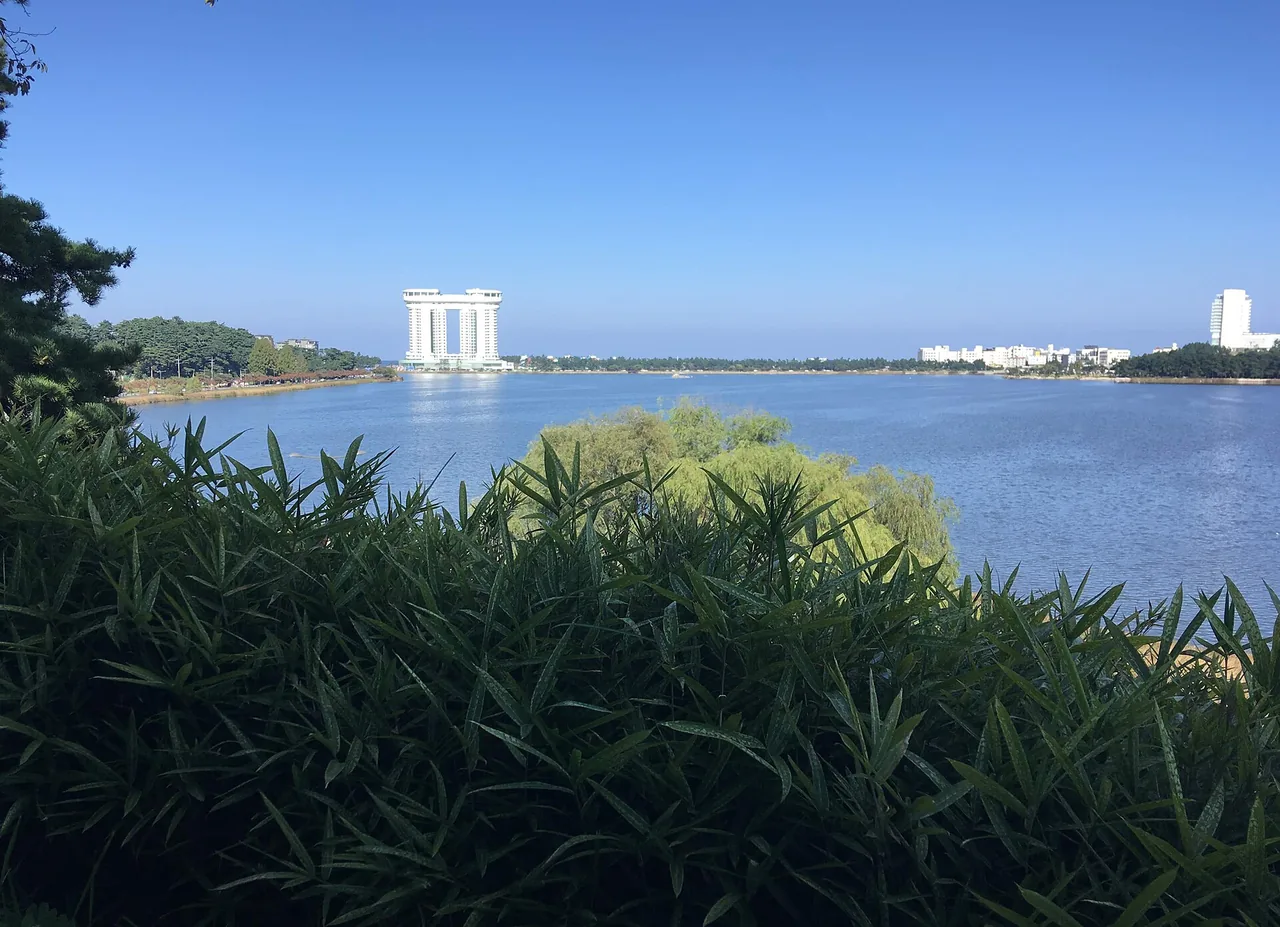
Gyeongpodae, the Chamsori Gramophone and Edison Museum, Arte Museum Gangneung and Gyeongpo Aquarium all lie within about 0.6 km of the lake. Arte Museum itself says the lake is under a five-minute walk away. That makes these sights easy to combine with a lake visit.
For older Gangneung history, add Ojukheon House or Seongyojang House on a separate leg. Check each sight's own page for hours and fees before you go.
Browse our Gangneung attractions guide to compare more stops. Our Gangneung city guide adds wider planning context for the trip.
Frequently Asked Questions
Is there an entrance fee for Gyeongpo Lake?
No. Gangneung city tourism lists the lake as free, open year-round and accessible at any time, with free parking.
How big is Gyeongpo Lake and how long is the walk around it?
The shoreline is about 4 km around (4.3 km in the 2013 heritage designation), and the water is only 1-2 m deep. A cycle path circles the lake, and bikes and four-wheel pedal cars can be rented to ride the loop.
When is the best time to visit?
Gangneung city tourism calls the lake beautiful in every season, singling out early summer when the lotus comes up, the spring cherry blossom festival, and evening walks after sunset.
Why is it called the lake of five moons?
Local lore says five moons can be seen at Gyeongpo: the moon in the sky, on the lake, on the sea, in your wine cup and in your companion's eyes.
What is Gyeongpodae?
Gyeongpodae is a pavilion on a small hill on the lake's west side, first built in 1326 and moved to its present site in 1508. It is one of the Eight Views of Gwandong and, with the lake, forms Scenic Site No. 108.
How far is Gyeongpo Lake from downtown Gangneung and the beach?
It is about 6 km north of the city center. Gyeongpo Beach lies on the sandbar between the lake and the sea, about 1 km from Gyeongpodae.
What else is near the lake?
Gyeongpodae, the Chamsori Gramophone & Edison Museum, Arte Museum Gangneung and Gyeongpo Aquarium are all within about 0.6 km, and the Gyeongpo Gasiyeon Wetland sits beside the lake.
Can you see birds at Gyeongpo Lake?
Yes. Ducks, cormorants and egrets live on the lake, and migratory birds such as swans, mallards and white-naped cranes have been recorded there.
Gyeongpo Lake rewards a simple plan, because entry is free and the shoreline stays open all year. Pick walking or cycling the roughly 4 km loop, then add Gyeongpodae and a nearby museum.
Time your visit for cherry blossoms in spring, lotus in early summer, or a quiet walk after sunset. Confirm bike rental prices on the spot, since no official source lists them.
For more Gangneung planning, read our 20 Best Things to Do in Gangneung: Sights, Food & Day-Trip Plans, Best Time to Visit Gangneung: Season-by-Season Guide and Gyeongpo Lake Cherry Blossom: When & How to Visit guides.