
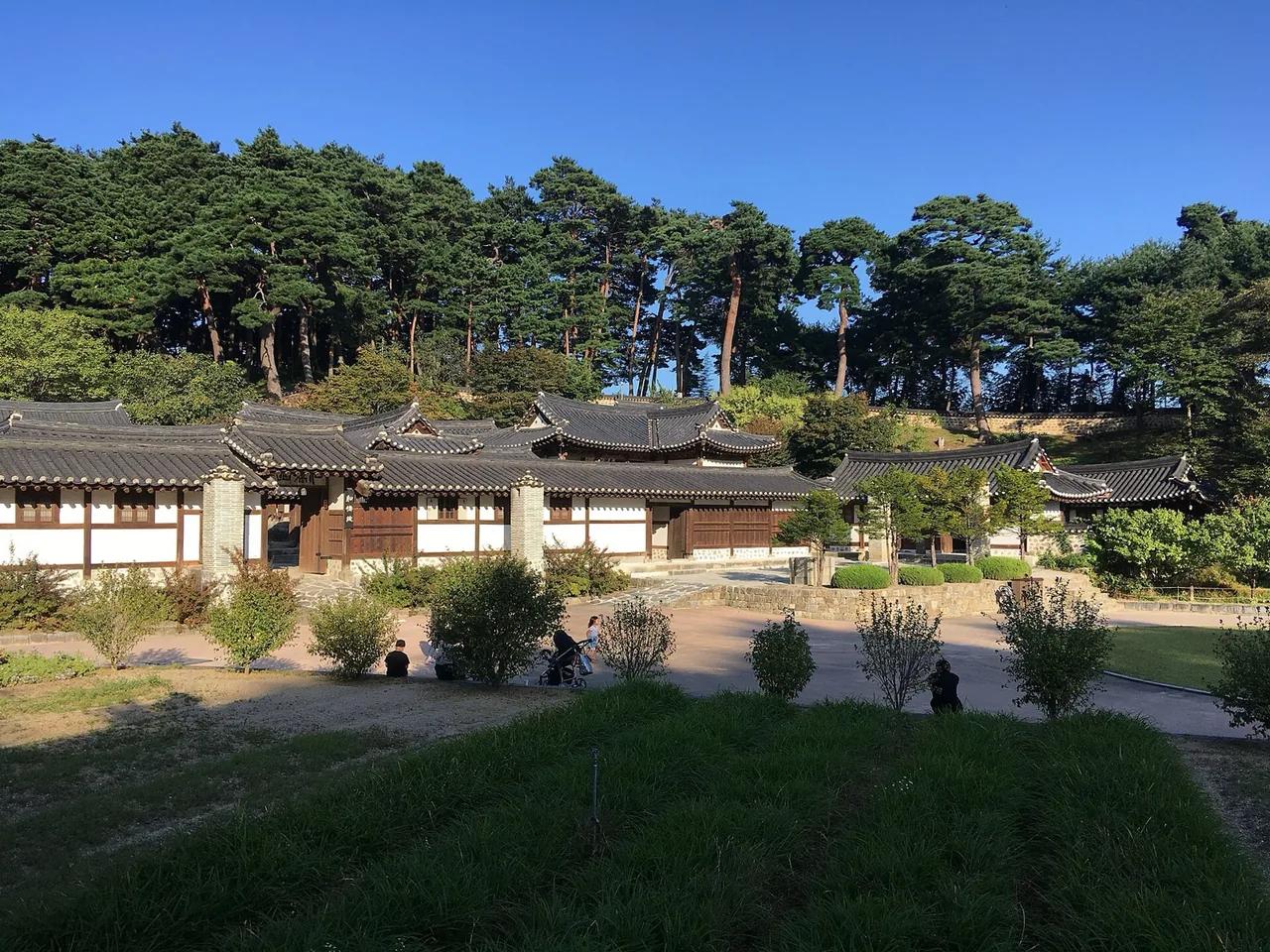
Seongyojang House in Gangneung: A Visitor Guide to the Hanok Estate

Last updated November 2026. Seongyojang House is a Joseon-era family estate in Gangneung, and this Seongyojang House Gangneung visitor guide covers what to know before you go. The compound is still home to descendants of the founding family, so it feels more lived-in than a typical museum.
Visitors walk through courtyards, a lotus-pond pavilion and a pine-covered hillside trail on the grounds. Hours change by season, two notices from autumn 2026 affect planning, and some buildings stay closed to the public.
Seongyojang House Hours, Tickets and Notices
According to the estate's official site, Seongyojang opens at 9:00 am and closes at 6:00 pm in the summer season. In the winter season the same site lists a 5:00 pm closing time. The official site does not say which months count as summer or winter.
Gangneung's city tourism page fills that gap with 9:00 am to 6:00 pm from March to October. It lists 9:00 am to 5:00 pm from November to February. By that schedule, a November visit falls in the winter window, so plan to finish before 5:00 pm. The official site also says ticket sales close at 5:30 pm, which conflicts with a 5:00 pm winter closing. Arriving by mid-afternoon avoids the mismatch.
According to the estate's official site, adult admission is ₩5,000. Discounted tickets cost ₩3,000 for youth, visitors age 65 and over, military, police, people with disabilities and national merit recipients. Children pay ₩2,000, and groups of 30 or more pay ₩4,000 for adults, ₩2,500 for discounted tickets and ₩1,500 for children. Hanok stay guests and Gangneung residents with ID enter free.
The official site posted two notices this autumn. One, dated October 19, 2026, concerns a temporary closure of Seongyojang, and one dated November 4, 2026, concerns restricted viewing in some areas. Neither notice gives details on the page we reviewed, so the closure dates and affected areas are not stated. The estate's enquiry number is 033-648-5303. The estate publishes no weekly closed day.
How to Get to Seongyojang House
The estate's official location page points visitors to Gangneung city bus 202. That bus runs a loop through Gyeongpo Beach, Gangmun Beach, Ojukheon House, Seongyojang, Haeunjeong and Gyeongpodae.
A second option is to get off at the Seongyojang Ipgu (entrance) stop. From there, walk 5 to 10 minutes toward the Gyeongpo-dong community center and the estate. Because the loop also stops at Gyeongpodae Pavilion, you can ride it between sights without changing buses.
The address is 63 Unjeong-gil, Gangneung-si, Gangwon-do, postal code 25464. A Korean map app will take you there if you arrive by taxi or on foot.

What to See Inside the Estate
Seongyojang is a 99-kan yangban (upper-class) house that grew over roughly 300 years rather than to a single plan. Visitors enter through one of about a dozen gates and move through a cluster of connected buildings set against a low, pine-covered hill. Gangneung's tourism page also lists a museum, a life-artifact hall, an education hall, a restaurant, a Hwallaejeong tea room, a workshop and a cafe.
Allow time for the pine-forest trail, which feels very different from the tiled courtyards. The notices described above matter here, because restricted viewing can affect parts of the grounds. Korean sources say the shrine, Oebyeoldang and Jamijae are closed to visitors, because descendants of the founding family still live on the grounds.
The Korea Heritage Service also notes that viewing can be restricted at the owner's discretion. That is why the autumn notices matter more here than at a typical museum.
- Anchae Main House
- The main house dates from the early 1700s.
- The compound grew around it as the family lived there, rather than to a single plan.
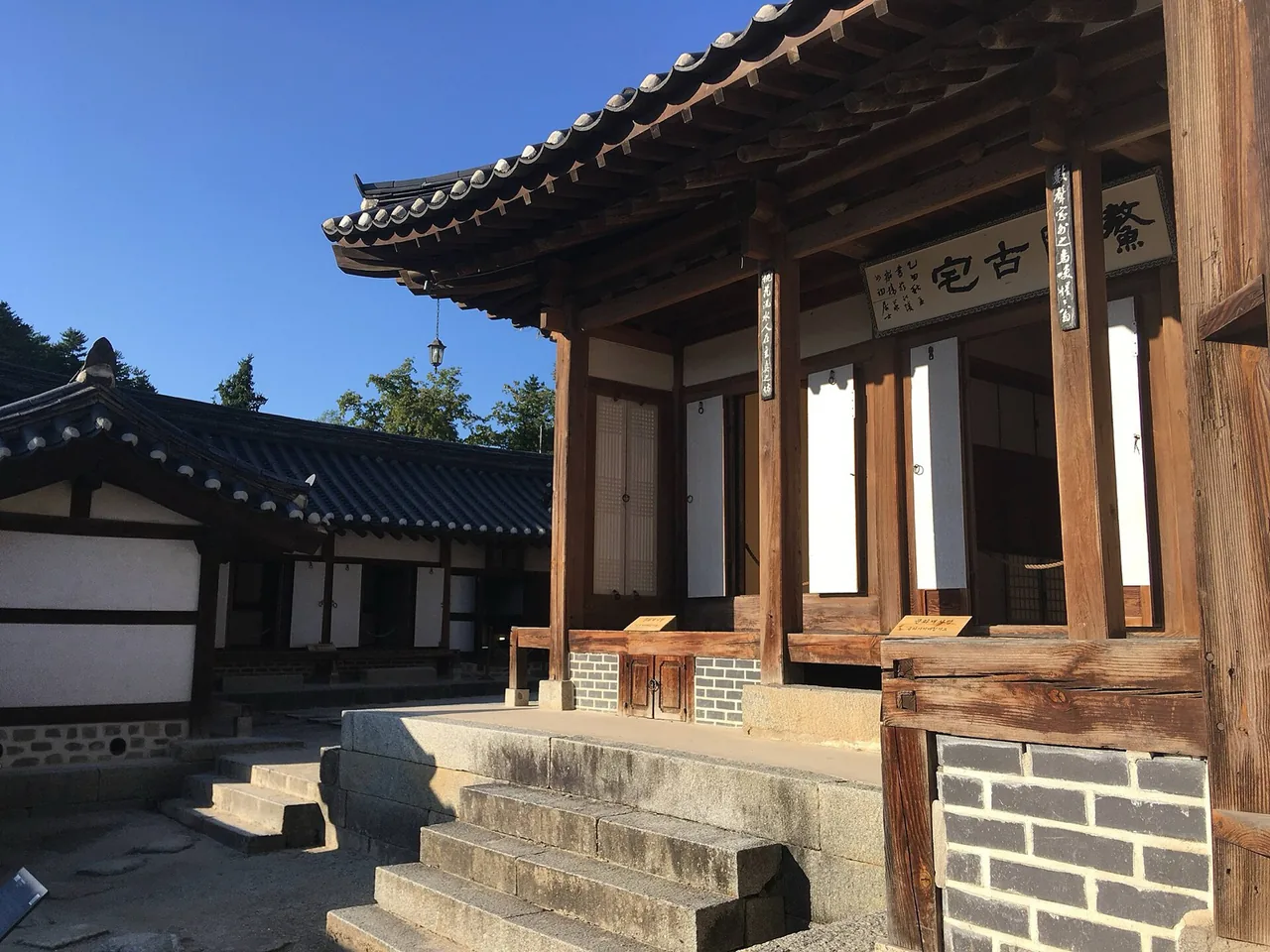
- Yeolhwadang Men's Quarters
- Yi Hu built this sarangchae in 1815, naming it after a line in Tao Yuanming's poem 'Returning Home'.
- It is also the setting for the Wednesday organ performance described later in this guide.
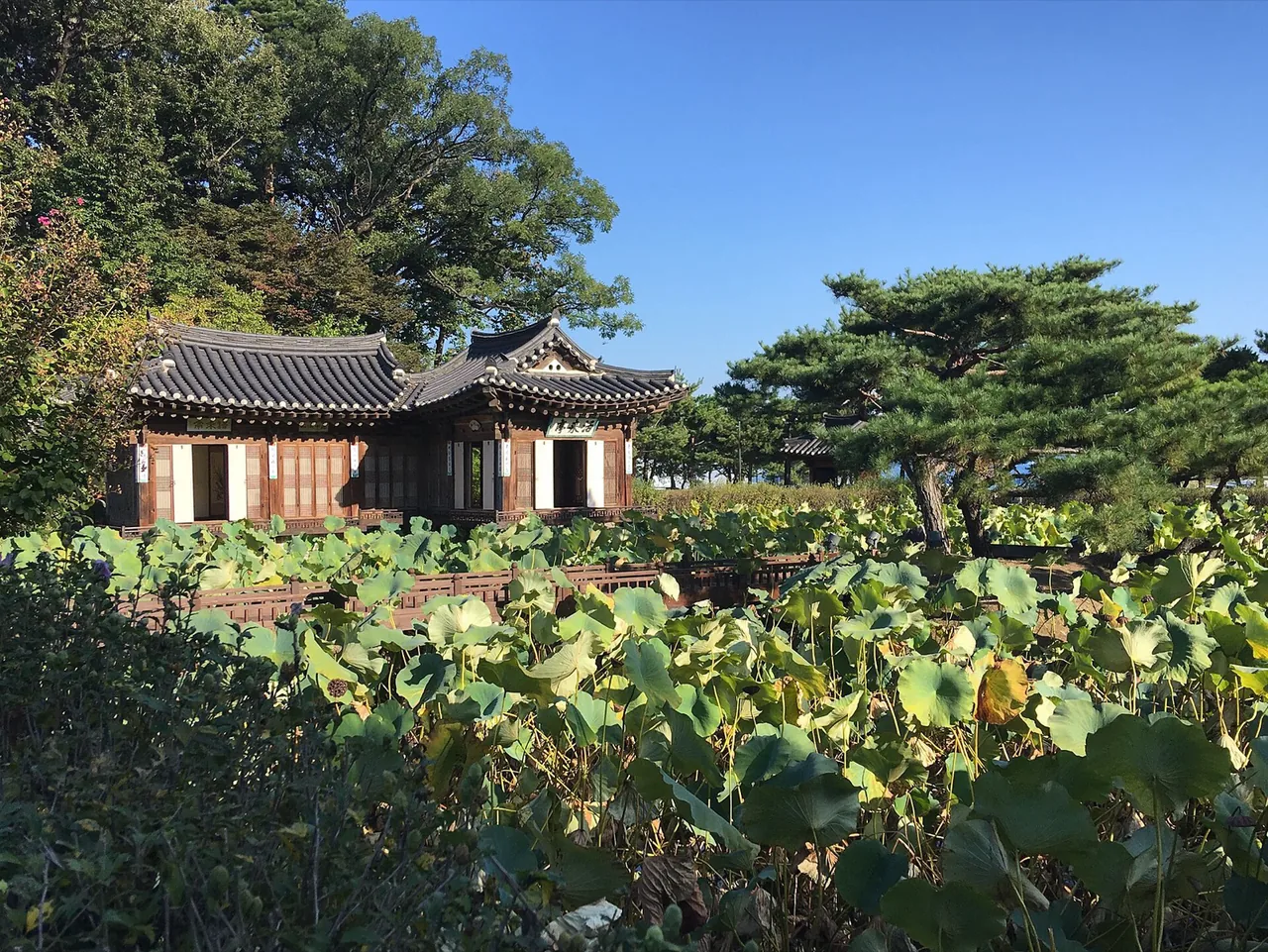
- Hwallaejeong Pavilion and Lotus Pond
- The pavilion followed in 1816 beside a square lotus pond.
- The tourism page lists a tea room here, which makes it a natural place to pause.
- Dongbyeoldang Annex
- Yi Geun-u added this L-shaped building in 1920.
- The date shows the estate kept changing well into the twentieth century.
The Story Behind the Boat-Bridge Manor
Yi Nae-beon (1692-1781), an 11th-generation descendant of Grand Prince Hyoryeong, moved the family from Chungju to Gangneung. Hyoryeong was King Sejong's elder brother, and family legend says a band of weasels led Yi Nae-beon to the site.
The name Seongyojang means 'boat-bridge manor'. In the past, Gyeongpo Lake reached the house, and people crossed it on boats tied together. The lake has since shrunk, and rice fields now cover that stretch of water.
The Korea Heritage Service designated the estate National Folklore Cultural Heritage Number 5 on April 20, 1967, covering 8,399 square meters. The estate's own history page gives 1965 for the designation, so you may see both years in print. We use the Korea Heritage Service date because it is the government record.
A former storehouse on the grounds housed the Dongjin School from 1908. In 2000, the broadcaster KBS named Seongyojang Korea's best traditional house of the 20th century.

Tours, Hanok Stays and Wednesday Music
Interpreters dispatched by Gangneung City lead tours of 30 to 40 minutes on the hour from 9:00 am to 4:00 pm. No tour runs from 12:00 to 1:30 pm. Reservations go through kctg.or.kr, according to the estate's official site.
The estate also runs hanok stays, and stay guests enter the grounds free. Listed buildings include Seobyeoldang and Yeonjidang, Hongyeheon, the thatched-roof Chojeong houses and Jungsarang with Haengrangchae. Call 033-646-3270 for reservation inquiries.
The Korea Heritage Service record says Seobyeoldang no longer exists, while the estate still offers a stay by that name. The records disagree, so confirm which building you are booking when you call.
Every Wednesday at 1:00 pm, the official site lists an organ performance called the Music Walk at Yeolhwadang. The program may change on Culture Day (문화가 있는 날), so confirm it if your visit falls on that date.
Pairing Seongyojang With Nearby Sights
Seongyojang works well as one stop on the bus 202 loop rather than a standalone trip. Ojukheon House and Gyeongpodae Pavilion are on the same route. Browse our Gangneung attractions guide to compare other options.
Starting at Seongyojang in the morning leaves room before the 5:00 pm winter closing.
Respect the rules posted on the official site: no pets except guide dogs, and no drones, outside food or smoking. Remember that people live here, so stay on visitor paths. Korean sources list the shrine, Oebyeoldang and Jamijae as closed to visitors.
Frequently Asked Questions
How much is admission to Seongyojang?
Adult ₩5,000, discounted visitors ₩3,000 and children ₩2,000; groups of 30 or more pay ₩4,000 / ₩2,500 / ₩1,500. Hanok stay guests and Gangneung residents with ID enter free.
What are Seongyojang's opening hours?
The estate's own site lists 09:00-18:00 in the summer season and 09:00-17:00 in the winter season, with ticket sales closing at 17:30. Gangneung's tourism page dates the winter season as November to February.
How do I get to Seongyojang by bus?
Take Gangneung city bus 202 to the Seongyojang stop, or get off at Seongyojang Ipgu and walk 5-10 minutes.
Can you stay overnight at Seongyojang?
Yes. The estate runs hanok stays in buildings including Seobyeoldang/Yeonjidang, Hongyeheon, the thatched-roof Chojeong houses and Jungsarang/Haengrangchae; stay guests get free admission.
Are guided tours available?
Culture and tourism interpreters dispatched by Gangneung City lead 30-40 minute tours on the hour from 09:00 to 16:00, except 12:00-13:30. Reservations are made through kctg.or.kr.
Why is it called Seongyojang?
When Gyeongpo Lake reached the house, people crossed it on a bridge of boats, so the estate was named 'boat-bridge manor' (船橋莊).
Can I bring my dog to Seongyojang?
No. Pets are not allowed except guide dogs, and drones, outside food and smoking on the grounds are also prohibited.
Do people still live at Seongyojang?
Yes. Descendants of the founding family still live there, so some buildings such as the shrine and Oebyeoldang are closed to visitors.
Seongyojang rewards visitors who respect its seasonal hours and its status as a family home. A temporary closure and restricted viewing were both posted on the official site this autumn. With a ₩5,000 adult ticket and an easy bus 202 ride, it fits neatly into a day along the Gyeongpo loop.
For more Gangneung planning, read our 20 Best Things to Do in Gangneung: Sights, Food & Day-Trip Plans, Best Time to Visit Gangneung: Season-by-Season Guide and Free Things to Do in Gangneung: Beaches, Lake & Heritage guides.