
Jeju Folk Village (Pyoseon) Visitor Guide: Hours and Tickets

Last updated November 2026. This Jeju Folk Village (Pyoseon) visitor guide covers hours, tickets, what to see, and nearby stops. The village is an open-air museum in Pyoseon-myeon, Seogwipo-si, built around island life in the 1890s.
Our hours come from Visit Jeju, the island's official tourism site, and we flag every place where sources disagree. Prices are the shakier part, because the operator's own website was suspended for a server upgrade when we checked on November 16, 2026. Read the ticket section before you set a budget.
Is Jeju Folk Village Worth Visiting?
Whether it is worth your time depends on what you expect from a folk village. According to Visit Jeju, experts reconstructed mountain, mid-mountain, and fishing villages, folk-religion sites, a government office, and a place of exile. The base period is the 1890s, near the end of the Joseon dynasty.
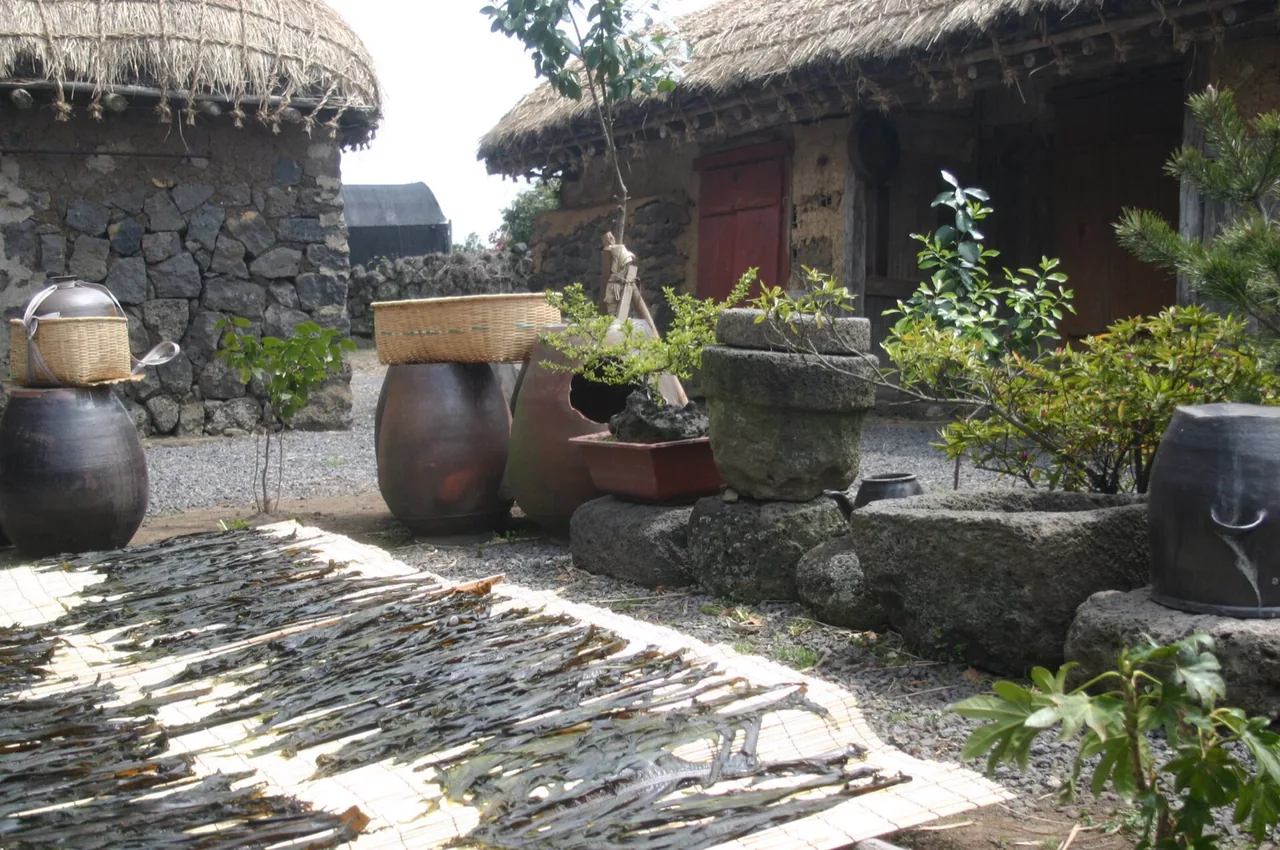
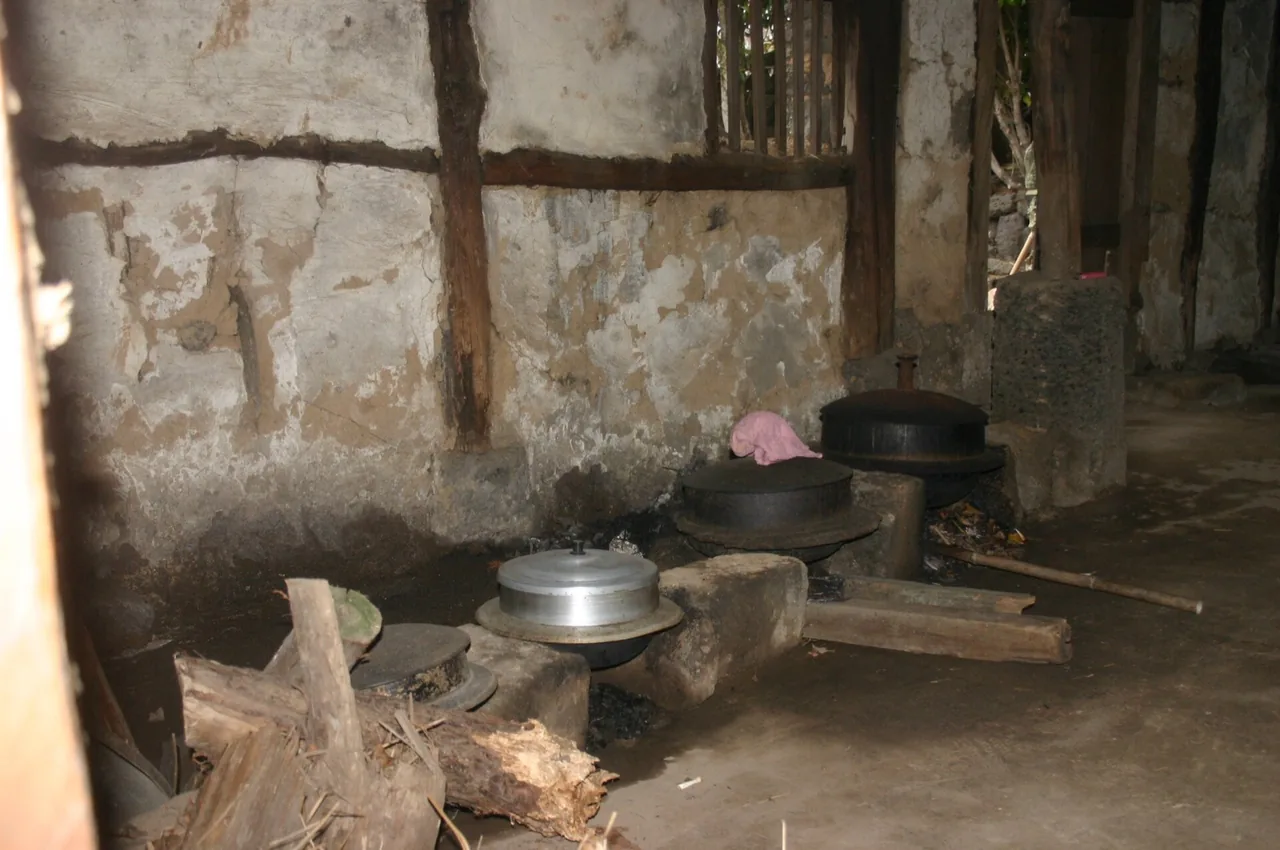
Here is an honest framing of reconstruction versus authenticity. The layout is a recreation, but Visit Jeju says roughly 100 of the traditional houses were once lived in by Jeju islanders. Folk craftspeople also work inside them, so the buildings are more than empty props.
What sets it apart from an ordinary open-air museum is the island-specific detail, from fishing-village life to shamanic shrines. The theme halls add variety, including a 150 m² viewing-stone hall with several hundred stones donated by a collector couple. An arcade, a comic-book room, and a folk-games zone are also on site, which helps if children tire of old houses.
The museum suits travelers who want Jeju's history, houses, and customs explained in one place. If you would rather see a village where people still live, Seongeup Folk Village is the better match, and we compare the two below. Travelers who only want sea views may find the museum a detour.
Tickets and Opening Hours
According to Visit Jeju, the village is open every day of the year. From March to October the hours are 09:00 to 19:00, and ticket sales close at 18:00. From November to February the hours are 09:00 to 18:00, and ticket sales close at 17:00.
Some third-party listings show earlier 08:30 openings and different winter closing times. Those listings disagree with the newer Visit Jeju record, so we follow Visit Jeju. Visit Jeju also tags the village for night opening, but we found no published night hours or prices.
For prices, a Korea Tourism Organization data listing on ktriptips shows adult admission at ₩15,000. A May 2025 Korea Tourism Organization festival notice lists senior ₩13,000, youth ₩12,000, and child ₩11,000. That notice also gives groups of 20 or more 20% off. Older blog posts quote a lower adult price of ₩12,000, which does not match these listings.
The operator's site, jejufolk.com, showed only a server-upgrade notice on November 16, 2026, so we could not confirm fares with the operator. Visit Jeju says booking through Naver Reservation gives a 10% ticket discount, and it also lists 20% off with the Nowda pass. Call 064-787-4501 before you go if the exact fare matters to your budget.
Getting There
The address is 631-34 Minsokhaean-ro, Pyoseon-myeon, Seogwipo-si, Jeju (postal code 63629), on the southeast coast of the island. Pyoseon Haevichi Beach is about 100 m away, according to Visit Jeju, so the two are easy to combine.
We could not confirm bus routes from an official source, so look up current lines in Naver Map or Kakao Map before you leave. One Korea Tourism Organization data listing mentions free parking, though we could not confirm it with the operator.

What to See at Jeju Folk Village Museum
Visit Jeju describes the village as a full display of the island's traditional folk material. The list below follows the sections it names, so you can tick them off as you walk.
- Mountain and Mid-Mountain Villages
- Visit Jeju lists both upland villages among the areas that experts reconstructed.
- Roughly 100 traditional houses in the village were once lived in by Jeju islanders.
- Folk craftspeople work inside them.
- Fishing Village
- This section shows island life by the sea in the 1890s.
- Pyoseon Haevichi Beach is about 100 m from the village, according to Visit Jeju.
- Folk-Religion Sites and Shaman Shrines
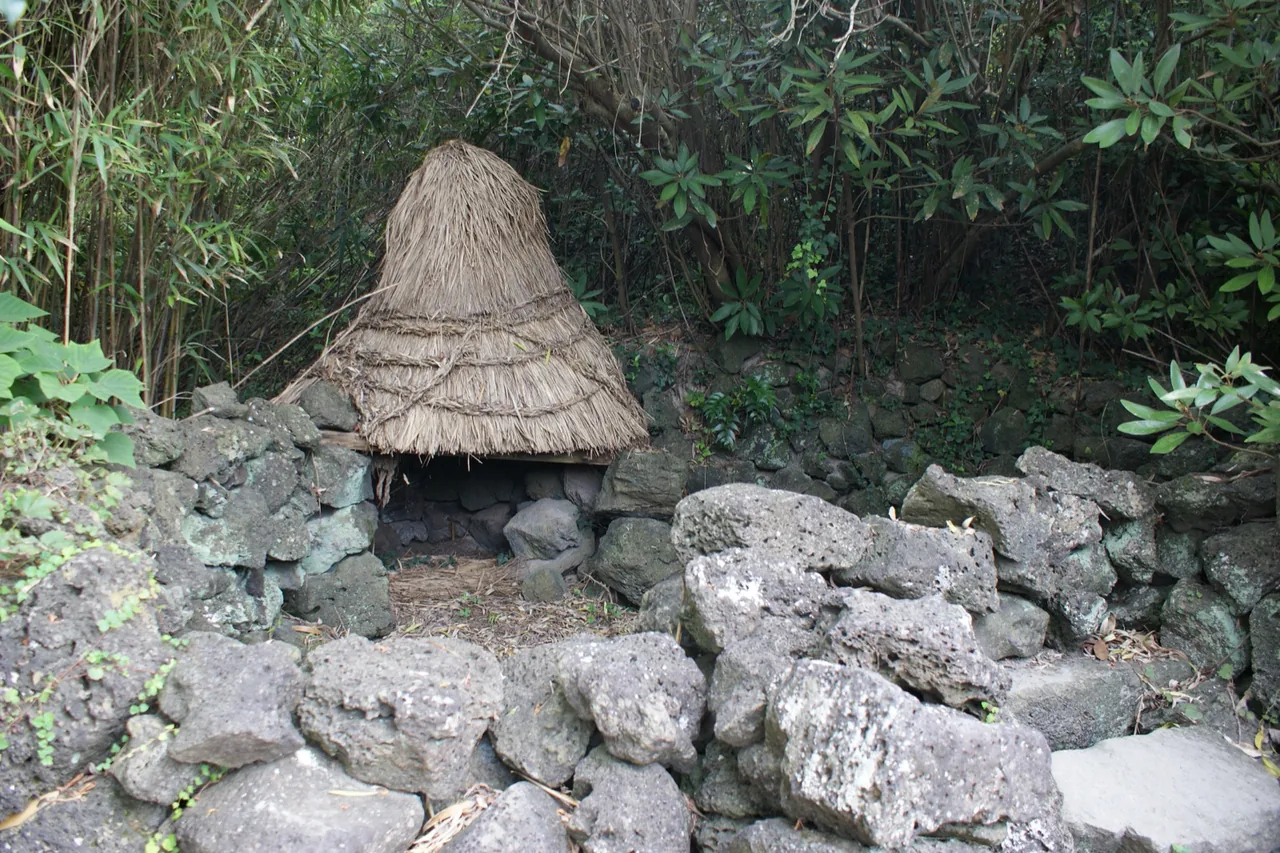
- Visit Jeju lists folk-religion sites, and its description mentions shamanic shrines.
- We could not confirm whether ritual demonstrations run on a schedule, so treat the shrines as exhibits.
- Ask staff or call 064-787-4501 if a live performance matters to you.
- Jeju Yeongmun Government Office
- Visit Jeju lists the Jeju yeongmun, the old government office, among the reconstructed areas.
- Place of Exile
- Visit Jeju includes a place of exile among the reconstructed areas of the village.
- It rounds out the picture of the 1890s beyond everyday village life.
- Viewing-Stone Hall
- The 150 m² hall displays several hundred stones donated by a collector couple.
- The collectors gathered the stones over about 30 years.
- Arcade, Comic-Book Room, and Folk-Games Zone
- These indoor and play areas give children a break from walking between old houses.
- Skip them if you are short on time and traveling without kids.
Comparing Zones With Limited Time
The village spreads across several themed areas, and the winter ticket cutoff limits how late you can start. From November to February, ticket sales close at 17:00, but you can still wander inside until 18:00. Arriving around 09:00 gives you the most daylight.
With limited time, we would prioritize the lived-in houses and craft areas first, since they carry the most island-specific detail. Add the fishing village next if you are heading to the beach afterward. Leave the arcade and comic-book room for last, or skip them if you travel without children.
Visit Jeju gives no recommended visit length, so we will not quote a number. Pace yourself by the closing time instead.

Seongeup, Pyoseon Beach and a Southeast Coast Day
Seongeup Folk Village is a separate, lived-in historic village farther inland in Pyoseon-myeon. Visit Jeju notes that residents act as volunteer guides and that people still live there, so keep your voice down near private homes.
Docent tours run 10:00 to 17:00 all year, according to Visit Jeju, and each lasts about 60 minutes. The guide service is free, and you can book by phone at 064-710-6810 or register on site. Visit Jeju also reports free entry to the village itself, citing a visitor review.
Seongeup's experience programs are listed for March to October only. Jeju folk song runs Wednesdays 11:00 to 13:00, Omegi liquor Mondays 10:00 to 12:00, and Gosori liquor Saturdays 10:00 to 12:00. A winter visit likely means docent tours only.
Pyoseon Haevichi Beach is about 100 m from the museum, according to Visit Jeju, which makes it an easy add-on. Jeju Herb Garden is a 5-minute drive away from the beach. Leashed dogs are allowed on the beach, but not in the swimming zone during swimming season.
For a self-guided coast day, start at the museum, walk to the beach, then continue to Seongeup for a docent tour.
Visiting Tips: Language, Dogs and Events
We also found no official statement on English signage or English-language tours at Jeju Folk Village. Seongeup's docent tours are the documented guided option, though Visit Jeju does not say which languages they use. A translation app on your phone fills most gaps.
Small dogs under 7 kg are allowed, according to Visit Jeju. Owners need a leash or carrier and must bring waste bags.
The village has hosted festivals, including a Korea Tourism Organization-listed event in May 2025. Event days can change crowds and access, so call 064-787-4501 if you are traveling around a holiday.
Frequently Asked Questions
What are Jeju Folk Village's opening hours?
From March to October it is open 09:00–19:00, and ticket sales and entry close at 18:00. From November to February it is open 09:00–18:00, and ticket sales and entry close at 17:00. It is open year-round.
How much is admission to Jeju Folk Village?
Korea Tourism Organization data listings show adult ₩15,000, senior ₩13,000, youth ₩12,000 and child ₩11,000, with 20% off for groups of 20 or more. The operator's site was down for an upgrade when we checked, so these are not operator-confirmed.
Is Jeju Folk Village the same as Seongeup Folk Village?
No. Jeju Folk Village is a paid open-air museum on the Pyoseon coast that recreates 1890s Jeju. Seongeup Folk Village is a separate, lived-in historic village farther inland in Pyoseon-myeon, where Visit Jeju reports free entry, citing a visitor review.
What period does Jeju Folk Village show?
It uses the 1890s, the end of the Joseon dynasty, as its base period.
What can you see at Jeju Folk Village?
Reconstructed mountain, mid-mountain and fishing villages, folk-religion sites, the Jeju yeongmun government office and an exile quarter. There are also about 100 traditional houses that were once lived in, craftspeople at work, a viewing-stone hall and a folk-games zone.
Can I bring my dog to Jeju Folk Village?
Small dogs under 7 kg are allowed on a leash or in a carrier, and owners must bring waste bags.
Are there discounts on Jeju Folk Village tickets?
Visit Jeju says booking through Naver is about 10% cheaper per person, and showing the Nowda pass gives 20% off.
Which city is Jeju Folk Village in?
It is in Pyoseon-myeon, Seogwipo-si, on the southeast coast of Jeju Island.
Jeju Folk Village rewards travelers who want island history in one place, with winter hours of 09:00 to 18:00 and a 17:00 ticket cutoff. Pair it with the beach next door and, for a lived-in contrast, a free docent tour at Seongeup. Confirm the fare by phone, since the official site was down when we checked.
For more ideas across the island, browse our Jeju attractions guide. Then pick one or two stops per day, because Jeju distances add up.
For more Jeju planning, read 16 Best Things to Do in Jeju: Sights, Food & Regions, Best Time to Visit Jeju: Month-by-Month Guide and Jeju Airport to Jungmun: Bus, Taxi & Car Compared.