
Seongeup Folk Village: A Visitor Guide to Jeju's Living Village

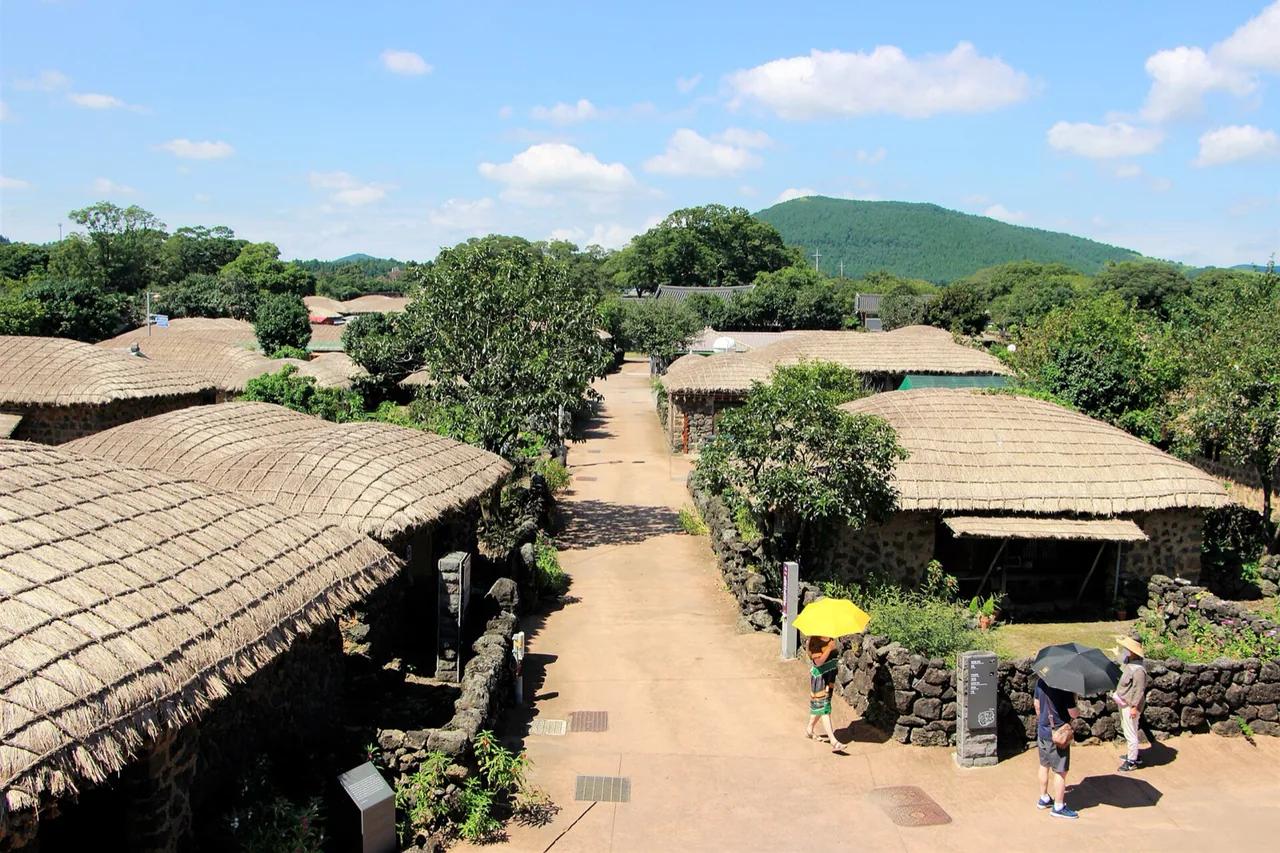
Last updated November 2026. Seongeup Folk Village is a walled village on Jeju's eastern slopes where people still live in thatched stone houses. Our Seongeup Folk Village Jeju visitor guide covers hours, guided tours, transport and what to look at along the lanes.
Unlike a museum village, Seongeup has no ticket gate. Visit Jeju lists a free guide service, a good way to get your bearings.
Seongeup Folk Village Jeju: What to Know First
Jeongui-hyeon county moved its office to Seongeup in 1423, in the fifth year of King Sejong. According to the official Seongeup Village site, the fortress was finished in just five days. Its wall ran 2,986 cheok around, with gates on the east, west and south.
A 1702 survey counted 1,436 households here, so this was a real administrative town. The village lost its county-seat status in 1915, according to the official site.
The village became a National Folklore Cultural Heritage site in June 1984. Its protected area has measured 790,747 square meters since 1987, and around 110 houses stand inside the fortress.
That history shapes how you should visit. Residents live in the houses, so treat the lanes like someone's neighborhood and keep voices low near doorways.
Hours, Admission and Free Guided Tours
Seongeup has no gate, so no official opening hours exist for the village itself. The only published times belong to the guide service. Visit Jeju lists docent tour hours of 10:00 to 17:00, open year-round with no closing days.
Admission costs nothing, or ₩0 for adults. Visit Jeju states that the cultural tourism guide service is free of charge. A Korea tourism listing describes entry as free except for hands-on programs.
We found no official page that states the free entry in so many words, so treat the fee-free entry as the tourism listings' statement. Hands-on class prices are not published in the sources we used, so ask at the village before joining one.
Each docent tour takes about 60 minutes. You can book by phone at 064-710-6810 or register on site. Village residents also act as volunteer guides who offer visitors information.

How to Get to Seongeup Folk Village
The official Seongeup Village site says buses on Beonyeong-ro between Jeju City and Pyoseon run about every 20 minutes and pass through the village. A mid-mountain route from Seogwipo runs about hourly, so plan a return time before you leave.
That site lists frequencies but no route numbers, and its bus page dates from 2019. Confirm the current bus route at the stop or in a Korean map app before you board.
Driving from Jeju International Airport takes about 40 minutes via Beonyeong-ro, according to the official site. The route passes the Hoecheon and Daecheon intersections and the Seongeup riding ground before reaching the village.
Visit Jeju gives the road address as 20 Seoseongil-ro, Pyoseon-myeon, Seogwipo-si, Jeju-do. Map pins differ by about 2 kilometers between sources, so search the Korean name or the address to land at the fortress itself.
What to See Inside the Fortress
Seongeup rewards slow walking more than ticking off a checklist. Most of the sights sit within a few minutes of each other along the main lanes.
The list below follows what the official site and Visit Jeju name as designated or notable features. Some designated houses may close to visitors at the owners' discretion, so do not build your day around one door.
- Designated Folk Heritage Houses
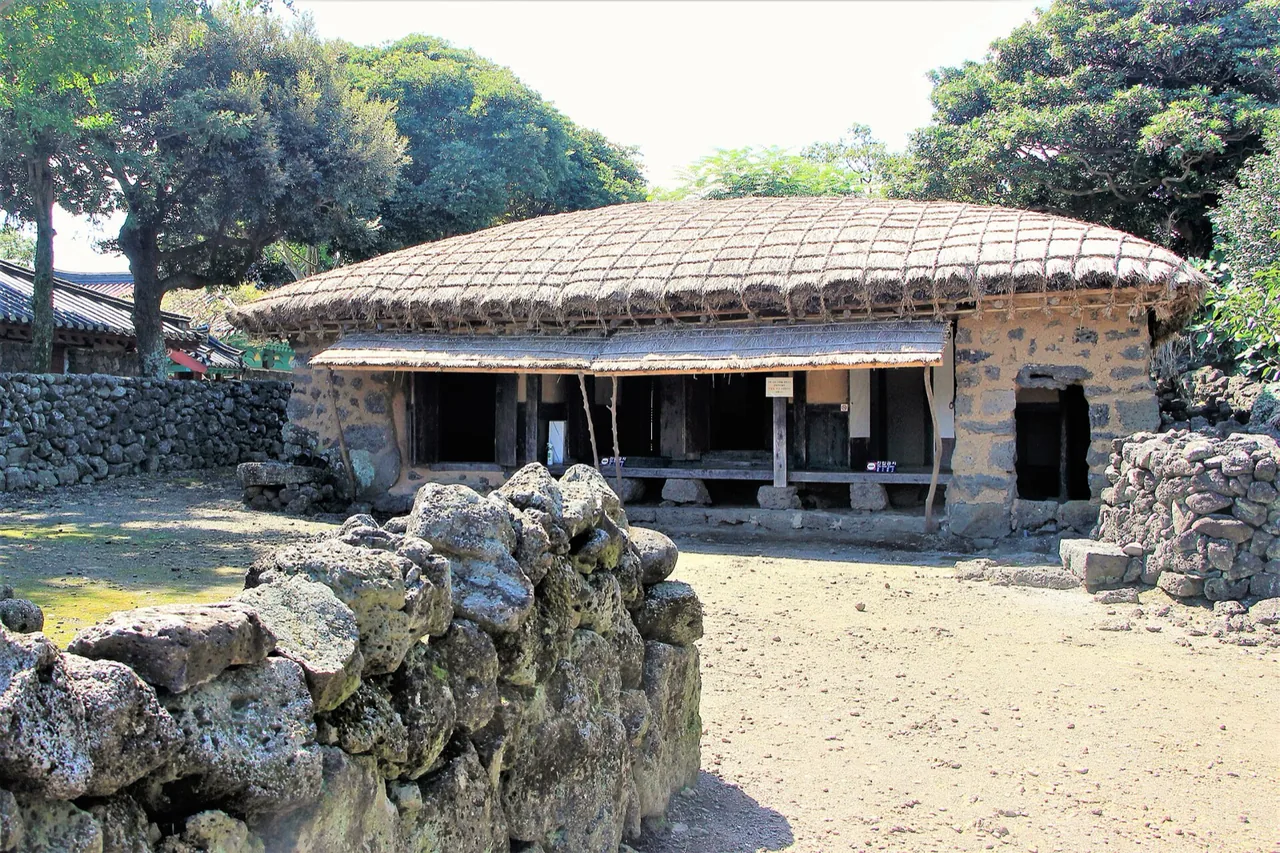
- The Jo Il-hun, Go Pyeong-o and Go Chang-hwan houses are all National Folklore Cultural Heritage.
- Owners can restrict viewing, so a closed gate is normal.
- Thatched roofs held down by rope and black basalt walls show classic Jeju building style.
- Ilgwanheon Magistrate's Office
- This building served as the county magistrate's office when Seongeup was the seat of Jeongui-hyeon.
- Jeongui Hyanggyo Confucian School
- The hyanggyo was the local Confucian school, another sign of Seongeup's role as a county town.
- Dol Hareubang Statues
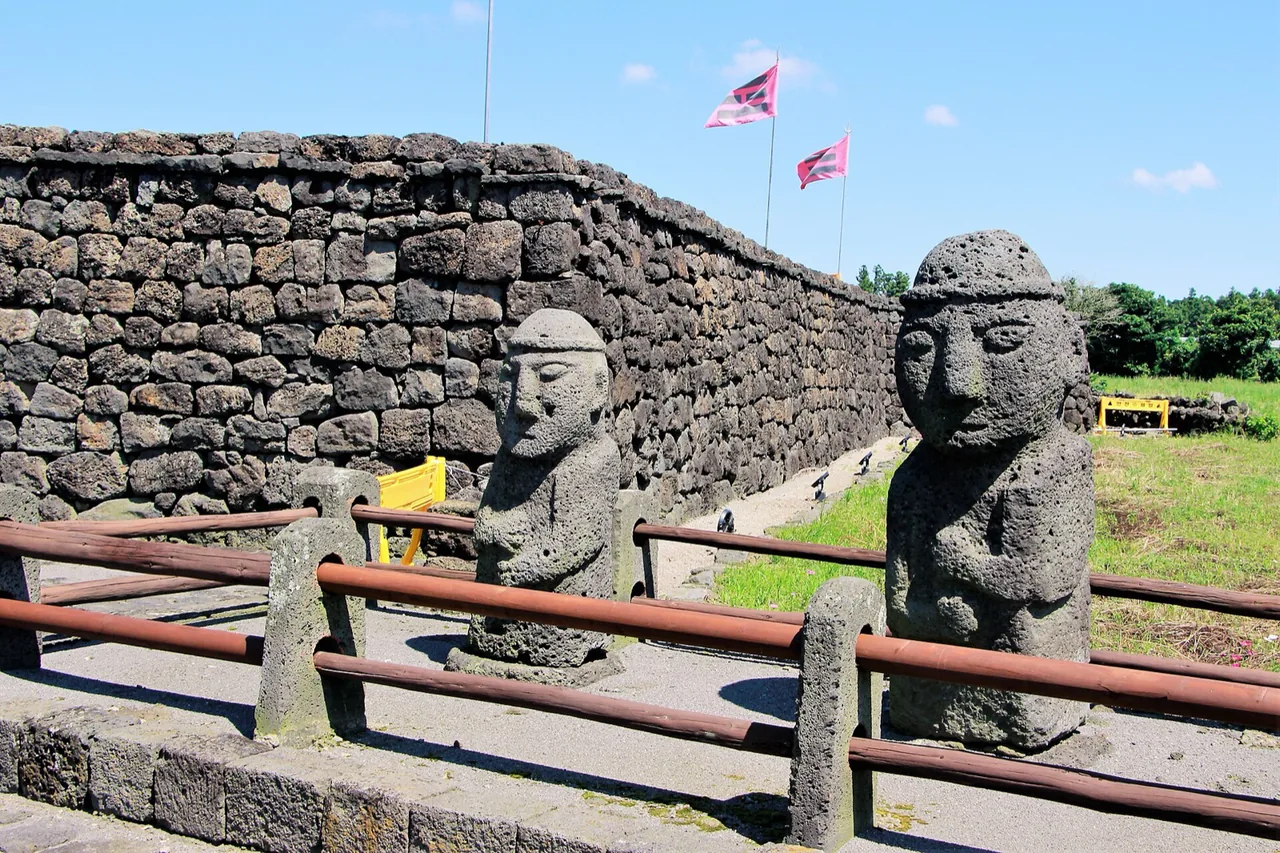
- Basalt dol hareubang statues stand near the fortress wall at the south entrance of the village.
- Zelkova and Hackberry Grove
- A group of zelkova and hackberry trees is designated Natural Monument No. 161.
- Korean Wikipedia mentions a zelkova about 1,000 years old.

Seongeup vs Jeju Folk Village
Many readers ask how Seongeup differs from Jeju Folk Village, and the answer is who lives there. Seongeup is a lived-in village where residents occupy the houses.
Because of that, Seongeup suits travelers who like walking and joining a docent tour. Do not count on access to every house, since owners can restrict viewing.
For other heritage stops, browse our Jeju Stone Park guide for the island's stone culture. The Jeju Haenyeo Museum adds the story of the island's women divers, and our wider Jeju attractions guide lists more.
Hands-On Programs, Festival and Overnight Stays
From March to October, Visit Jeju lists three experience programs run through the heritage training center. Jeju folk song runs Wednesdays from 11:00 to 13:00, and omegisul liquor making runs Mondays from 10:00 to 12:00. Gosorisul liquor making meets Saturdays from 10:00 to 12:00.
These programs are charged separately from entry, but no fee appears in the sources we used. Ask at the village about prices and sign-up before you travel.
The official site lists the 32nd Traditional Folk Reenactment Festival on September 19 and 20, 2026, which has now passed.
Traditional minbak guesthouses inside the village take overnight guests.
Frequently Asked Questions
Is Seongeup Folk Village free to enter?
Yes. Entry is free. Hands-on programs are charged separately.
Do people still live in Seongeup Folk Village?
Yes. Unlike Jeju's other folk villages, Seongeup is a lived-in village: residents occupy the traditional houses, and some designated houses may be closed to visitors for the owners' personal reasons.
How old is Seongeup Folk Village?
Jeongui-hyeon's county seat moved here in 1423 and stayed for about 500 years, until 1915.
Is there a free guided tour?
Yes. The culture and tourism guide service is free, and each tour takes about 60 minutes. Docent tour hours are 10:00 to 17:00, year-round with no closing days. You can book by phone at 064-710-6810 or register on site.
How do I get to Seongeup Folk Village by bus?
Buses on Beonyeong-ro between Jeju City and Pyoseon pass through the village about every 20 minutes. A mid-mountain route from Seogwipo runs about hourly.
What hands-on programs does Seongeup offer?
From March to October, the heritage training center runs a Jeju folk song class on Wednesdays (11:00–13:00), omegisul making on Mondays (10:00–12:00) and gosorisul making on Saturdays (10:00–12:00).
Can you stay overnight in Seongeup Folk Village?
Yes. Traditional minbak guesthouses inside the village take overnight guests.
Which city is Seongeup Folk Village in?
It is in Seongeup-ri, Pyoseon-myeon, Seogwipo-si, on the east side of Jeju Island.
Seongeup Folk Village is a lived-in village on Jeju's east side with free entry. Book the free docent tour by phone, ask about fees for any hands-on class, and respect the homes along the lanes.
Visit Jeju lists the docent tour hours as 10:00 to 17:00 year-round.
For more Jeju planning, read 16 Best Things to Do in Jeju: Sights, Food & Regions, Best Time to Visit Jeju: Month-by-Month Guide and Jeju East Coast: Best Stops, Route and Time Plan.