
Jeju Stone Park Visitor Guide for First-Time Visitors

Last updated November 2026. Jeju Stone Park is a museum and forest park in the uplands east of Jeju City, devoted to how islanders have used volcanic stone. This Jeju Stone Park visitor guide covers hours, tickets, transport, and the areas that deserve your time.
More than 80 percent of the grounds are gotjawal forest left in its natural state, according to the park's own planning page. The rest holds museums, outdoor stone displays, and a thatched-house village. Plan around the Monday closure and a short gallery closure starting November 17.
Jeju Stone Park Hours, Tickets, and Closures
According to the official Jeju Stone Park website, the park is open Tuesday to Sunday from 09:00 to 18:00. Ticket sales run from 09:00 to 17:00, so arrive well before the booth closes.
Adult admission for ages 25 to 64 costs ₩5,000, according to the park's official fee table. Buying online by the day before drops that to ₩4,500. Youth aged 13 to 24 and enlisted military pay ₩3,500, or ₩3,000 online. Children 12 and under enter free.
Free entry for visitors 65 and over applies to Korean nationals only, because the official exemption list excludes foreigners. Foreign seniors should expect to pay the adult fare. Jeju residents get 50 percent off with ID, and groups of 10 or more pay ₩4,000 per adult.
The park closes every Monday, plus January 1, Seollal, and Chuseok. If Monday is a public holiday, it shuts on the next non-holiday weekday instead. A park notice posted November 12 says the Five Hundred Generals Gallery is closed November 17 to 27, 2026. The Stone Museum, the Seolmundae Halmang Exhibition Hall, and the outdoor areas stay open.
How to Get to Jeju Stone Park
The park sits at 2023 Namjo-ro, Jocheon-eup, Jeju-si, in forested uplands east of Jeju City. By car or taxi from Jeju International Airport, the official directions give about 30 minutes. The route follows Beonyeong-ro (Route 97) through Bonggae, then turns onto Namjo-ro (Route 1118) for 3 km.
From Seogwipo, the park lists about 35 minutes by car via Route 1131 and Route 1112. Its directions also give about 30 minutes from Seongsan and 45 minutes from Jungmun. Drivers will find 572 parking spaces on site.
The official directions page names no bus line and only links to live bus information. We could not confirm a bus route, so none is given here. The official directions page also lists taxi numbers, and a taxi or rental car is the practical way to arrive.

How Long to Spend at Jeju Stone Park
The park's course guide offers routes from 30 minutes to 3 hours. The full all-park course takes two to three hours. Each themed zone runs 40 to 120 minutes, so choosing matters.
With limited time, pair one indoor hall with one outdoor stretch. The Stone Museum course alone is listed at 50 minutes over 970 meters, which leaves room for the outdoor displays within a two-hour visit. Travelers building a wider route can browse our Jeju attractions guide for other half-day stops.
An electric vehicle runs a non-stop loop of 40 to 50 minutes, departing every 30 minutes on the hour and half hour. Service runs between 09:30 and 17:20, with the last departure at 16:30 and no 12:00 run. The vehicle seats 12, and the official guide does not state its fee.
The park closes at 18:00 and ticket sales stop at 17:00, so a full-park course of two to three hours needs an early start.
About Jeju Stone Park and Its Background
Jeju Stone Park (Jeju Dolmunhwa Gongwon) is run by the provincial government and opened on June 3, 2006. The official history page records a site of 3,269,731 square meters chosen in Gyorae-ri in 1998, which matches the roughly 327 hectares Wikipedia gives for the designated grounds. The park's facilities page gives the developed site as 932,538 square meters, so figures differ depending on which area is meant.
The project grew out of an agreement between the former Bukjeju County and Tamna Mokseokwon. Its founder, Paek Un-chol, donated more than 20,000 stone and root objects between 2000 and 2009, and the park's history page counts 20,441 items by 2009. Construction was finished in February 2021, according to Visit Jeju and Wikipedia.
The park's planning page says more than 80 percent of the land is gotjawal forest kept as an ecological park, and that four oreum (small volcanic cones) surround it. The Jeolmul forest and the Saryeoni forest path lie nearby for visitors who want a longer walk.
Visit Jeju also lists guided tours from 09:00 to 16:00 by reservation. Pets are not allowed, and cooking, smoking and drinking alcohol are prohibited in the park.
Things to See at Jeju Stone Park: The Five Zones
The park's course guide groups the grounds into themed zones that connect by walking paths. We break them into five areas below, with the time and trade-off for each.
Indoor halls suit rainy days, according to the park's own rainy-day course suggestions. Outdoor areas reward dry, mild weather and a slower pace.
Park notices have restricted access to the Sky Pond (Haneul Yeonmot) at times, so do not plan your day around it. The Five Hundred Generals Gallery is closed from November 17 to 27, 2026.
- Jeju Stone Museum
- Opened June 3, 2006, with a geology hall explaining how volcanic activity formed the island.
- Rare stones and suiseok viewing stones are displayed in the museum.
- The official course runs 50 minutes over 970 meters.
- The museum reopened June 2, 2026, after a closure.
- Five Hundred Generals Gallery
- Opened September 9, 2010, with seven special exhibition rooms for changing shows.
- The basement holds a chorok tree root collection designated Jeju monument no. 25 in 1973.
- Closed November 17 to 27, 2026, while staff prepare the next exhibition.
- Seolmundae Halmang Exhibition Hall
- The newest major hall opened June 12, 2025, and centers on Jeju's creation goddess.
- The park's course guide lists this zone at about 120 minutes and 1.8 km of walking.
- Outdoor Stone Culture Exhibits
- A myth garden on Seolmundae Halmang and the Five Hundred Generals sits among the forest paths.
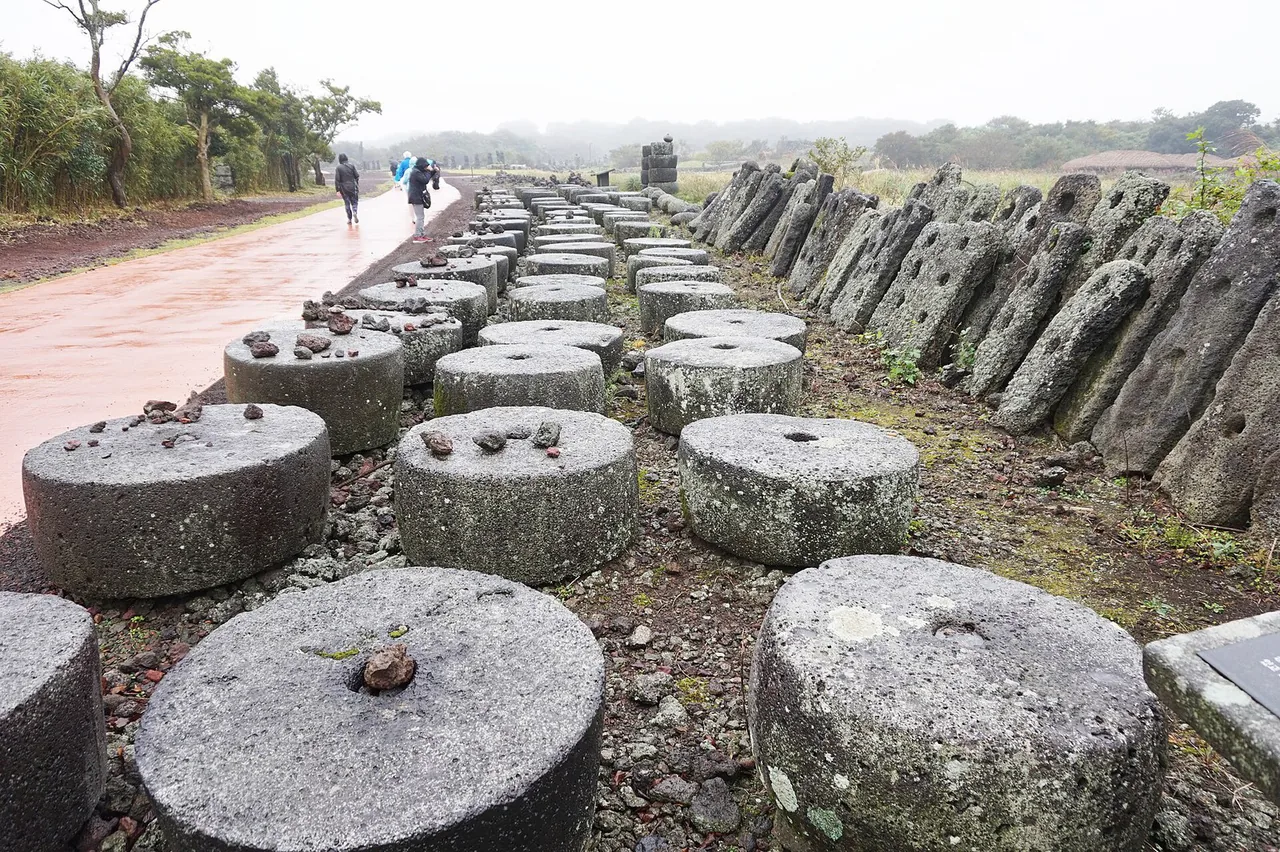
- A second outdoor area, completed in 2005, shows dongjaseok tomb figures, bangsatap towers, and millstones.
- Best for dry days, comfortable shoes, and travelers who like to wander at their own pace.
- Dolhan Maeul Thatched Village
- Forty-nine traditional thatched-roof buildings opened in this village on August 15, 2012.
- The village is part of the walking courses through the grounds.

Dol Hareubang Statues and Photo Opportunities
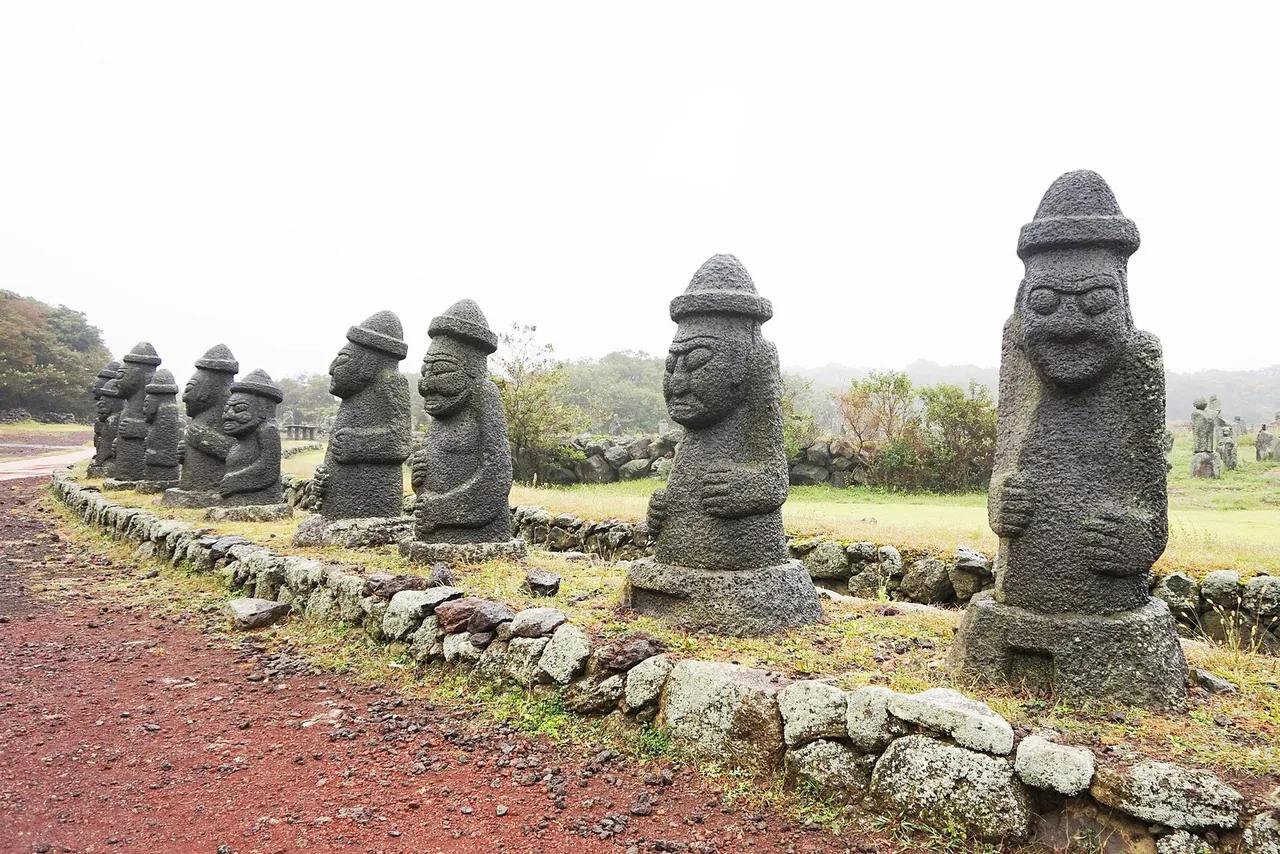
Dol hareubang, meaning stone grandfathers, are basalt statues with brimmed hats and hands resting on their bellies. According to Visit Jeju, the park's outdoor area holds 48 of them, and several line a red-gravel path.
Rows of round basalt millstones and upright perforated stone slabs line other walking paths, with thatched roofs behind them.
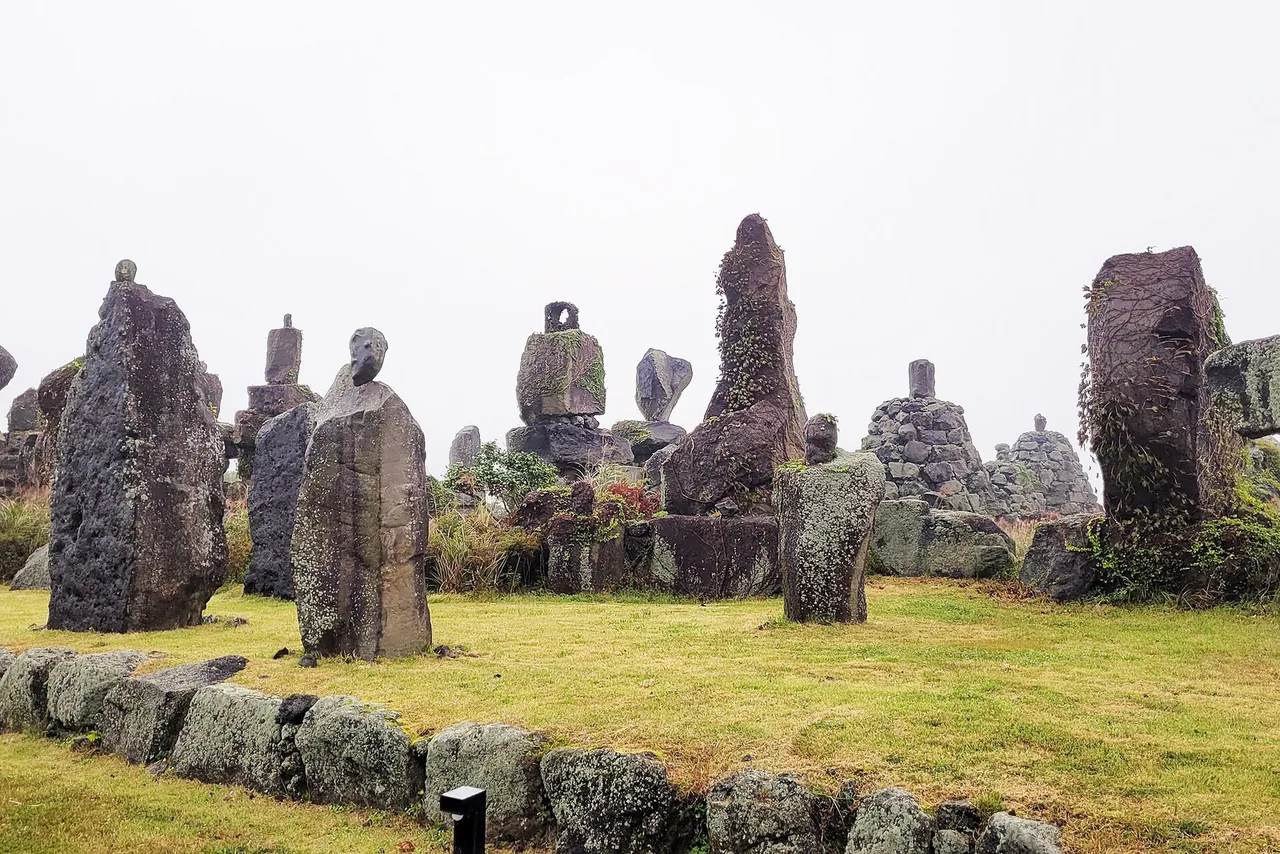
Stone figures of the Five Hundred Generals stand on a lawn as tall, weathered forms and cairns. Most of the grounds are gotjawal forest left in its natural state, so stay on the marked paths.
Exploring the Seolmundae Halmang Exhibition Hall
Seolmundae Halmang is Jeju's creation goddess, and the hall built around her story opened on June 12, 2025. The park's course guide lists the zone at about 120 minutes and 1.8 km of walking.
In Jeju legend, the Five Hundred Generals are her sons, which links this hall to the nearby gallery. The park also hosts an annual Seolmundae Halmang Festival in May. Other cultural events are held there during the year.
A simple decision rule helps here. With 90 minutes or less, spend them in this hall and on the outdoor path, since the Five Hundred Generals Gallery is closed from November 17 to 27, 2026. With a full day, add the Stone Museum, the village, and a stop at the Jeju Haenyeo Museum for more island culture.
Frequently Asked Questions
What are Jeju Stone Park's opening hours?
The park is open 09:00-18:00, with ticket sales from 09:00 to 17:00. It is closed every Monday (if Monday is a public holiday, it closes on the next non-holiday weekday instead), and on January 1, Seollal (Lunar New Year's Day) and Chuseok.
How much is admission to Jeju Stone Park?
Adults (25-64) pay ₩5,000, or ₩4,500 when bought online by the day before. Youth aged 13-24 and enlisted military pay ₩3,500. Children 12 and under enter free. The free entry for people 65 and over applies to Korean nationals only, so foreign seniors pay the adult fare.
How long does it take to see Jeju Stone Park?
The park suggests courses from 30 minutes to 3 hours. The themed zones each take 40 to 120 minutes, and the Seolmundae Halmang Exhibition Hall zone alone is about 120 minutes and 1.8 km of walking.
Is there a shuttle inside Jeju Stone Park?
An eco-friendly electric vehicle runs a non-stop loop of 40-50 minutes every 30 minutes on the hour and half hour, 09:30-17:20 (last departure 16:30), with no 12:00 run. It seats 12.
Is Jeju Stone Park good on a rainy day?
Yes, partly: the park's own course guide lists rainy-day options using the indoor Jeju Stone Museum, the Five Hundred Generals Gallery and the Seolmundae Halmang Exhibition Hall.
Can I bring my dog to Jeju Stone Park?
No. Pets are not allowed, and cooking, smoking and drinking alcohol are also prohibited in the park.
Where is Jeju Stone Park?
It is at 2023 Namjo-ro, Jocheon-eup, Jeju-si, about 30 minutes by car from Jeju International Airport and about 35 minutes from Seogwipo.
Is anything closed at Jeju Stone Park right now?
The Five Hundred Generals Gallery is closed November 17-27, 2026 to prepare its next exhibition; the Stone Museum, Seolmundae Halmang Exhibition Hall and outdoor areas stay open.
Jeju Stone Park rewards visitors who match their route to the time they have. Check the Monday closure, buy online for the ₩4,500 adult rate, and choose the Seolmundae Halmang hall if you must pick one building. To pair it with another cultural stop, consider the Jeju Folk Village on a separate day.
For more Jeju planning, read 16 Best Things to Do in Jeju: Sights, Food & Regions, Best Time to Visit Jeju: Month-by-Month Guide and 8 Best Restaurants in Jeju: Where to Eat & What to Order.