Daegu Food: 8 Local Dishes and Where to Eat Them
Daegu food guide: 8 local dishes, from makchang and jjimgalbi to ttaro gukbap, with areas, spice levels, who should skip what, and ordering tips.
On this page
Last updated November 2026: daegu food is spicy, meat-forward and noodle-heavy, built around grilled offal, braised ribs and beef soup. Makchang, jjimgalbi, mungtigi, nabjak mandu and ttaro gukbap lead the list below. Each dish comes with the area to eat it in and the guide that goes deeper.
Featured image: Dongchan0417, CC BY-SA 3.0, via Wikimedia Commons.
What Makes Daegu Food Different
Red chili and beef or pork sit at the center of most Daegu menus. Local beef soup gets its heat from a red chili oil made with melted beef tallow, not from extra pepper powder. Textile-trade history brought workers and merchants to the city, and market eating grew up around them. Sources vary on exact origin dates, so treat the founding stories on menu boards as local lore. Most signature dishes are built on beef or pork, which matters for vegetarian and halal diners. Anjirang alley, Dongin-dong and Seomun Night Market hold most of the eating.
8 Must-Try Daegu Food Dishes
Hours checked November 2026. Menu prices are not listed here because they differ by restaurant and change often. The dishes run from the easiest first night to the biggest dare.
1. Makchang (Grilled Pork Intestines)
Makchang is pork intestine grilled over a tabletop fire and eaten with a dipping sauce. Texture is chewy and fatty rather than tender. Eat it along Anjirang's offal alley. Restaurants there run from Anjirang Market to Lumbini Kindergarten, a stretch of about 0.5 km. A city tourism page lists about 50 establishments in the alley, mostly serving gopchang and makchang. Parking is available, which helps groups arriving by car.
Skip it if offal is a hard no. Our makchang ordering guide covers cuts and grill etiquette. For the street itself, read about Anjirang's offal alley.
2. Jjimgalbi (Spicy Braised Short Ribs)
Jjimgalbi is short rib braised in a red-pepper and garlic sauce until the meat pulls from the bone. Daegu's version is spicy, and the leftover sauce goes over steamed rice. Go to the Dongin-dong alley, which has its own write-up of the jjimgalbi alley restaurants.

Portions are often built for two or more diners, so a solo traveler may find it a stretch. Ask staff about the heat before ordering if chili is a worry. Skip it if you avoid beef.
3. Mungtigi (Raw Sliced Beef)
Mungtigi is raw beef sliced and dressed with seasoning, closer to a tartare than a grill dish. Garlic, sesame oil and chili usually carry the flavor. Served cold, it works as a shared side next to a grilled course. Start with a small plate, since the flavor is rich.
Read the mungtigi guide before you commit. Skip it if you avoid raw meat, are pregnant or have a weakened immune system. It is the biggest dare on this list.
4. Nabjak Mandu (Flat Dumplings)
Nabjak mandu are flat, half-moon dumplings with thin wrappers. Fillings typically include glass noodles, carrots, green onions, chives and cabbage. They are boiled, then pan-fried, and soy sauce goes on top before eating. Flavor is mild, so this is the gentlest dish on the list.
Order them as a warm-up before a spicy meal, or as a break between grilled courses. Skip them if you came for heat. Anyone avoiding meat should ask what the filling contains.
5. Ttaro Gukbap (Beef Soup with Rice on the Side)
Ttaro gukbap is beef soup served with rice in a separate bowl. Daegu's version carries a red chili oil made from melted beef tallow. Spice is high, and the broth is rich rather than clear. Add the rice a spoonful at a time so the soup stays hot.
It suits a cold morning or a late-night reset after a grill dinner. Skip it if you avoid beef or spicy broth. Few bowls will suit those diets.
6. Jjimdak (Soy-Braised Chicken)
Jjimdak is chicken braised in a soy-based sauce with vegetables and noodles. It arrives in a shared pot and tastes sweet-savory with a mild kick. It is a safer pick than offal or raw beef when the table disagrees about adventure.
Order for two or more, because the pot is sized to share. For named restaurants, see our Daegu restaurant roundup. Skip it if you avoid chicken.
7. Nujeun-Guksu (Pressed Noodles in Anchovy Broth)
Nujeun-guksu is a hand-cut noodle made from soybean flour and wheat flour, served in anchovy broth. The romanization varies, and you may see it spelled nujeun guksu. Broth is savory and light, with far less chili than the grill dishes.
It makes a quick lunch between the heavier stops, and a bowl takes little time to finish. Skip it if you dislike fish-based stock, since the anchovy flavor is plain.
8. Seomun Night Market Snacks
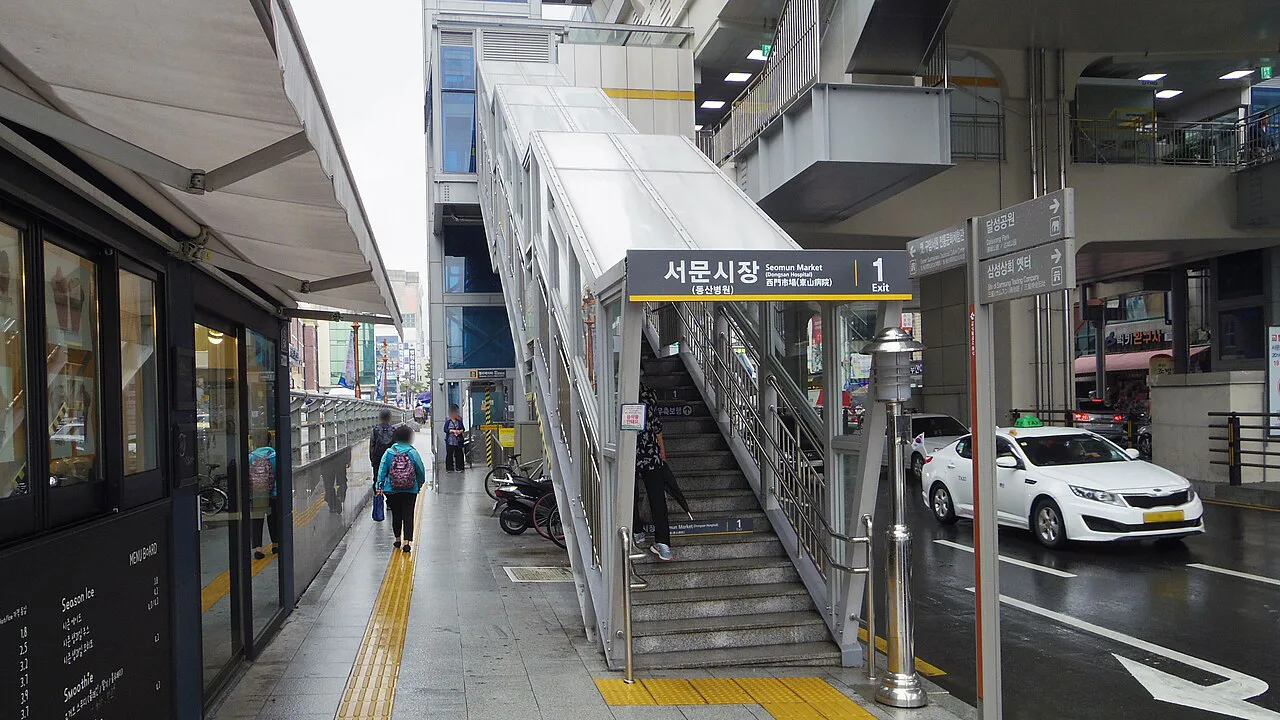
Seomun Night Market runs 19:30 to 24:00 daily, and until 24:30 on Fridays and Saturdays. It is open every night all year round. Find it at 45 Keunjang-ro 26-gil, Jung-gu, across from the Seomun Market Dried Seafood Mall.
Come after a grilled dinner and graze on street snacks at the stalls. Walking the lanes takes less time than a sit-down meal. Skip it if you want a seated table, or if you arrive before 19:30.
Daegu Food at a Glance
Spice and adventure ratings below are our editorial assessment, from mild to high. Use them to pick a first night and a dare night.
| Dish | What it is | Spice | Adventure | Best area |
|---|---|---|---|---|
| Makchang | Grilled pork intestines | Medium | High | Anjirang alley |
| Jjimgalbi | Braised short ribs | High | Low | Dongin-dong alley |
| Mungtigi | Raw sliced beef | Medium | Very high | Beef specialists; see the guide |
| Nabjak mandu | Flat pan-fried dumplings | Low | Low | Markets and snack stops |
| Ttaro gukbap | Beef soup, rice on the side | High | Medium | Beef-soup restaurants |
| Jjimdak | Soy-braised chicken | Low to medium | Low | See restaurant guide |
| Nujeun-guksu | Noodles in anchovy broth | Low | Low | Local noodle shops |
| Night market snacks | Street food | Varies | Low | Seomun Night Market |
Where to Eat Daegu Food by Area
Anjirang alley is the place for grilled offal after dark. Dongin-dong is the place for jjimgalbi. Seomun Night Market handles late snacks, and it keeps going after most restaurants wind down. Dongseongno is the downtown base between meals. Its pedestrian section runs about 900 m between the Daegu Station intersection and the Dongseongno Tourist Information Center. Shop hours there vary by shop. The information center, at 435 Jungang-daero, is open 10:00 to 19:00 and offers luggage storage.
Seomun runs until 24:30 on Fridays and Saturdays, so late snacks can stretch past the grill dinner.
Spice, Offal and Raw Beef: A First-Timer Guide
Start mild and work up. Nabjak mandu and jjimdak make safe openers. Grilled offal comes next, and raw beef comes last. Daegu's signature dishes are mostly meat-based, and beef or pork broth is common. Vegetarians will find the city hard going, so ask at each restaurant instead of assuming a dish is meat-free.
- Do not open with mungtigi on an empty stomach.
- Do not order a full jjimgalbi pot alone.
- Do not assume a soup is meatless. Broths are beef-based.
- Do not skip asking about spice level before the dish arrives.
Hours, Costs and How to Order
Seomun Night Market runs 19:30 to 24:00 daily, and until 24:30 on Fridays and Saturdays. Restaurant hours and prices differ by venue, so no fixed figure applies. Check current details on the official Daegu city site. Grill and braised-rib tables are priced per portion, so a group splits the cost more easily than a solo diner. English menus are not guaranteed, so carry the hangul names: 막창 (makchang), 찜갈비 (jjimgalbi), 뭉티기 (mungtigi), 납작만두 (nabjak mandu), 따로국밥 (ttaro gukbap) and 찜닭 (jjimdak). The Korea Tourism Organization site lists current visitor information. For named restaurants, use our restaurant roundup.
How to Get Around Daegu's Food Areas
Dongseongno sits inside a public-transport-only zone. It runs 1.05 km from the Banwoldang intersection to the Daegu Station intersection and dates to 2009. There is no dedicated parking, so use nearby paid lots. Anjirang alley is easier by car, since parking is available there. No metro station or line facts are listed here. Check the Daegu Metro operator's current map for the stop nearest each area.
Sample 1-Day Daegu Food Route
This route links the main areas in one day. Swap the order if a queue forms.
Dongseongno's information center runs 10:00 to 19:00, so the route's 10:00 bag drop lands at opening time.
- 10:00: Start at the Dongseongno Tourist Information Center and drop bags in luggage storage.
- 12:00: Lunch on ttaro gukbap or nujeun-guksu.
- 15:00: Coffee break at one of Daegu's cafes.
- 18:00: Early jjimgalbi in the Dongin-dong alley.
- 19:30: Seomun Night Market opens. Graze on street snacks until close.
- Day 2: Anjirang alley for makchang, and mungtigi if you want the dare.
Building the rest of the trip? Our Daegu attractions guide covers the sights, districts and logistics around this guide.
Explore food in other cities
Frequently Asked Questions
What is Daegu known for food?
Daegu is known for spicy, meat-forward dishes. Makchang grills, jjimgalbi short ribs and ttaro gukbap beef soup are the usual headliners. Noodles and nabjak mandu dumplings fill the milder end.
What is Daegu's signature dish?
No single dish owns the title. Most first-time visitors start with makchang at Anjirang alley or jjimgalbi in Dongin-dong. Ttaro gukbap is the pick for a soup-first meal.
Explore More Daegu Guides
Keep planning your Daegu trip with these guides.
Daegu Guides
Notes for your Korea trip
Optional updates to our city guides.
You might also like
Continue reading
More guides you'll find useful