7 Jeju Food Dishes to Eat First (and Where to Find Them)
Jeju food guide: 7 dishes from black pork to abalone porridge and hallabong, plus where to eat by area, when to go, queue timing and a 2-day route.
On this page
Last updated November 2026, this guide to Jeju food starts with seven dishes and then maps where to eat them by area. Black pork, abalone porridge, raw fish, buckwheat noodles and hallabong each have a best season and a best kind of place. Dish comes first, then area, then timing and a short route.
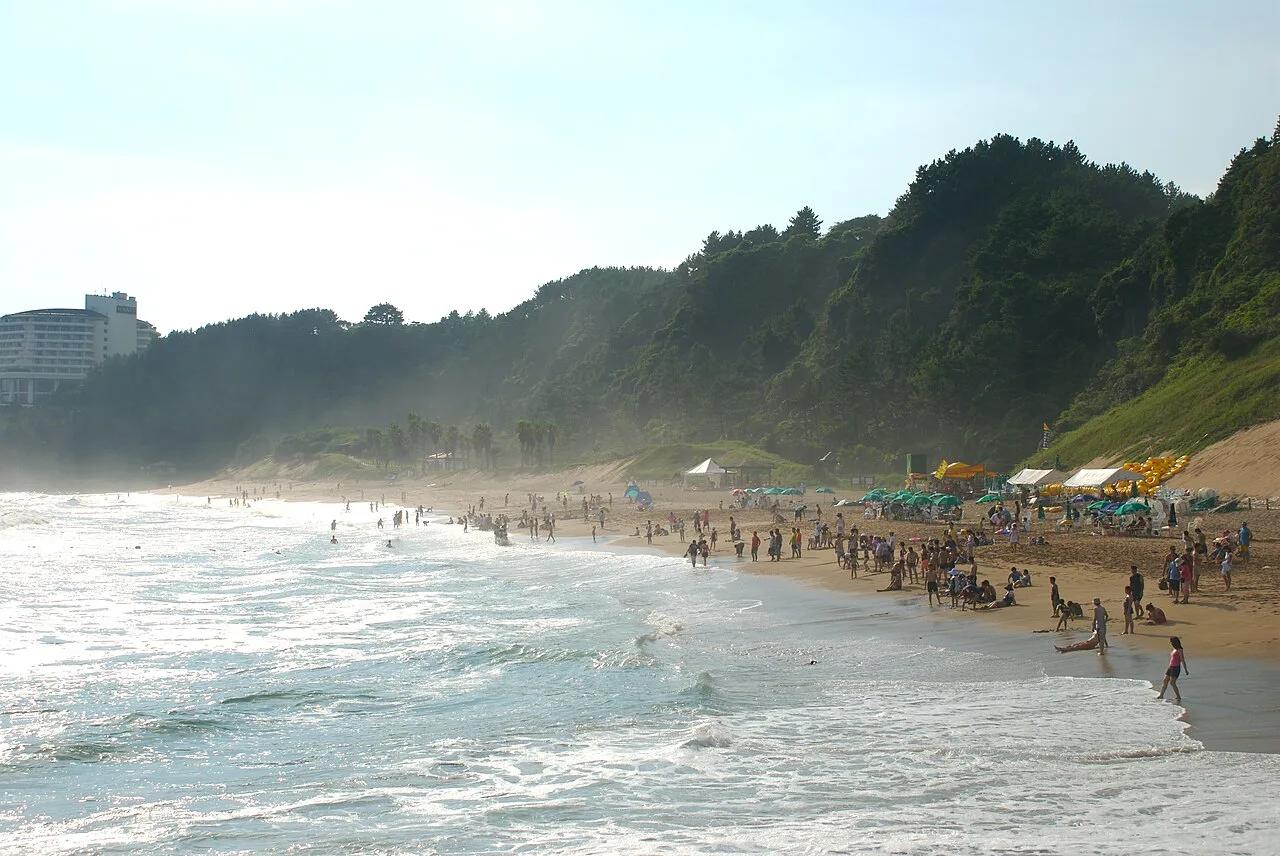
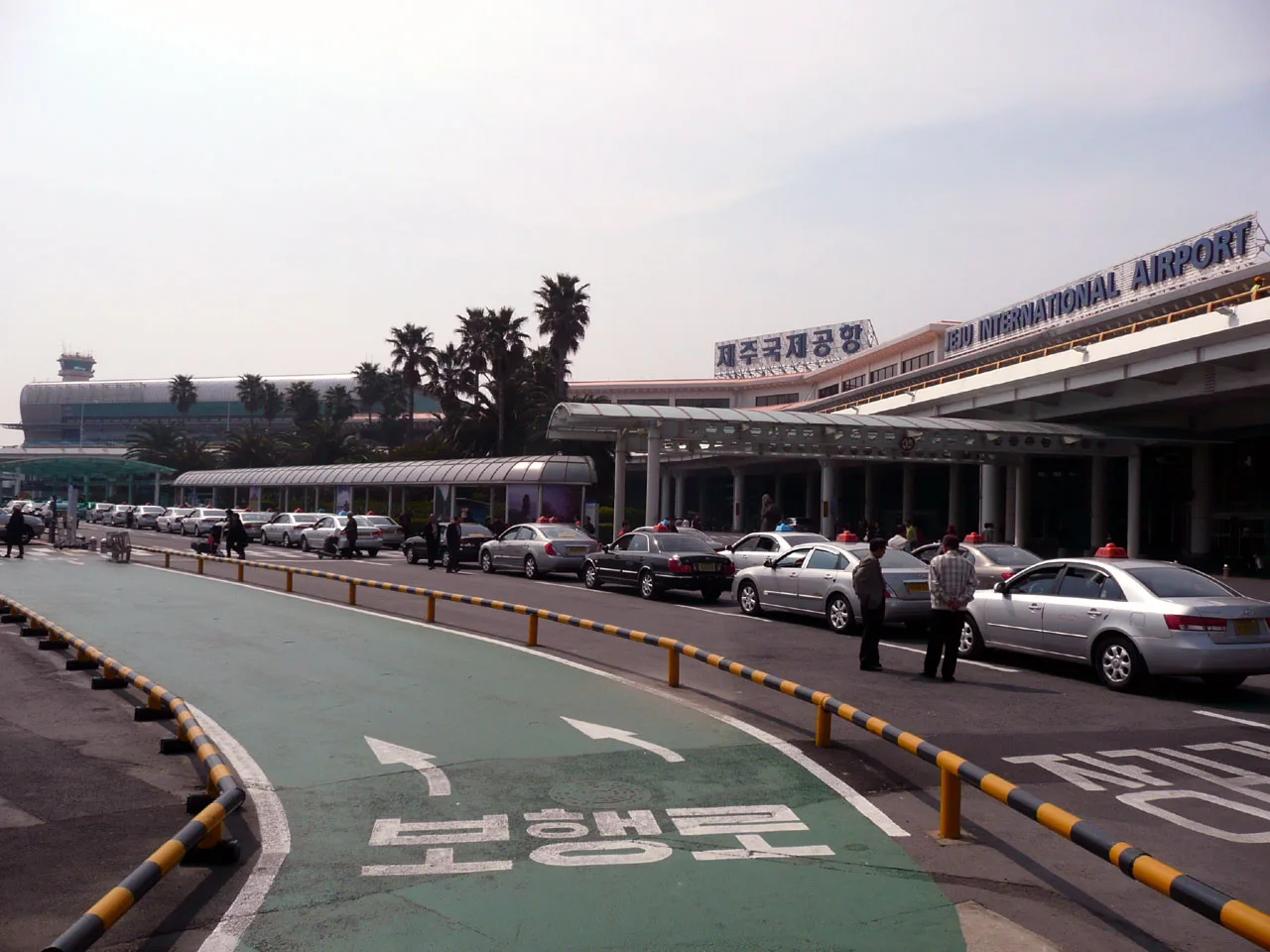
Featured image: thddbwnd, CC BY 3.0, via Wikimedia Commons.
What Makes Jeju Food Different
Jeju food rests on two supplies: the sea and the island's black pigs. Haenyeo, the female free-divers, still bring up abalone, sea urchin and conch by hand. Heukdwaeji, the dark-skinned black pig, feeds the charcoal grills of Jeju City. Flavors run saltier and more direct than on the mainland. Spice stays mild for Korea. Heat mostly comes from raw garlic and fresh chili added at the table, with braised hairtail as the main exception. Pork and seafood sit inside nearly every dish, a point that matters for the dietary notes further down.
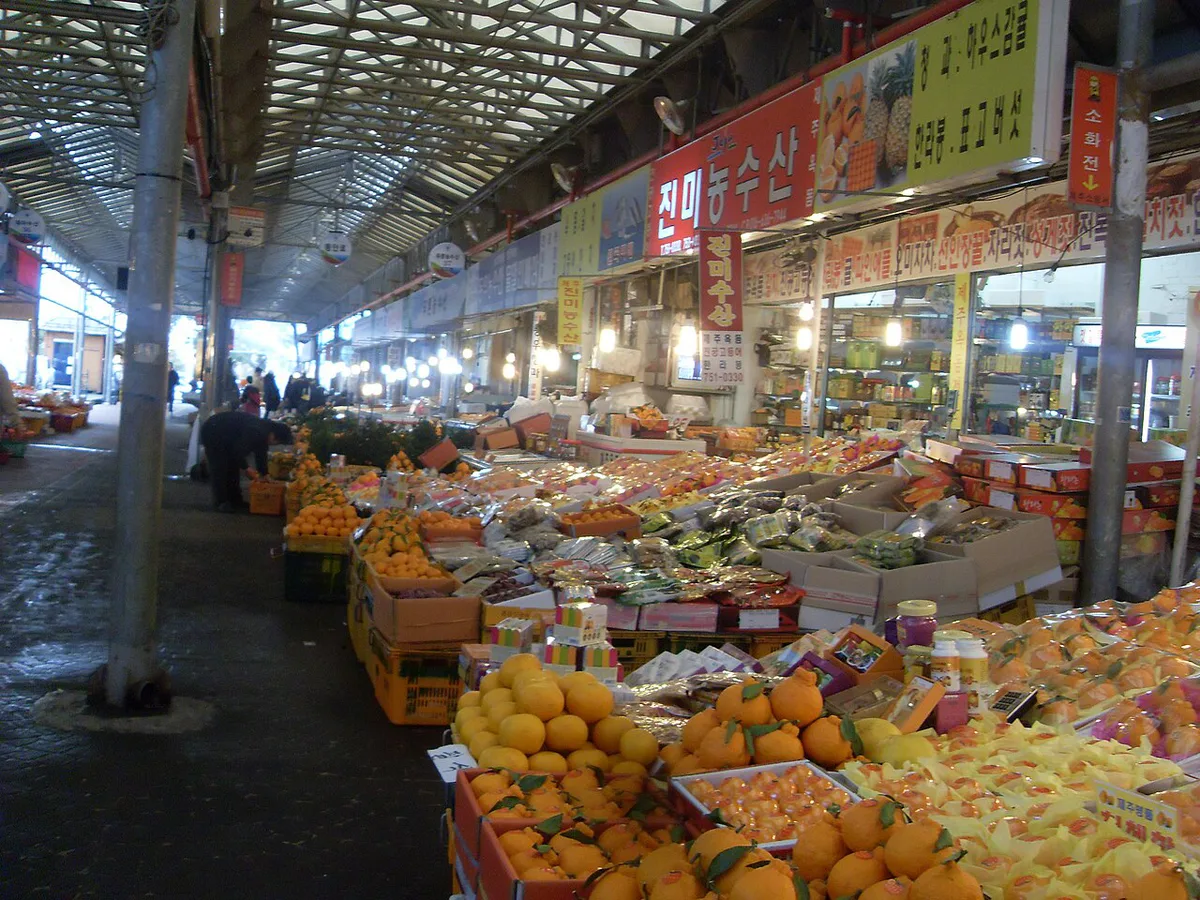
7 Jeju Food Dishes to Eat First
Each entry below gives the dish, one place or situation to find it, and who should skip it. Prices and hours checked November 2026. Start with black pork if you want the island's signature meal. Start with hairtail stew if you want a cheaper weeknight dinner.
1. Black pork grill (heukdwaeji gui)
Thick slices of black pork belly hit an iron grill, and the fat renders until the edges turn glassy and crisp. Wrap each piece in a perilla leaf with raw garlic and fermented shrimp paste. Meat is chewier and richer than mainland pork, with a thicker fat cap, and that is the point.
Black pork restaurants cluster along a stretch of Jeju City near Shin Jeju. A full meal for two with sides and soju typically runs ₩35,000 to ₩55,000. Weekend dinner peaks between 6:30 and 8 PM, so aim to sit down around 5:30 or 6 PM. Our black pork grill guide covers cuts and ordering. Skip it if anyone at the table avoids pork.
2. Abalone porridge (jeonbokjuk)
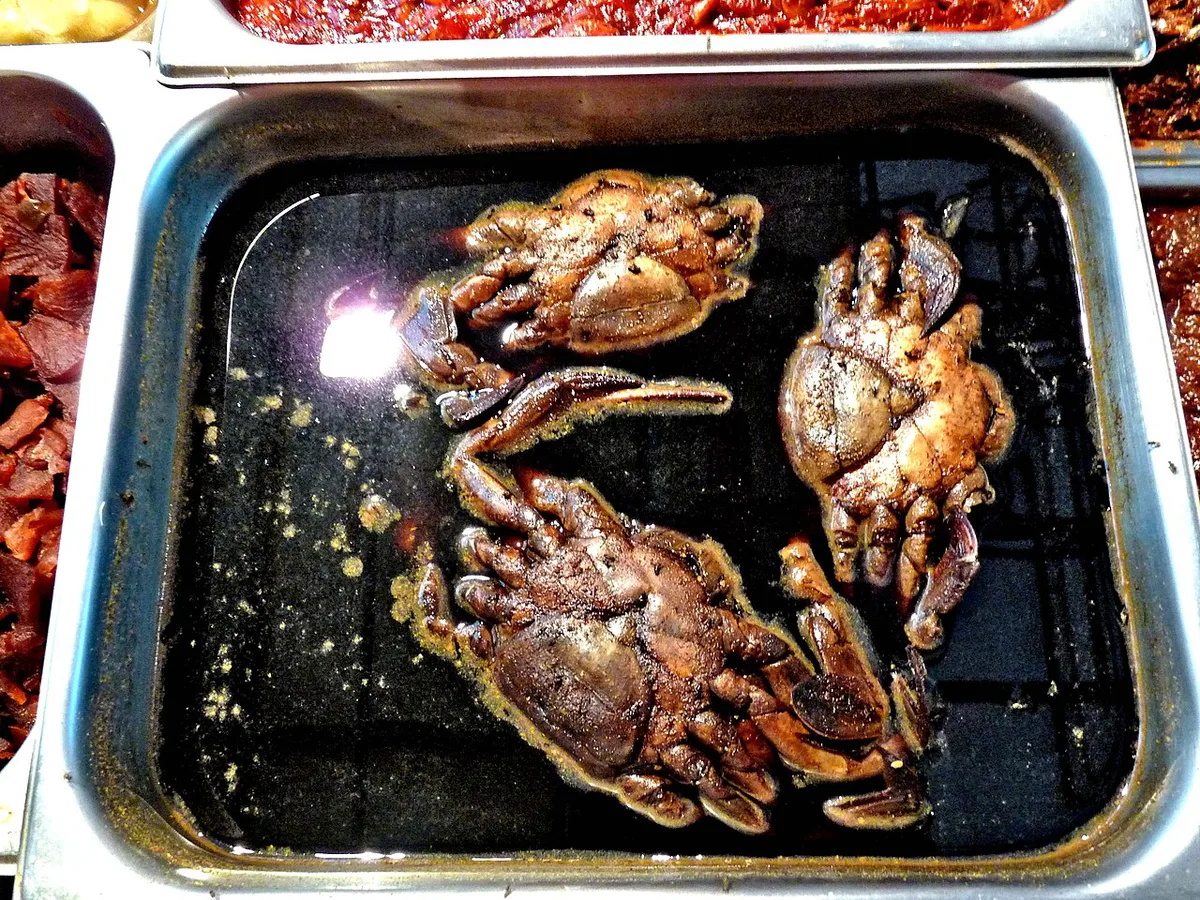
Rice simmered with abalone turns pale green from the abalone liver. It tastes mildly briny, with a savory depth that builds slowly. Order it at a haenyeo restaurant in Seongsan or near Udo Island, where a bowl typically runs ₩15,000 to ₩20,000. On the west coast, porridge shops near Hyeopjae Beach in Hallim-eup serve the same dish. The beach itself is open at all times, so a walk before or after the bowl costs nothing.
Porridge suits a late breakfast, a rainy day or a first taste of abalone without the price of grilled whole shellfish. For bowl styles and shop types, read our abalone porridge breakdown. Skip it with a shellfish allergy.
3. Braised hairtail (galchi-jorim)
Hairtail is Jeju's everyday fish. Cooks cut the long silver body into sections and braise it in gochujang with radish and green onion. Broth turns deep red, and the heat builds slowly while steam carries fermented pepper paste across the table. Pan-fried hairtail (galchi-gui) is the plainer version. Order the braised one if you want the dish locals eat at home.
Dinner with rice and banchan typically runs ₩12,000 to ₩18,000 at neighborhood spots, making it the best-value entry on this list. Eat it at dinner rather than lunch, when sit-down kitchens are less rushed. Skip it if you dislike picking small bones or want a mild meal.
4. Raw fish rice bowl (hoedeopbap)
Slivers of whatever came off the boat that morning sit on rice with vegetables and a sweet-hot sauce. Mix everything at the table. Dongmun Traditional Market in Jeju City is the easy place to find one. Pojangmacha stalls fill up between noon and 2 PM, and bowls start appearing then. Dongmun sits near Jeju International Airport, which makes it a workable first meal after landing.
Our haenyeo seafood guide covers the fuller raw and grilled fish menu. Skip it if raw fish worries you. Grilled fish or abalone porridge covers the same coastal ground.
5. Sea urchin over rice (seongge)
Raw sea urchin over rice is worth ordering between late spring and early autumn, when urchin are at their fattest. Flavor is oceanic without being assertive. Texture is sweet and almost custard-like. Haenyeo restaurants in Seongsan and around Udo Island are the natural places to try it, since divers supply those kitchens.
Pair it with a morning at Seongsan, where the paid trail to the summit typically takes 30 to 40 minutes. Skip it in winter, when quality drops, and if the idea of raw urchin is a hard no. Braised hairtail is the better swap.
6. Cold buckwheat noodles (mul naengmyeon)
Jeju's version arrives in an icy broth and is worth ordering even when the temperature outside argues against it. Summer is the peak, when cold noodles pair well with heat and with rich grilled pork. Order a bowl after a black pork dinner or at lunch on a beach day. It resets the palate and costs less than most mains.
For buckwheat dishes beyond the cold bowl, see our buckwheat and cold noodle guide. Skip it in winter if you want something hot. Hairtail stew serves better then.
7. Hallabong tangerines
Hallabong is a hybrid mandarin with a knobby top and a peel that practically falls off. Season runs December through March. Stalls stack the fruit in nets at every market and roadside stand, and juice runs down your wrist. At Seogwipo Maeil Olle Market, freshly squeezed hallabong juice is a common stall pairing with savory snacks.
Hallabong also appears in soft serve and desserts. Our hallabong season guide goes deeper on timing. Skip the fresh fruit outside winter. Jeju carrots and radish take over the markets then.
Where to Eat Jeju Food by Area
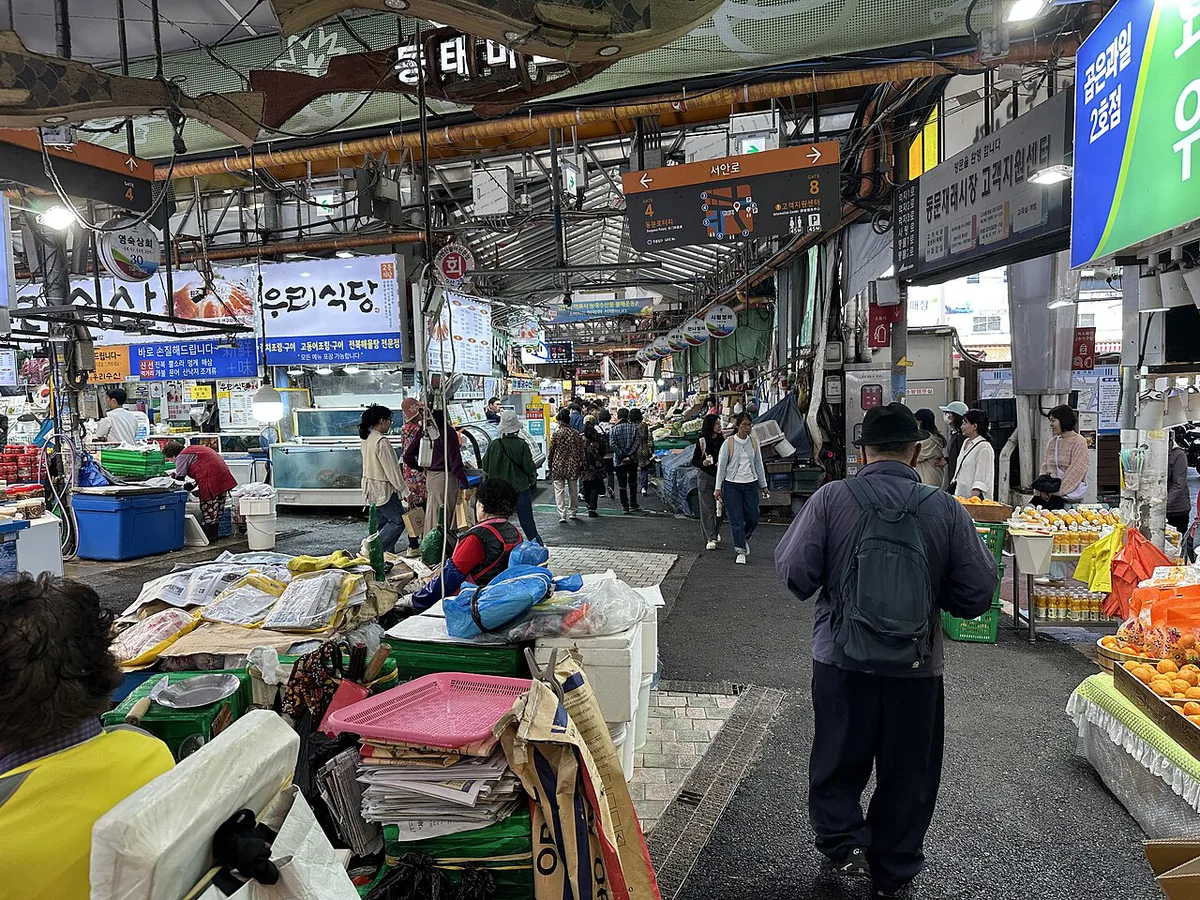
Base the eating plan on where you sleep, not on a dish list. Jeju City has the densest choice. Dongmun Traditional Market sits at 14 Gwandeok-ro, near Jeju International Airport. Stores set their own hours, and the evening night market adds food and souvenirs. For black pork streets and Chilseong-ro snack bars, stay in Jeju City. Bars there pick up after 9 PM. Seogwipo rewards a few days, according to Visit Jeju, and its market is the anchor. In the east, ferries to Udo leave from Seongsan Port and Jongdal Port, and the crossing takes about 10 to 15 minutes. Udo Marine Provincial Park admission is ₩1,000 for adults, with the ferry fare separate. One or two main sights plus a cafe or restaurant break take roughly 3 to 4 hours. Ferries depend on weather, so check sailing information on the day. Outside vehicles in Udo-myeon stay restricted from Aug 1, 2026 to Jul 31, 2029, with exceptions listed on the official page. On the west side, the Aewol coastal road runs about 9 km from Hagwi-ri to Aewol-ri by car, bicycle or on foot. Cafés cluster there. For specific venues, use our named restaurant picks, which this pillar deliberately does not repeat.
| Staying in | Eat here | Rule of thumb |
|---|---|---|
| Jeju City | Dongmun Traditional Market, black pork streets, Chilseong-ro bars | Markets by day, grills at 5:30 to 6 PM, bars after 9 PM |
| Seogwipo | Seogwipo Maeil Olle Market | Winter hours 07:00 to 20:00, open every day |
| East coast and Udo | Haenyeo restaurants near Seongsan and Udo | Ferry about 10 to 15 minutes, go midday |
| West coast | Aewol and Hyeopjae cafes and porridge shops | Combine with the 9 km coastal route |
Markets and Sweet Stops
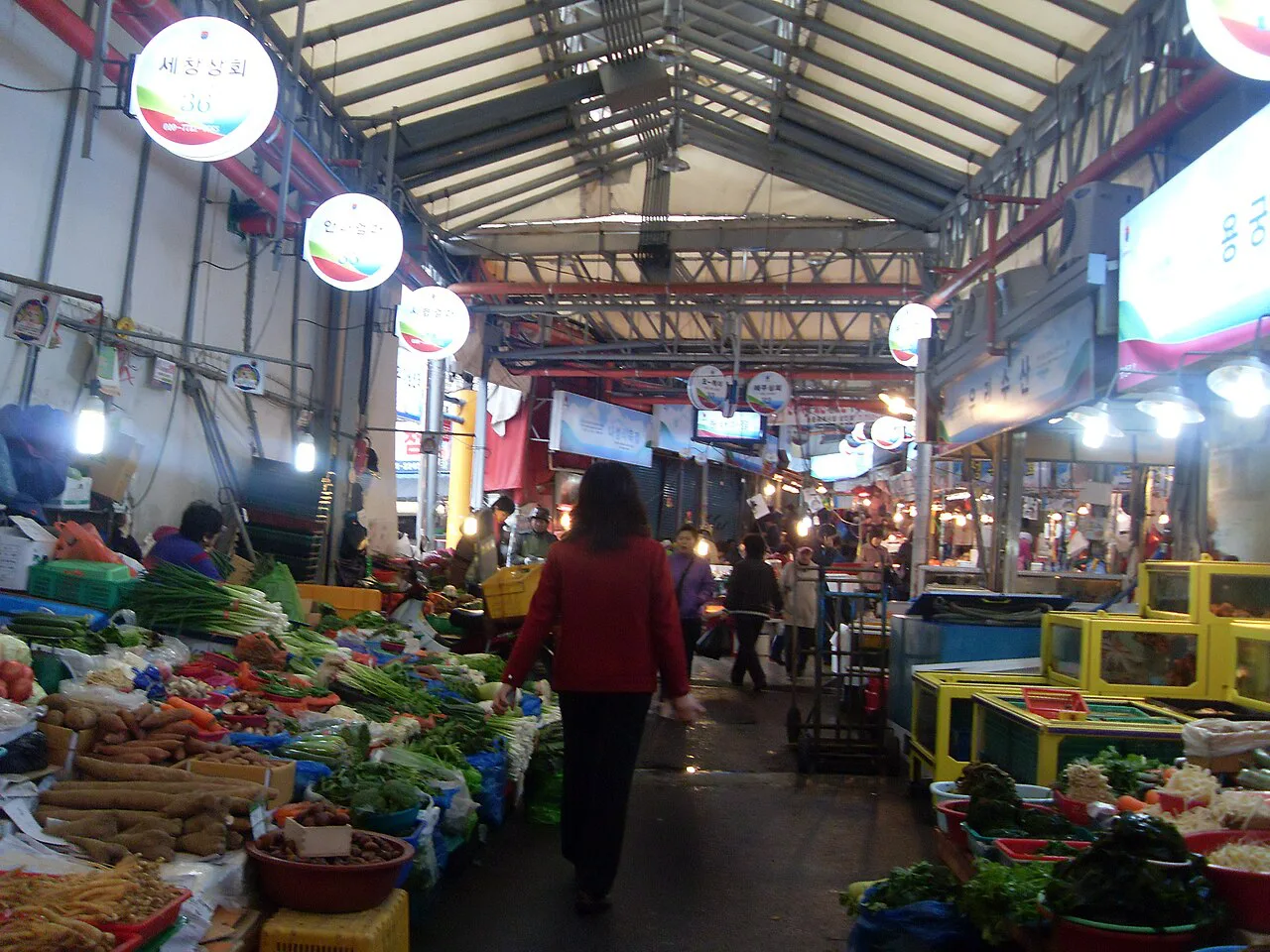
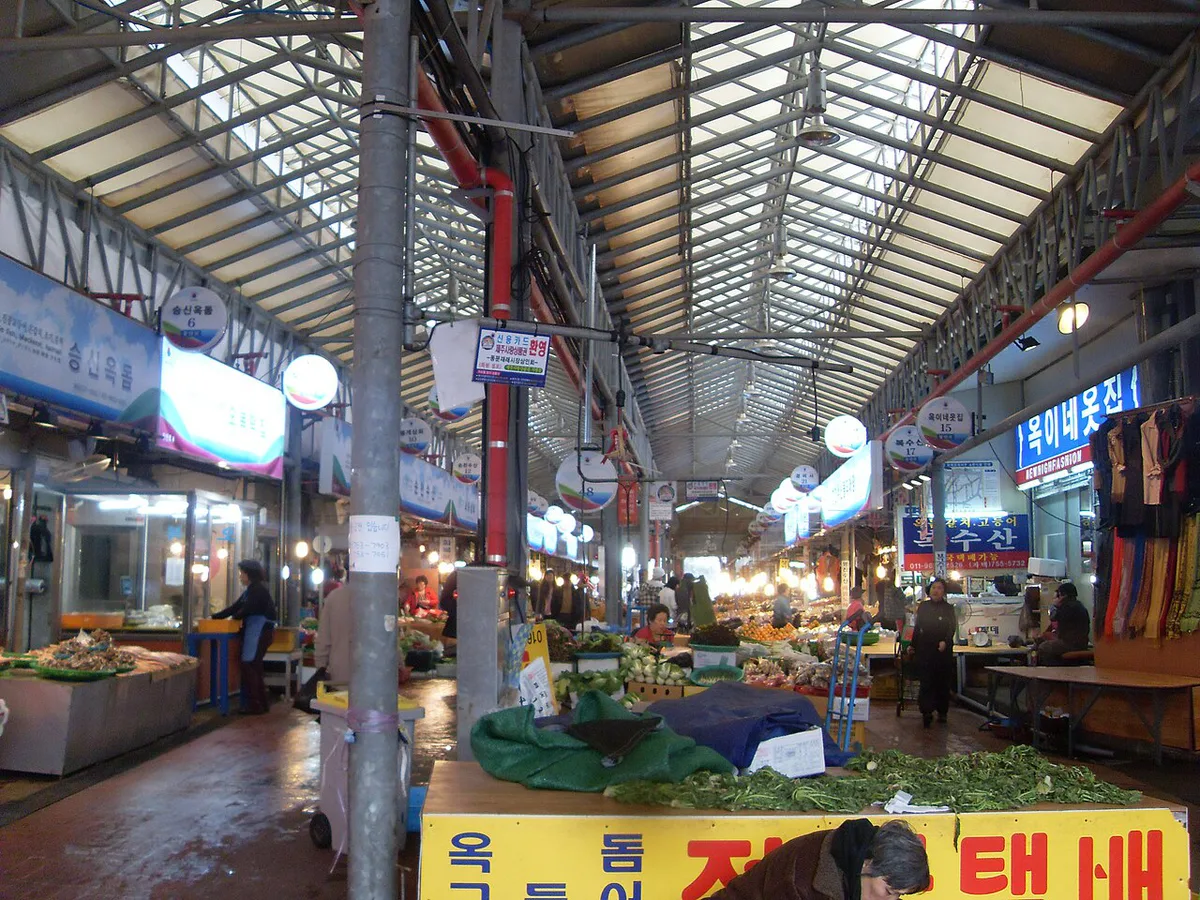
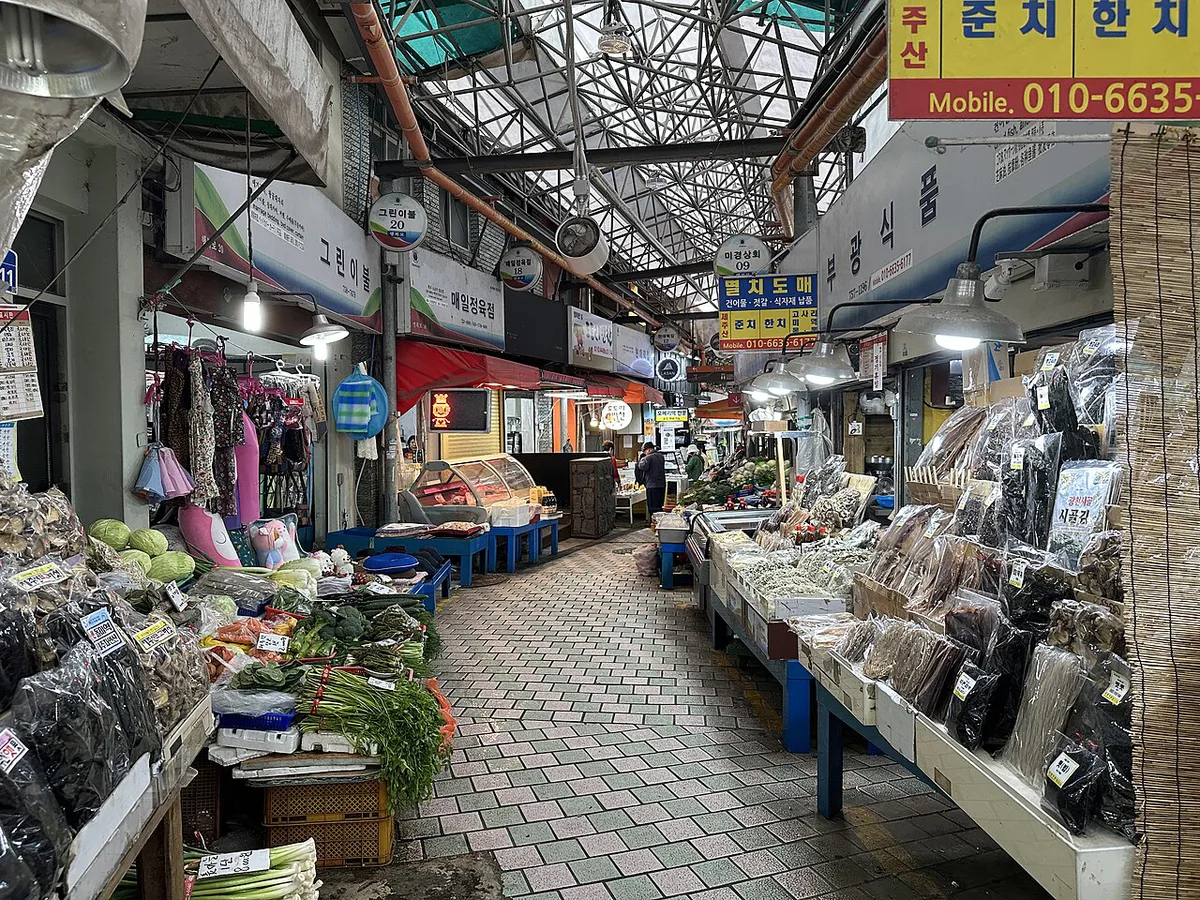
Dongmun is the market to start with. Raw hairtail sits on ice, women slice hallabong, and rice cakes are shaped from black millet. It runs all day, and the evening night market offers a variety of food and souvenirs. See our Dongmun day and night stalls page for how to split the two shifts. Seogwipo Maeil Olle Market at Jungang-ro 62beon-gil 18 has winter hours of 07:00 to 20:00 and no regular closing days. Hours vary by store. Stalls there sell stuffed buns, fried pork belly kimbap rolls and hallabong juice. To compare more markets, browse other market options across the island. For dessert, hallabong soft serve and Udo's peanut treats are the usual picks, and café and sweets stops collects them.
Seogwipo Maeil Olle Market keeps winter hours of 07:00 to 20:00, so a market stop can wrap up before many traditional kitchens wind down after 8:30 PM.
When to Go: Food by Season
Spring (April and May) and autumn (October and November) are when Jeju food peaks. Haenyeo seafood is plentiful and markets run full. Summer brings the best sea urchin and the coldest noodles. Winter belongs to hallabong, with indoor restaurants filling in around wind and rain. Time of day matters as much as month. Lunch hits hard from noon to 1:30 PM. Dinner starts around 6 PM, and the busiest window at weekend black pork restaurants is 6:30 to 8 PM. After 8:30 PM, many traditional kitchens wind down and run short of dishes. Arriving at 5:30 or 6 PM usually avoids a wait.
Practical Tips for Eating on Jeju
Most traditional black pork grills, haenyeo seafood spots and market stalls take no reservations, so it is first come, first served. Exceptions are craft-food spots in Jeju City's Ara-dong neighborhood and the café cluster near Aewol. Carry cash for markets and small restaurants. Cards work at most sit-down places. Tipping is not part of Korean dining, and any service charge is built into the bill. Dietary limits take effort. Kimchi and many vegetable sides are fermented with salted shrimp or anchovy sauce. Vegetarians can show the cook the phrase 채식주의자예요, meaning "I am a vegetarian," and ask about shrimp and anchovy directly. Some newer cafés around Aewol and Hallim offer vegetable-forward menus. Picture menus, pointing and a translation app handle most ordering. The Korea Tourism Organization food guide covers general Korean dining etiquette.
A 2-Day Jeju Food Route
This route assumes a stay in Jeju City with one day trip east. Swap days if the forecast turns windy.
Udo's ferry crossing takes 10 to 15 minutes, and the ₩1,000 park admission is paid separately from the ferry fare.
- Day 1 morning: Dongmun Traditional Market. Eat a raw fish rice bowl between noon and 2 PM.
- Day 1 afternoon: coffee and hallabong sweets, then walk the market's evening stalls.
- Day 1 dinner: black pork at 5:30 or 6 PM, then cold noodles to finish.
- Day 2 morning: ferry from Seongsan Port to Udo, about 10 to 15 minutes each way. Allow 3 to 4 hours on the island.
- Day 2 lunch: abalone porridge or sea urchin at a haenyeo restaurant near Seongsan or Udo.
- Day 2 dinner: braised hairtail at a neighborhood spot.
- Rain or wind backup: ferries depend on weather, so spend Day 2 at Seogwipo Maeil Olle Market (07:00 to 20:00 in winter), then take the hairtail dinner there.
Explore More Jeju Guides
Keep planning your Jeju trip with these guides.
Jeju Guides
- Jeju Black Pork: What to Order and Where to Eat
- Jeju Seafood Guide
- Jeju Abalone Porridge: Where to Eat It & What to Order
- Jeju Cafes: Best Areas, Views and Routes by Region
- Dongmun Market, Jeju
- 8 Best Restaurants in Jeju
- Jeju Hallabong Guide
- Jeju Noodles: What to Order and Where to Eat on the Island
- Jeju Markets: Dongmun, Seogwipo & 5-Day Picks
Building the rest of the trip? Our Jeju attractions guide covers the sights, districts and logistics around this guide.
Explore food in other cities
Notes for your Korea trip
Optional updates to our city guides.
You might also like
Continue reading
More guides you'll find useful