Jeju Hallabong Guide: When to Eat, Pick & Buy It
Planning to try hallabong in Jeju? See what it is, which months to visit, where to taste, pick or buy it, and how to carry it home.
On this page
Last updated November 2026: jeju hallabong is the large, knob-topped tangerine of Jeju's winter markets and cafés. Your travel month decides whether you eat it fresh, because a 2015 ministry description has the fruit changing colour from mid-October and fully ripe by February or March. Use this guide to choose a month, a tasting route and a take-home plan, then explore more dishes in Jeju's food scene.
Featured image: Janko Luin, CC BY-SA 2.0, via Flickr.
What Hallabong Is and What to Expect When You Taste It
Hallabong is the Korean name for a large dekopon-type tangerine, sold in Japan as dekopon. You may also see the same type listed as shiranui. VisitKorea's food guide places Jeju's tangerines among the island's signature specialties, and VisitKorea says hallabong reached Korea in the 1990s. Skin is thinner than the fruit's size suggests. Each fruit weighs about 200–300 g. Korea.net describes fruit with a protruding bump at the stem and fruit without one, so the top knob is common but not universal. Flavor runs sweet and sour, juicy and soft, with high sugar. Next to a regular mandarin, expect a larger fruit and juicier segments.
Best Time to Visit for Jeju Hallabong
Ripening shapes your trip more than anything else. Korea.net's 2015 description says fruit is light green at first. Colour starts changing in mid-October. Fruit turns orange in early December and is fully ripe by February or March. Treat those dates as typical, and read harvest updates on Visit Jeju before you book. A late-winter trip puts fully ripe fruit within reach. An October trip works better with café drinks and packaged products.
| Visit month | Fruit stage | Plan around |
|---|---|---|
| Mid-October to November | Colour begins to change | Orchard fruit is not yet orange; lean on café drinks and packaged products |
| Early December to January | Turning orange | Fresh fruit starts to appear; combine markets with one orchard stop |
| February to March | Fully ripe | Best window for picking and buying fresh fruit |
| April to September | Outside the ripening window | Rely on jelly, tea, juice and café menus rather than fresh fruit |
Ways to Try Hallabong in Jeju
Five routes cover most trips, and the table compares them on cost, effort and season. Jejue In Farm is a café and citrus orchard at 20-14 Hogeunseoho-ro in Hogeun-dong, Seogwipo. Ordering a drink or buying a ticket lets you pick your own citrus. Guests can sample tangerines, and the café serves ade drinks made with hallabong. Opening hours are 10:00–18:00, and it closes on Sundays. Confirm hours on its Instagram page before you go. Jeju measures about 73 km east to west and 41 km north to south, so an orchard detour needs a real driving plan. Market stalls and cafés give you the same fruit with far less effort.
| Option | Cost level | Effort | Season dependence | Car needed | Best for |
|---|---|---|---|---|---|
| Orchard picking café | Mid (drink or ticket) | High | Tied to the harvest | Plan a taxi or rental car | Hands-on fruit and photos |
| Market stall | Low to mid | Low | Fresh-fruit months | No | Buying fresh fruit by the bag |
| Supermarket | Low | Low | Fresh-fruit months | No | Boxed fruit for your room |
| Café drink or dessert | Mid | Low | Menus change by season | No | Hallabong ade and desserts |
| Packaged souvenir | Low to mid | Low | Little | No | Gifts and luggage |
- No car: skip orchard picking and buy fruit at Seogwipo Maeil Olle Market instead.
- Only a few days: choose one orchard stop or none, and spend the saved time on markets.
- Visiting outside December to March: skip the fresh-fruit hunt and buy jelly or tea.
Where to Buy Fresh Fruit and Souvenirs
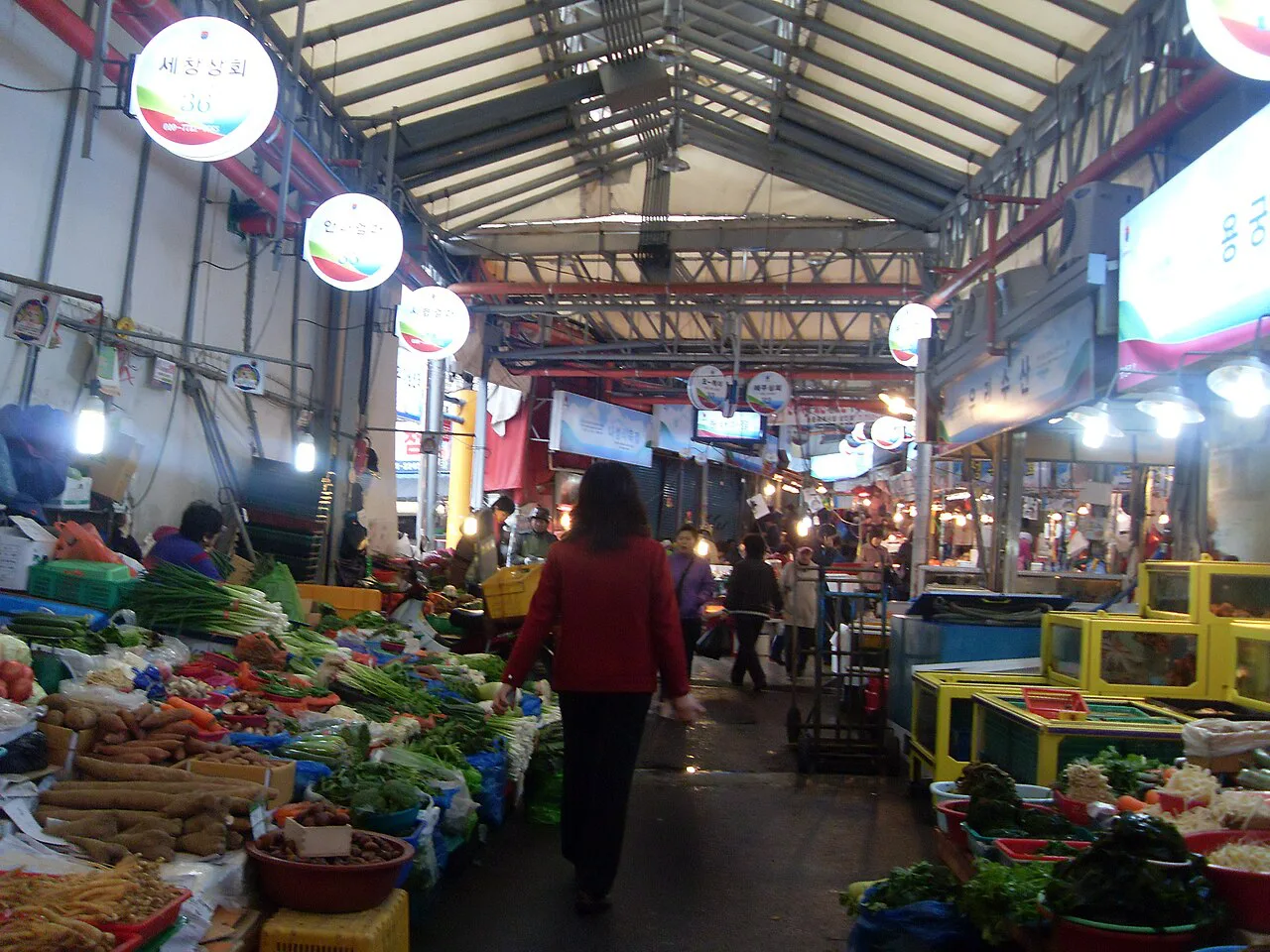
Two markets anchor a fresh-fruit run. Dongmun Traditional Market sits near Jeju International Airport, so it suits an arrival or departure day. Stalls run by day, and the night market adds food and souvenirs in the evening. In Seogwipo, Maeil Olle Market is open year-round with no regular closing days. Winter hours are 07:00–20:00 at Jungang-ro 62beon-gil 18, though each store sets its own. More stalls and food stops are covered in our guide to markets across Jeju. Choose fruit that feels heavy for its size and firm, and match peel colour to the month. Prices and hours checked November 2026. Souvenir ranges below come from a 2024 VisitKorea listing, so treat them as rough guides.
Plan Sundays at Seogwipo Maeil Olle Market, since Jejue In Farm closes that day and its hours run 10:00–18:00.
- Hallabong yanggaeng (jelly) from HyoEun Dessert in Andeok-myeon: from ₩20,000 for 4 pieces
- Tangerine juice: from ₩10,000 per box
- Tangerine chips: under ₩10,000
- Tangerine drip coffee from Jeju Basalt: from ₩10,000 for 5
- Hallabong tea from JEJU 4MOON: under ₩10,000
- Hallasan cookies from HALLA COOKIESHOP, with hallabong among four flavors: from ₩10,000
Taking Hallabong Home
At 200–300 g per fruit, a fresh box adds weight quickly. Ask the market stall or shop whether it ships, since that spares your luggage. If you carry fruit, wrap each one separately and keep the box in your cabin bag. Ask your airline about fresh-fruit rules for both domestic and international legs. Customs rules differ by country, so read your home authority's quarantine page before you pack. Jelly, tea and chips travel far more easily than fresh fruit.
Ask whether a stall ships, since each fruit weighs 200–300 g and that stacks up quickly in luggage.
- Mistake to avoid: buying a fresh box on your last morning, then learning at screening that your destination restricts fresh citrus.
- Fix: check the quarantine page first, or buy sealed products instead.
A Simple Hallabong Day Plan in Seogwipo
Base yourself in Seogwipo for a half-day route that keeps driving short. Start at Jejue In Farm between 10:00 and 18:00, Monday to Saturday. Order a hallabong ade and pick fruit if the season allows. Head to Seogwipo Maeil Olle Market afterwards, where winter hours run to 20:00. On a Sunday, skip the orchard and spend the time at the market and a dessert stop. Find more sweet stops among dessert cafés across the island. Round off dinner with grilled black pork, another specialty VisitKorea lists beside hallabong. Save Dongmun's night market for a Jeju City evening, since it sits near the airport. For more to eat, return to our wider Jeju food guide.
Frequently Asked Questions
What is the most famous fruit grown on Jeju Island?
Tangerines are the answer. VisitKorea calls them one of the first specialties that come to mind for Jeju. Hallabong is the large variety, with colour change starting in mid-October.
What does a dekopon taste like?
Dekopon is sweet and sour, juicy and soft, with high sugar. Korea.net gives that description for hallabong, the Korean name for the same type.
Are sumo oranges the same as dekopon?
Sumo citrus is the trade name used in North America for the dekopon type. Hallabong is the Korean name for it. Labels differ by country, but all three point to the same kind of large, knobbed tangerine.
Notes for your Korea trip
Optional updates to our city guides.
You might also like

Continue reading
More guides you'll find useful