Jeju Canola Flower Season: When & Where to See the Yellow Fields
Jeju canola flower season: bloom timing by area, free vs paid fields, the Gasi-ri festival, and how to plan around cherry blossoms and weather.
On this page
Last updated November 2026: Jeju canola flower season runs from late winter into spring, and sources disagree on the exact window. One local guide reports mid-February to the end of April, while another puts the main bloom in April and early May. Sanbangsan's southwest fields are reported to open first, so plan for a range and match your dates to an area using our Jeju timing planner.
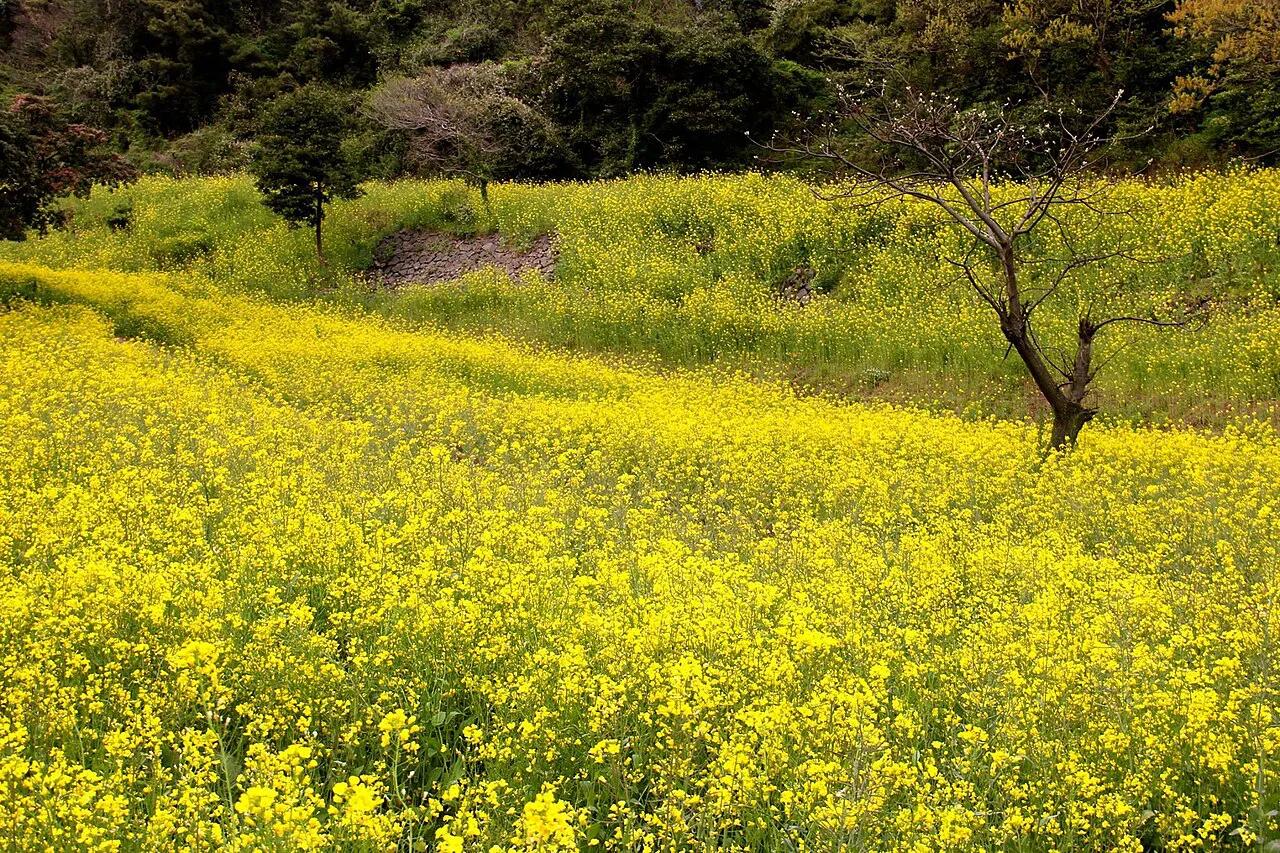
Featured image: Joycekim77, CC BY-SA 3.0, via Wikimedia Commons.
When Is Jeju Canola Flower Season? (And Why Sources Disagree)
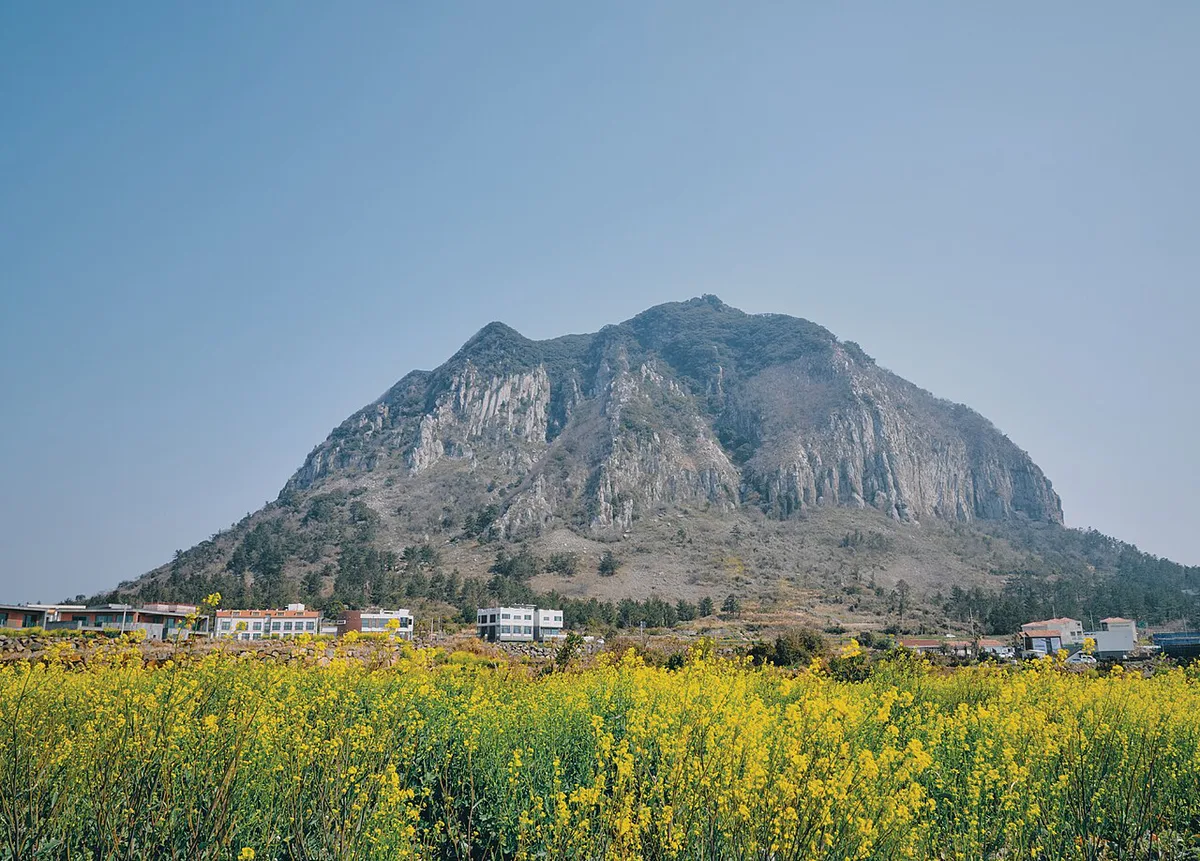
Reported bloom windows run from mid-February to the end of April on one resident's guide. Another guide places the start in early-to-mid April and the peak in the last two weeks of April. Both can be right. Fields are sown at different times, sit at different elevations, and some are kept specifically for visitors. The Gasi-ri festival listing gave 4–5 April for 2026, so early April is a safe anchor for the festival fields. Do not plan around a single peak week. Pick a range, then check current bloom reports and the Seogwipo festival page before you book flights. For weather outlooks, use the Korea Meteorological Administration. Canola is called yuchae (유채꽃) in Korean, which helps when searching local bloom reports.
Season Comparison: Canola Bloom by Area
Use this table to match your dates to a field cluster. Ranges are reported by local guides and differ between them, so treat each as a window rather than a promise.
| Area | Reported bloom | Cost | Crowds | Car needed |
|---|---|---|---|---|
| Sanbangsan, southwest | Mid-February to March | Small cash fee or cafe purchase | High on weekends | Helpful |
| Seongsan and Gwangchigi, east | Late February to April | Free and paid fields | High near the crater | Helpful |
| Noksan-ro and Gasi-ri, inland | March to April | Roadside free | Peaks during the festival | Strongly helpful |
| Hamdeok and Seoubong, north | Spring, exact dates vary | Free | Lower, a walk is required | Optional |
| Hueree Natural Park, south | Spring, check on the day | ₩13,000 adult entry | Moderate | Helpful |
Best Canola Fields: Free, Paid, and Quiet Options
Near Seongsan Ilchulbong, free fields and paid photo gardens stretch from the Gwangchigi beach area toward the crater. Most Sanbangsan fields ask for a small fee or a cafe purchase. Hamdeok's Seoubong hill sits on Olle Course 19 and takes a walk of roughly 2.5 km, so it stays quieter. Seongeup Folk Village adds canola along its stone walls and is free to enter. For a paid, tidy option, Hueree Natural Park charges ₩13,000 for adults, with a ₩10,000 child rate and ₩11,000 for teenagers.
- Sanbangsan: earliest reported fields, cafe or small-fee entry, busy parking.
- Seongsan and Gwangchigi: free and paid fields beside the crater.
- Noksan-ro, Gasi-ri: free roadside views, best for a drive and short walks.
- Seoubong, Hamdeok: free, walk-in, easier to enjoy without a crowd.
- Hueree Natural Park: paid, planted fields with pig show and gardens.
Jeju Canola Flower Festival in Gasi-ri
The Seogwipo festival is held at Pony Experience Park in Gasi-ri. The 2026 listing gave 4–5 April, 11:00–17:00, with free entry. Programs include one-day classes and busking. Dates move each year, so look up the 2027 schedule on the Seogwipo city site before booking. Per Visit Jeju, the festival began in 1983 and settled in Gasi-ri in 2016. Canola has been planted widely on Jeju since the 1960s because it suits the island's poor soil. During the festival, 1.5 km of Noksan-ro is closed to cars. That closure makes the road safe to walk, but it changes parking and drop-off plans.
Canola vs Cherry Blossom Timing
Canola lasts longer than cherry blossom, which makes it the easier bloom to plan months ahead. Noksan-ro is lined with both, and where they overlap you can see both together in some sections. Guides place that overlap around late March to the second week of April, though sources vary. If cherry trees are your priority, read our Jeju cherry blossom guide. For earlier dates, see Jeju in March: Weather, Blossoms & What to Expect. For the festival weekend and later fields, see Jeju in April: Weather, Blooms & What to Expect.
Field Etiquette, Entry Fees, and What It Costs
Roadside views are free, while paid photo fields are reported at roughly ₩1,000–₩5,000, often in cash. Entry to Seongsan's paid summit section is separate from the free walking areas around Umutgae Beach. Off-season, those field fees disappear because there is nothing in bloom to charge for. Do not step into unmarked fields. Most are working farm crops, and trampling them costs a farmer income. Stick to marked paths and signed entrances. On Noksan-ro, park in lots rather than on the verge, and walk the paths under the trees instead of the road.
Expect ₩1,000–₩5,000 at paid photo fields, while Hueree Natural Park's adult ticket is ₩13,000 for its planted gardens and pig show.
Getting There: Rental Car, Tour, or Public Transport
A rental car is the most flexible way to link fields, since the best spots are split between the southwest and east coasts. Guided day tours cover the main fields without a car, but check current departure dates for the bloom weeks. Bus service to Noksan-ro and some fields is limited, so a taxi from Pyoseon is a reasonable fallback. Choose a base by cluster. Seogwipo suits Sanbangsan, the east coast suits Seongsan, and Pyoseon or Gasi-ri suits the festival and Noksan-ro.
Noksan-ro closes 1.5 km of road to cars during the festival, which changes drop-off plans for a taxi from Pyoseon.
Sample Canola Days: East Coast vs Southwest
On the east route, start at the Gwangchigi fields, then climb Seongsan Ilchulbong. In spring (March–April), the site opens 05:00–19:00, with the last ticket sold at 18:00. The summit takes about 30 to 40 minutes via the paid section. The site is closed on the first Monday of every month. Finish at Gasi-ri for Noksan-ro in the afternoon. On the southwest route, begin at Sanbangsan early, then walk the Yongmeori Coast and continue to Jusangjeolli. Confirm drive times in a map app. In rain, swap an outdoor field stop for Hueree Natural Park, which is open year-round and has a last admission of 17:30 from March to September.
What to Wear and Bring
Fields are exposed, so pack a windproof layer, sunscreen, and shoes with grip for muddy edges. Spring weather can swing from sun to hail within a day. Carry small bills for paid fields. Shoot in early morning or near sunset to avoid washed-out yellow. See our Jeju weather guide for what to expect month by month.
Visiting Outside the Bloom Window
Today, mid-November, the Visit Jeju page showed 12°C (54°F) and no canola in bloom. Fields outside the bloom window are bare or green farmland, so do not reroute a trip to see them. Use Jeju in November: Weather, Sights and Who Should Go for what is in season now. For winter planning, read Jeju in Winter: What to Expect, Where to Go and What to Skip. For a different color season, Jeju in October: Weather, Fall Colors & What to Do fits better.
Walk Gasi-ri Beyond the Festival Grounds
Gasi-ri works best for travelers who want a landscape walk as well as flower photographs. Noksan-ro runs for about 10 km through canola and cherry-tree scenery, so choose a short marked stretch instead of trying to cover the whole road on foot. The road is especially useful when both blooms overlap in spring.
For a longer outing, follow part of the 20 km Gapmajangil trekking course, created in 2011 around Gasi-ri’s former horse-grazing landscape. It is a better fit for walkers than a quick roadside stop. Start with the flower-lined road, then continue only as far as your weather, daylight, and transport plan allow.
Festival logistics can change the experience. The 2026 festival listing covered 4–5 April, and the article’s reported 1.5 km Noksan-ro closure made part of the route more pleasant to walk. Check the current festival notice before committing to a driving route, especially if you need a taxi pickup.
Frequently Asked Questions
What month does canola bloom in Jeju?
Reports range from mid-February to the end of April, with another guide placing the main bloom in April and early May. Southwest fields near Sanbangsan are reported to open first. Check current bloom reports before booking.
What is the best time to visit canola fields in Jeju?
Early April pairs fields with the Gasi-ri festival and possible cherry blossom overlap. Late April is reported as the densest bloom, and early May is calmer but thinner. Pick a window, not a single week.
Notes for your Korea trip
Optional updates to our city guides.
You might also like
Continue reading
More guides you'll find useful